Topwater Frogs Modification

You made the perfect cast. The frog landed with a soft *plop* right in the thickest mat of lily pads. You twitched it once, twice… and then the water exploded. You set the hook with everything you had, only to feel the sickening slack of a missed opportunity. Sound familiar? If you’re losing more bass than you’re landing on hollow-body frogs, the problem isn’t your timing—it’s your tackle. The secret to turning those heartbreaks into hero shots lies in a few simple, at-home modifications.
The Disclaimer: Fish Smart, Fish Legal
Before we start snipping and gluing, let’s cover the essentials. Always check your state’s current fishing regulations. A valid fishing license is required in all 50 states, and rules on lure modifications, especially concerning added weight or hooks, can vary. For the most authoritative source, visit your state’s wildlife agency, like the U.S. Fish & Wildlife Service for federal lands or your specific state’s .gov site. Never compromise safety for a fish. Wear your PFD, be weather-aware, and handle every fish with care to ensure its survival after release.
The Science of the Strike: Why Frogs Fail (And How to Fix It)
Think of an unmodified topwater frog like a stubborn clamshell. When a bass engulfs it, the soft body collapses, but the hard, upward-facing hook points are often buried in the frog’s plastic “skin.” The bass feels this rigid mass and spits it out before the hooks can ever find purchase. Your modification goal is to transform that clamshell into a trapdoor—something that easily compresses and immediately exposes a sharp, unimpeded hook.
Your At-Home Modification Toolkit
You don’t need a pro shop. Grab these items:
- Sharp Scissors or Hobby Knife: For precise trimming.
- Super Glue (Gel Formula): For resealing and adding durability.
- Small Split Ring Pliers: The game-changer for hook upgrades.
- #2 or #3 Split Rings: To improve hook swing.
- Optional: 1/8 oz. Tungsten Bullet Weights: For nose-heavy “walking” frogs.
Step-by-Step: The Three Essential Frog Mods
1. The “Belly Trim” for Better Compression:
Lay the frog on its back. Using your scissors, carefully trim away 1/8 to 1/4 inch of material from the belly, just behind the hook points. This reduces the amount of plastic the bass must crush, allowing the hook to pivot into position faster. Don’t cut into the body cavity. A light sanding of the cut edge prevents tearing.
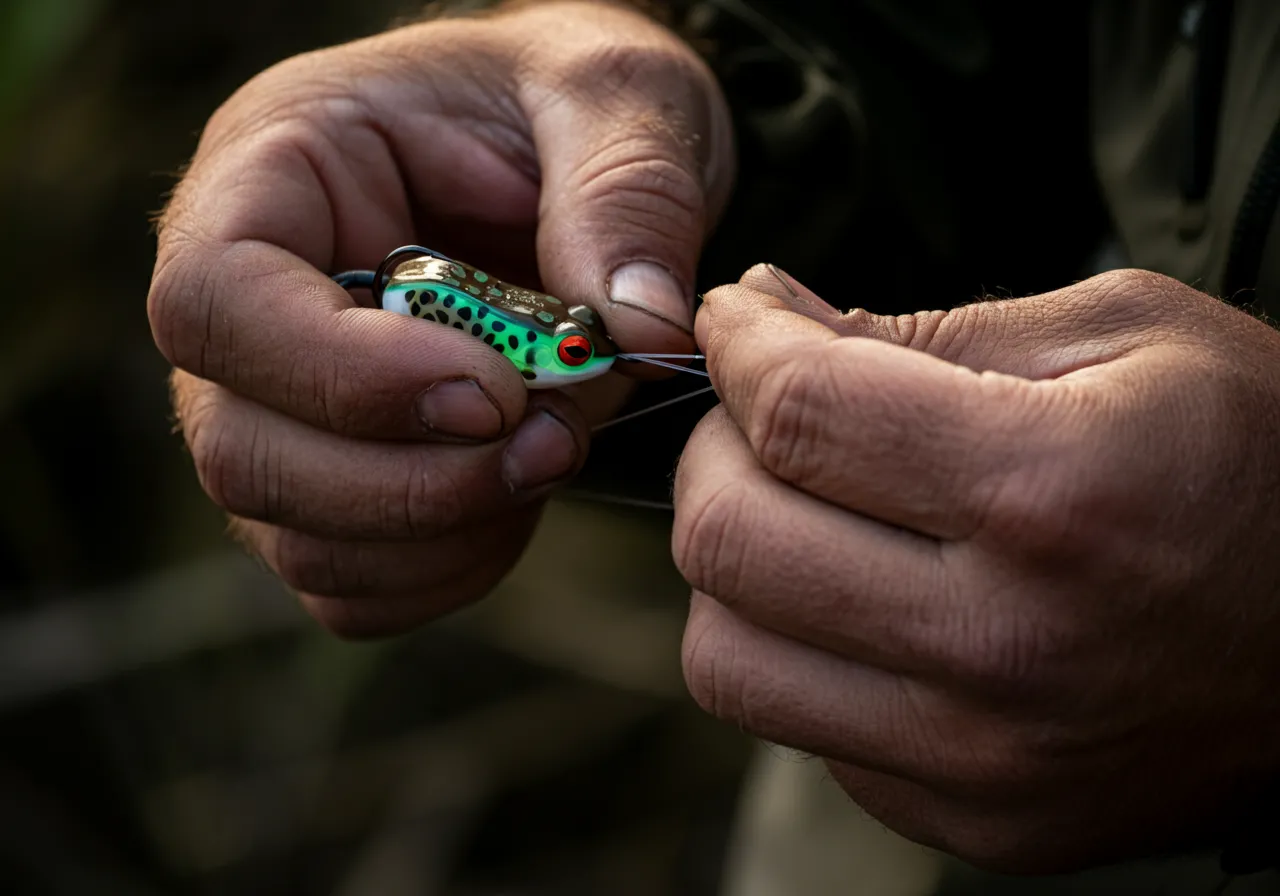
2. The “Split Ring Upgrade” for Hook Freedom:
This is the single most effective mod. Remove the stock hook from the frog’s harness. Attach a #2 or #3 split ring to the harness eyelet, then reattach the hook to the split ring. This tiny metal ring acts like a universal joint, giving the hook vastly more independent movement to find the corner of the bass’s mouth on the strike.
3. The “Leg & Skirt Tune-Up”:
Trim the rubber legs to different lengths (one side shorter than the other) to create an erratic, injured action. Thin out the skirt strands by 30-40% to reduce water resistance and allow for a quicker, more natural sink on the pause—often when the bass commits.
Gear Showdown: Stock Frog vs. Modified Frog
| Aspect | Stock Frog (Out-of-the-Box) | Modified Frog (Pro-Tuned) | |
|---|---|---|---|
| Hookup Ratio | Low to Moderate. Hooks are restricted. | High. Hooks swing freely for solid penetration. | |
| Compression | Stiff. Requires forceful crush from bass. | Easy. Trimmed belly collapses instantly. | |
| Action | Predictable, uniform leg movement. | Erratic. Trimmed legs create “injured” prey trigger. | |
| Cost & Risk | Zero extra cost, zero risk. | Minimal cost ($5 for rings/glue), slight risk of error. | |
| Best For | Open water, beginners learning the retrieve. | Heavy cover, pressured fish, tournament anglers. |
The Honest Truth: Pros & Cons of Modifying Frogs
Pros:
You will land more fish. Period. The increased hookup ratio is dramatic. You gain confidence to throw into the nastiest cover where big bass live. It’s inexpensive and makes you an active participant in your tackle’s performance.
Cons:
Over-modifying can ruin a frog. Cut too much, and it will take on water and sink. Some glues can melt certain plastics. It adds a small, upfront time investment. For purely open-water frogging, modifications are less critical.
Frequently Asked Questions (FAQ)
Q: What’s the best line for fishing modified topwater frogs?
A: I use 50-65 lb. braided line exclusively. Zero stretch is critical for driving the hook through the frog’s body and the bass’s bony mouth, especially on long casts in heavy cover.
Q: Do I need a special rod?
A> Yes. A 7’3″ to 7’6″ Heavy or Heavy-Power, Fast-Action rod is non-negotiable. You need the backbone to haul a bass from the mats and to drive the hook home.
Q: When is the prime time for topwater frog fishing?
A> Early morning, late evening, and all day under cloudy skies or on stained water. It’s most effective when bass are shallow, from late spring through early fall.
Transforming your hollow-body frogs from frustrating to foolproof is one of the most rewarding skills in bass fishing. Grab a few old frogs, your toolkit, and give these mods a try. Your hookset percentage—and your photo gallery—will thank you. Now get out there, make some tweaks, and go stick the one that blew up on you last time.