Jerkbaits Suspended Action

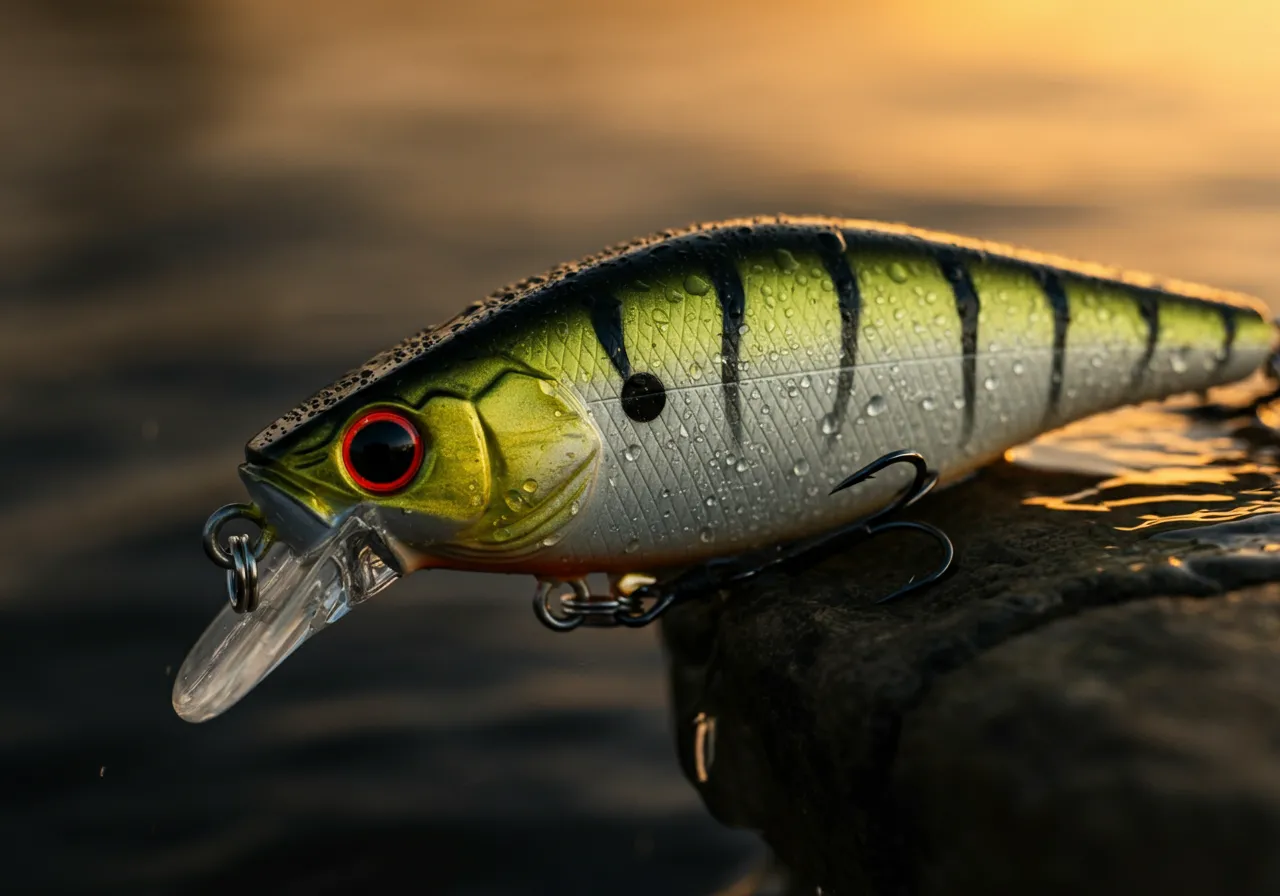
You’ve seen it happen. A big bass follows your lure right to the boat, only to turn away at the last second with a dismissive flick of its tail. It saw the retrieve, calculated the speed, and decided it wasn’t worth the effort. This is the frustration of a predictable presentation. Now, imagine a lure that doesn’t flee. It twitches, darts, and then just… hangs there. Vulnerable. Irresistible. That’s the magic of a suspended jerkbait.
The Angler’s Dilemma and the Perfect Pause
When fish are pressured by cold fronts, clear water, or just plain lockjaw, aggressive retrieves often fail. They’re not chasing; they’re calculating. The suspended jerkbait solves this by mimicking an injured baitfish that has exhausted itself—a high-calorie, easy meal. Your job isn’t to outrun the predator, but to tempt it with vulnerability.
The Science of the Suspend: A “Wounded Bird” Analogy
Think of a hawk hunting over a field. A healthy bird flies with purpose and is hard to catch. But a wounded bird, fluttering erratically and landing awkwardly, becomes a prime target. The predator’s brain is wired to key in on that erratic, struggling motion followed by a moment of helplessness.
A suspending jerkbait does exactly this in the water. With the right weight and buoyancy, it sinks to a specific depth and then stays there when you pause your retrieve. Each sharp “jerk” of your rod tip makes it dart like a startled minnow. The subsequent pause lets it hover, immobile, as if gasping for breath. This triggers a primal strike impulse in predators like bass, walleye, and pike that pure speed never will.
Safety, Legality, and Stewardship First
Before we talk lures, let’s cover the non-negotiables. No fish is worth a trip to the hospital or a run-in with a game warden.
- Weather & Water Wisdom: Jerkbait season often coincides with colder, unstable weather. Always check a reliable forecast before heading out. Sudden wind shifts or dropping temperatures can make water dangerous quickly.
- PFDs Are Not Optional: You should be wearing your life jacket, especially when fishing from a boat in cold water. A manual inflatable PFD is comfortable and could save your life.
- The Golden Ticket: A valid fishing license for the state you are in is required. Regulations on seasons, size limits, and bag limits are strictly enforced and vary widely. It is your responsibility to know them. Always consult your state’s official wildlife agency for the most current rules. For a prime example of a comprehensive state resource, you can visit the Tennessee Wildlife Resources Agency site.
- Ethical Handling: These lures often hook trophy fish. Have a proper landing net, wet your hands before handling, and keep the fish in the water as much as possible. If practicing catch and release, consider using barbless hooks or crimping down the barbs on your jerkbaits for easier, less traumatic release.
The Step-by-Step Jerkbait Retrieve: It’s All in the Wrist
This technique is less about reeling and more about rod work. Here’s how to turn your rod into a puppeteer’s string.
- The Cast & Settle: Make a long cast past your target area—a rock pile, weed edge, or dock pillar. Let the lure sink completely. Count it down if you need to hit a specific depth (e.g., “one-one-thousand, two-one-thousand…”).
- The Jerk: With your rod tip pointed at the water, sharply snap your wrist and forearm downward about 1 to 2 feet. This is not a giant sweep. It’s a quick, impulsive motion. The line should go slack.
- The Pause: This is the most critical step. Do nothing. Let the lure sit perfectly still. This pause can last from 3 seconds to 10 seconds or more in very cold water. Watch your line.
- The Cycle: Reel up the slack line until you feel a slight tension, then repeat the jerk-pause sequence. A common rhythm is jerk-jerk-pause, or jerk-pause, jerk-pause.
- The Strike: Be ready! Most hits occur during the pause or just as you begin to jerk again. You’ll often see your line jump or simply start moving sideways. Set the hook with a firm, upward sweep.
Gear Guide: Matching the Tool to the Task
Using a suspended jerkbait effectively requires gear that transmits feel and handles the abuse. You can’t perform delicate wrist snaps with a broomstick rod.
| Category | Budget-Conscious Setup | Pro-Optimized Setup |
|---|---|---|
| Rod | 6’6″ to 7′ Medium Power, Fast Action graphite composite rod. Sensitive enough to feel strikes, with a backbone to set hooks. | 6’10” to 7’3″ Medium Power, Moderate-Fast Action premium graphite rod. The slight extra bend protects thin treble hooks from pulling free. |
| Reel | 2500-3000 size spinning reel or 6.3:1 gear ratio baitcaster. A smooth drag is essential. | High-speed baitcaster (7.1:1 or higher) to quickly take up slack between jerks, or a high-end spinning reel with ultra-smooth line management. |
| Line | 8-12 lb test Fluorocarbon or low-stretch braid with a 3-4 ft fluorocarbon leader. Fluorocarbon sinks and is less visible. | 10-15 lb test straight Fluorocarbon. Its sink rate, invisibility, and lack of stretch are perfect for deep-diving suspending jerkbaits. |
| Lure Choice | One proven suspending model in a shad color and a perch/bass color. Learn one lure deeply. | A box with multiple brands, dive depths (3-6 ft, 6-10 ft), and subtle float/suspend/sink rates to match exact water conditions. |
Why It Works (And When It Doesn’t): The Honest Truth
Pros:
- Cold Water Killer: The premier technique for bass in water temperatures from 45°F to 65°F.
- Triggers inactive, negative fish that ignore moving targets.
- Excellent in clear water where a subtle, realistic presentation is key.
- Allows precise depth control to keep the lure in the strike zone longer.
Cons:
- Slow Pace: It’s a methodical, patient technique. Not for anglers who need constant action.
- Can be snaggy around heavy cover due to the multiple treble hooks.
- Less effective in very murky water where vibration and sound (like from a spinnerbait) are more important.
- Requires specific gear and tuning (sometimes adding suspend dots or lead tape) to get the lure to hover perfectly.
Jerkbait FAQs: Quick Answers from the Front Seat
Q: What’s the best time of year for suspended jerkbaits?
A: Primarily pre-spawn through post-spawn (late winter to late spring), and again in the fall. Any time water temps are between 45° and 65° Fahrenheit, have one tied on.
Q: My jerkbait floats back up on the pause. What gives?
A> It’s a “floating” model, not a true “suspender.” You can add light-weight suspend strips or use a slightly heavier line (which creates more drag) to help it hang. True suspending models are labeled as such.
Q: How do I avoid losing fish on treble hooks?
A> Keep constant, steady pressure. Don’t “horset” them. Use a rod with a forgiving tip (moderate-fast action) and ensure your drag is set properly—about 25-30% of your line’s breaking strength.
Ready to put more fish in the boat? Mastering the pause is just the beginning. Explore our other in-depth guides on reading your electronics to locate those offshore suspend-worthy structures, or dive into our complete line comparison to perfect your setup.
In a Nutshell
The suspended jerkbait is a finesse-power hybrid that exploits a predator’s instinct to strike vulnerable prey. By mastering the sharp jerk followed by an agonizingly long pause, you can trigger strikes from fish that refuse all other offerings. It demands patience, the right gear, and a belief in the power of doing nothing. Now get out there, make the cast, and hold on.