Spooling a Reel Correctly

You made the perfect cast, the lure landed with a whisper, and then… nothing. No strikes, no taps. You reel in, only to find a bird’s nest of line exploding from your spool. Or worse, you finally hook the fish of a lifetime, and on the third headshake, your line snaps not at the knot, but somewhere in the middle of the spool. Sound familiar? More often than not, the culprit isn’t bad luck—it’s bad spooling. Putting line on a reel seems simple, but doing it wrong creates tension problems, line memory, and weak spots that will cost you fish. Let’s fix that for good.
Disclaimer: This guide is based on my two decades of professional experience. Always check your state fishing regulations and obtain the proper fishing license before heading out. Safety on the water is paramount; never fish in severe weather without a personal flotation device (PFD). Handle all fish with care, following best practices for catch and release to ensure the future of our sport.
Why Proper Spooling Isn’t Just Winding: The Road Map Analogy
Think of your fishing line as a detailed road map. When you spool it on perfectly, with even pressure and no twists, every “road” (coil of line) lies flat and parallel. The reel can retrieve and release it smoothly, mile after mile. Now, imagine crumpling that map into a ball, then trying to flatten it out again. You get creases, overlaps, and weak points. That’s exactly what happens with poor spooling technique. Uneven tension creates “soft spots” and “hard spots” on the spool. When a big fish pulls, the line digs into these soft spots, creating catastrophic friction and breaking at half its rated strength. It’s not the fish that beat you; it was the first turn of line you put on the reel.
The Non-Negotiables: Safety, Licenses, and Conservation
Before we touch a line, let’s get the essentials squared away. Fishing is a privilege that comes with responsibility. Your first stop should always be your state’s wildlife agency website to purchase your fishing license and review the latest regulations for your target species and water body. I recommend bookmarking the U.S. Fish & Wildlife Service’s fishing page as a central hub for ethical angling and conservation information. On the water, your PFD is as crucial as your rod. A sudden storm or a slip on a wet deck can turn a great day tragic in seconds. Finally, respect the resource. Use appropriate tackle to land fish quickly, keep them wet if releasing, and always pack out more trash than you brought in.
The Step-by-Step Guide to Flawless Spooling
Gather your reel, new line, a pencil or Phillips screwdriver, a damp cloth, and a friend if possible. The goal is to mimic the line’s factory winding direction onto your reel.
Step 1: Identify the Line’s “Natural Twist”
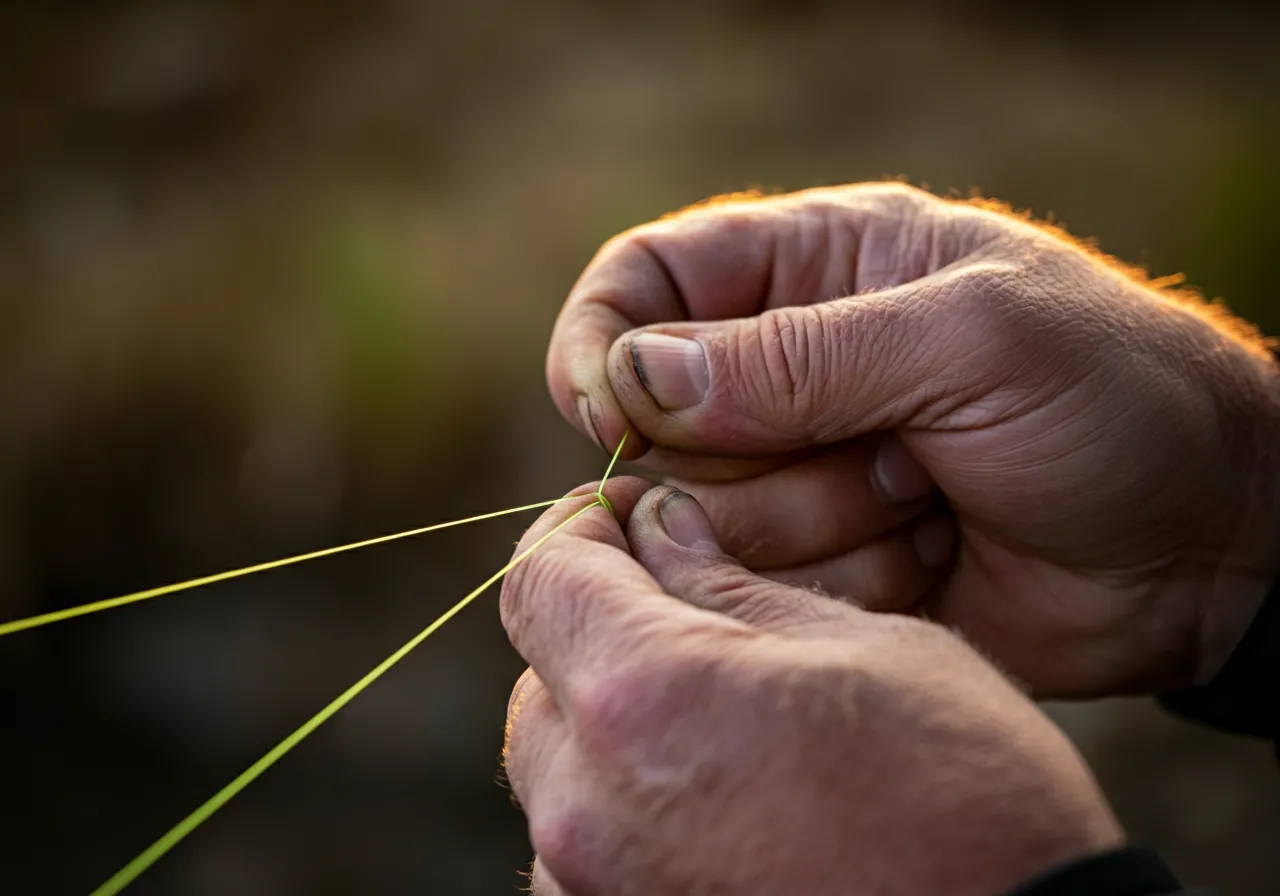
Take the new line spool and let it spin freely on the pencil. Notice which way it wants to uncoil. Monofilament and fluorocarbon typically come off the factory spool in large loops. Braided line is wound straight. This is critical.
Step 2: Orient the Spool Correctly (The Golden Rule)
This is where 90% of mistakes happen. Place the factory spool on the floor.
- For Spinning Reels: The line must come off the bottom of the factory spool. Imagine the line peeling off like a roll of toilet paper. This counteracts the reel’s bail rotation.
- For Baitcasting Reels: The line must come off the top of the factory spool. The line should “unspool” rather than “spin off.”
If you get this wrong, you’ll introduce immediate twist.
Step 3: Secure the Line and Apply Tension
Thread the line through your rod’s guides (optional but helpful) and tie a secure arbor knot to your reel’s spool. For baitcasters and spinning reels with smooth arbors, put a single wrap of electrical tape on the spool first to prevent slippage. Now, apply constant, firm pressure. I use a damp cloth pinched around the line about two feet from the reel. A friend can hold the pencil with the factory spool, or you can run the line under a heavy book. Constant tension is key.
Step 4: Wind Slowly and Fill to the Correct Level
Engage the reel and wind slowly and steadily. Guide the line back and forth with your fingers for even distribution. For spinning reels, fill until there’s a 1/8-inch gap between the line and the spool’s lip. For baitcasters, fill to about 1/16-inch from the lip. Overfilling guarantees tangles; underfilling kills casting distance.
Gear Showdown: The Tension Tool Debate
You can spool perfectly with a pencil and a towel, but specialized tools exist. Here’s the breakdown.
| Feature | Budget/DIY Method (Pencil & Cloth) | Pro-Grade Line Winder |
|---|---|---|
| Cost | ~$0 | $50 – $200+ |
| Tension Control | By feel; can be inconsistent. | Adjustable dial for repeatable, perfect tension. |
| Speed | Slow and steady. | Fast, efficient, especially for braid. |
| Best For | Occasional re-spooling, anglers on a budget. | Guides, tournament anglers, frequent line changers. |
| Twist Prevention | Good, if spool orientation is perfect. | Excellent; most have swivels to eliminate twist entirely. |
The Honest Pros and Cons of Perfect Spooling
Pros:
- Maximum Casting Distance: Evenly packed line flows off the spool with less friction.
- Eliminates Mystery Breaks: No more weak spots from uneven tension.
- Reduces Backlashes & Tangles: Properly filled spools behave predictably.
- Longer Line Life: Line isn’t stressed during application, so it lasts longer.
Cons:
- Time Investment: It takes 10 focused minutes vs. 2 haphazard ones.
- Initial Learning Curve: Getting the spool orientation right requires a bit of thought the first time.
The “cons” are trivial compared to the frustration and lost fish they prevent.
Your Spooling Questions, Answered
Q: Should I put backing on my reel before the main line?
A: Absolutely, especially for braid on baitcasting reels or when using expensive fluorocarbon. A layer of cheap mono (about 1/3 of the spool) prevents braid slippage and saves money on your premium line.
Q: How often should I completely re-spool?
A: It depends on use. Inspect line regularly for nicks, abrasion, or memory. I re-spool mono/fluoro every 2-3 major trips or at the start of the season. Braid can last multiple seasons but should be reversed on the spool yearly to expose fresh line.
Q: Can I spool a reel without a rod?
A> You can, but threading through the rod’s guides first helps apply smoother tension and ensures the line is routed correctly before you start winding. It’s a good habit.
Mastering this fundamental skill is the quiet upgrade that makes all your other gear perform better. It turns that new reel from a potential headache into a trusted tool. Now that your line is on right, the real fun begins. Explore our other guides on perfecting your retrieve and tying foolproof knots to complete your arsenal.
Summary
Spooling a reel correctly is a foundational skill that prevents tangles, maximizes performance, and stops preventable line breaks. The core technique involves identifying the line’s natural twist, orienting the factory spool correctly (bottom for spinning, top for baitcasting), applying constant tension, and filling the spool to the proper level. Using the right tools, from a simple cloth to a professional line winder, ensures even pressure and eliminates twist, setting you up for success on the water.