Fly Casting Mistakes to Avoid

You’ve spent hours tying the perfect fly, you’ve spotted a rising trout, and you make your cast… only to watch your line collapse in a heap ten feet short. Sound familiar? More fish are lost to poor presentation than to poor fly selection. The barrier between you and consistent success isn’t your gear—it’s the fundamental errors in your casting stroke. Let’s break them down.
Disclaimer: This guide is based on 20+ years of professional guiding experience. Always check your local regulations. Some links may be affiliate links, but recommendations are based solely on proven performance.
The Physics of a Fly Line: Think of It Like Cracking a Whip
Many anglers think of fly casting as throwing the fly. That’s your first mistake. You’re not throwing anything; you’re loading and unloading a spring. Your rod is the spring, and the weight of the fly line is the force that bends it. A proper cast is a controlled transfer of energy from your hand, through the rod, down the line, and finally to the leader and fly. If you try to muscle it, you break the chain. Think of it like cracking a whip: a smooth, accelerating stroke that ends in a crisp stop makes the tip snap and the energy travel. A slow, weak, or mushy motion just makes the whip flop on the ground.
Safety, Licenses, and River Etiquette First
Before we wade into technique, let’s cover the non-negotiables. Always wear a PFD (life jacket) in a boat or when wading deep, swift water. Check the weather forecast and water conditions—a rising river is dangerous. In the US, you must possess a valid fishing license for the state you are in. Regulations vary wildly, so consult your state’s wildlife agency. For ethical angling, practice proper catch and release: keep fish wet, use barbless hooks or crush the barbs, and minimize handling. Respect other anglers’ space and always leave the spot cleaner than you found it.
For the most accurate and up-to-date regulations, always refer directly to your state’s agency, such as the U.S. Fish & Wildlife Service for migratory species rules and links to state resources.
The 5 Costly Fly Casting Mistakes & Their Fixes
Here are the errors I see daily on the water, and the precise adjustments to make.
1. The Death Grip & Arm Wrestling the Rod
The Mistake: Clenching the rod handle with all your might and using only your arm from the shoulder. This locks your wrist, kills rod tip sensitivity, and leads to a stiff, inefficient stroke that tires you out by 10 AM.
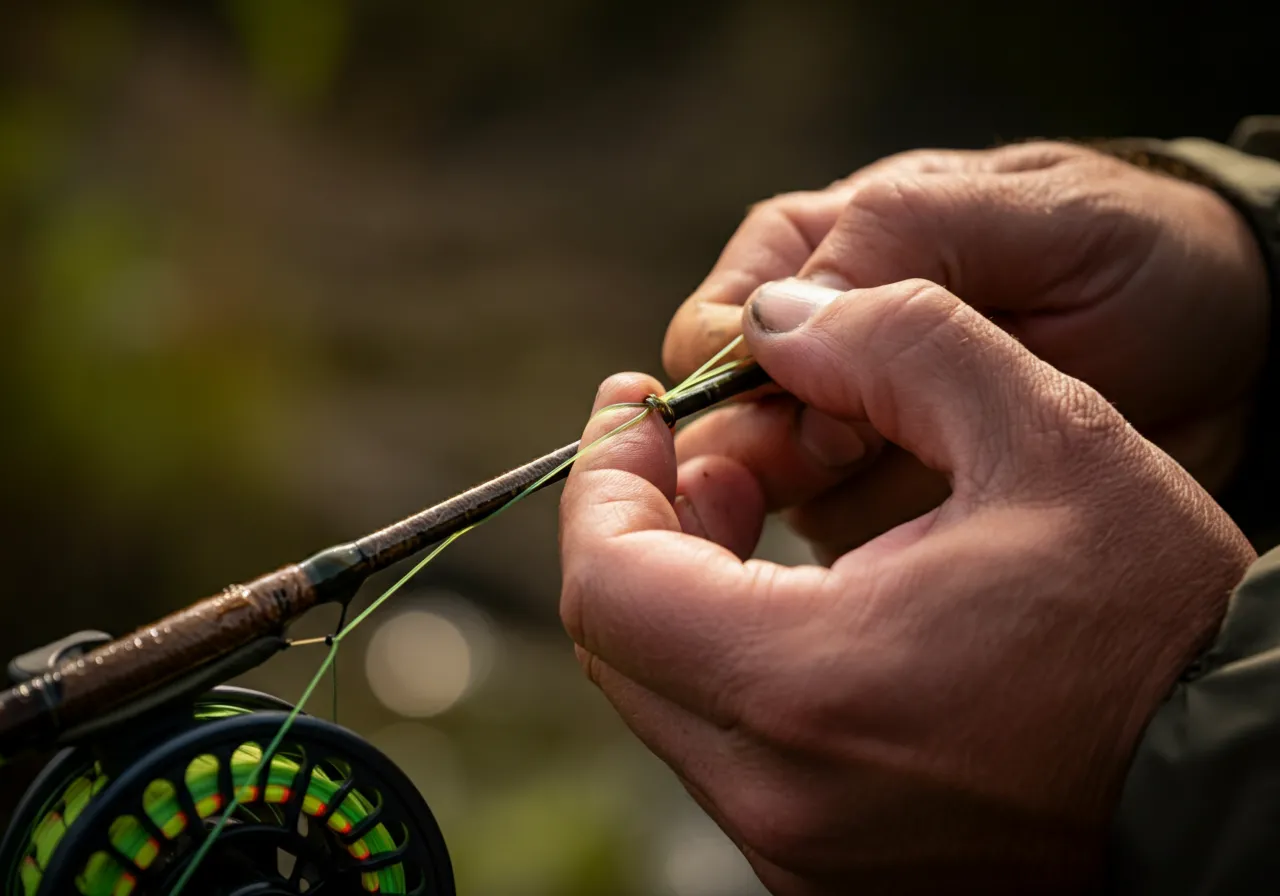
The Fix: Hold the rod like you’re shaking someone’s hand—firm but not crushing. Your thumb should be on top for control. The power comes from your forearm, with a slight wrist break at the end of the stroke. Practice with your elbow tucked against your side; this forces you to use your forearm and wrist, not your whole arm.
2. No Stop on the Backcast
The Mistake: The classic “windshield wiper” cast. You sweep the rod back and immediately sweep it forward in a continuous, rounded motion. This never allows the line to straighten behind you, resulting in a tailing loop or a collapsed cast.
The Fix: The stop is everything. On your backcast, accelerate smoothly to a firm stop, as if you’re pointing the rod tip at a spot behind you. Wait. Feel the line tug as it straightens. *Then* initiate your forward cast. This pause is non-negotiable for forming a proper loop.
3. Trying to Throw Line With Force
The Mistake: Putting your body into it like you’re heaving a baseball. This overpowers the rod, causes extreme tailing loops (where the fly line crosses itself, often snapping off the fly), and spooks every fish in the pool.
The Fix: Use less power. Focus on a smooth acceleration to a crisp stop. Let the rod do the work. A good drill is to practice casting with just your wrist and forearm, keeping your upper arm still. You’ll be shocked at how little effort is needed to throw 40 feet of line.
4. Creeping Forward
The Mistake: After stopping on the backcast, you let the rod drift slowly forward before starting the power stroke. This removes all the tension and “load” from the rod, killing your power and creating a wide, inefficient loop.
The Fix: After your stop, the rod should remain still until you begin the forward stroke. Imagine there’s a wall behind you; stop the rod, then start the forward cast from that exact stopped position. This maintains the rod’s load.
5. Poor Tracking (The Crooked Cast)
The Mistake: Your rod tip doesn’t travel in a straight line. On the backcast, it goes out to the side, and on the forward cast, it comes from a different angle. This puts curves and waves in your line, destroying accuracy.
The Fix: Practice your stroke alongside a straight line on the ground or a seam in your carpet. Your rod tip should travel directly over that line on both the backcast and forward cast. This ensures your energy is driving the line straight to your target.
Gear Setup: Matching Your Tool to the Task
Using a heavy bass bug rod for delicate trout presentations is like using a sledgehammer to hang a picture. Your gear must match your target. Here’s a quick breakdown.
| Scenario (US Waters) | Recommended Rod Weight | Line Type | Leader Tippet Size |
|---|---|---|---|
| Small Stream Trout (Dry Flies) | 3-4 Weight | Weight Forward (WF) Floating | 5X – 7X (4-6 lb test) |
| Large River Trout/Bass (Streamers, Nymphs) | 5-6 Weight | WF Floating or Sink Tip | 0X – 4X (8-15 lb test) |
| Bass, Pike, Light Saltwater | 7-8 Weight | WF Floating or Intermediate Sink | 10-20 lb Fluorocarbon |
| Saltwater (Redfish, Stripers, Bonefish) | 8-10 Weight | WF Saltwater Taper | 12-20 lb Fluorocarbon |
Pros and Cons of Focusing on Casting Mechanics
Pros: Drastically improved accuracy and distance with less effort. Fewer tangles and lost flies. Ability to present a fly delicately or punch it into the wind. Less fatigue, meaning you fish effectively all day. Builds a foundation for advanced casts (roll casts, double hauls).
Cons: Requires focused, mindful practice (it’s not just fishing). Can feel frustrating initially as you break old habits. You might catch fewer fish for an outing or two while you retrain your muscle memory.
Fly Casting FAQ
Q: What’s the single best drill to improve my casting?
A: The “pickup and laydown” drill. Cast 30 feet of line straight out on the water. Practice picking it up and laying it back down in the same spot with a single backcast and forward cast. This ingrains timing, loop control, and the pause.
Q: How long does it take to correct these bad habits?
A: With 15 minutes of focused practice in the yard 2-3 times a week, you’ll see major improvement in a month. Consistency is key.
Q: Do I need an expensive rod to cast well?
A> No. A well-designed mid-priced rod from a reputable brand will serve you far better than a high-end rod if your fundamentals are flawed. Master the stroke first, then upgrade.
Ready to put these fixes into action on the water? Browse our other guides on reading water and fly selection to complete your skillset.
The Tight Line Summary
Great fly casting isn’t about strength; it’s about timing and technique. Stop gripping too tight, master the acceleration and stop, incorporate a pause, use less force, and keep your rod tip traveling in a straight line. Fix these five mistakes, and you’ll stop fighting your gear and start fishing effectively. Now get out there and practice—the fish are waiting.