Setting the Hook Properly

You feel that unmistakable thump on your line. Your heart leaps. You rear back with all your might, expecting a heavy pull… only to reel in nothing but slack line and disappointment. Sound familiar? More trophy fish are lost in that critical second of the hookset than at any other moment. It’s not about brute strength; it’s about precision, timing, and understanding the physics between you and the fish. Let’s fix that.
The Angler’s Disclaimer: Safety, Licenses, and Ethics
Before we talk technique, let’s cover the non-negotiables. Always check local weather and water conditions before heading out; a sudden storm can turn a great day dangerous in minutes. Wear your life jacket (PFD)—it’s the most important piece of gear you own. You must have a valid fishing license for the state you’re in. Regulations on seasons, size, and bag limits exist to conserve our fisheries. Finally, practice ethical angling: handle fish with wet hands, use appropriate tackle to land them quickly, and revive released fish fully. It’s our duty.
The Science of the Strike: It’s a Conversation, Not a Shout
Think of your fishing line as a telephone wire. When a fish bites, it sends a signal down that wire. Your job is to listen and respond correctly. A bass sucking in a soft plastic sends a different signal than a walleye pecking a jig or a redfish crushing a crab. Setting the hook is your clear “answer” to that signal, closing the deal. Yank too hard or too soon, and you rip the phone off the wall. Hesitate or pull too softly, and the fish spits the bait and hangs up on you. The key is matching your response to the initial call.
The Core Technique: The Three Pillars of a Perfect Hookset
Forget the Hollywood hookset. A proper drive of the hook is a controlled, purposeful motion built on three pillars.
1. Rod Position & Line Management
Keep your rod tip low, between 10 and 2 o’clock, with a slight bend. This keeps a direct line to your bait and eliminates slack. Your reel should be in gear, and your line should be taught but not tight. Any slack is a broken telephone wire—the signal (the bite) won’t get through, and your response (the hookset) will be useless.
2. The Critical Pause: “Loading the Spring”
This is where most anglers fail. When you feel the bite, do not immediately jerk. Pause for a one-count. This allows the fish to fully take the bait into its mouth, moving the hook point into position near the lip or corner of the jaw. During this pause, smoothly but quickly reel down any slack until you feel resistance. You are “loading the spring” of your rod.
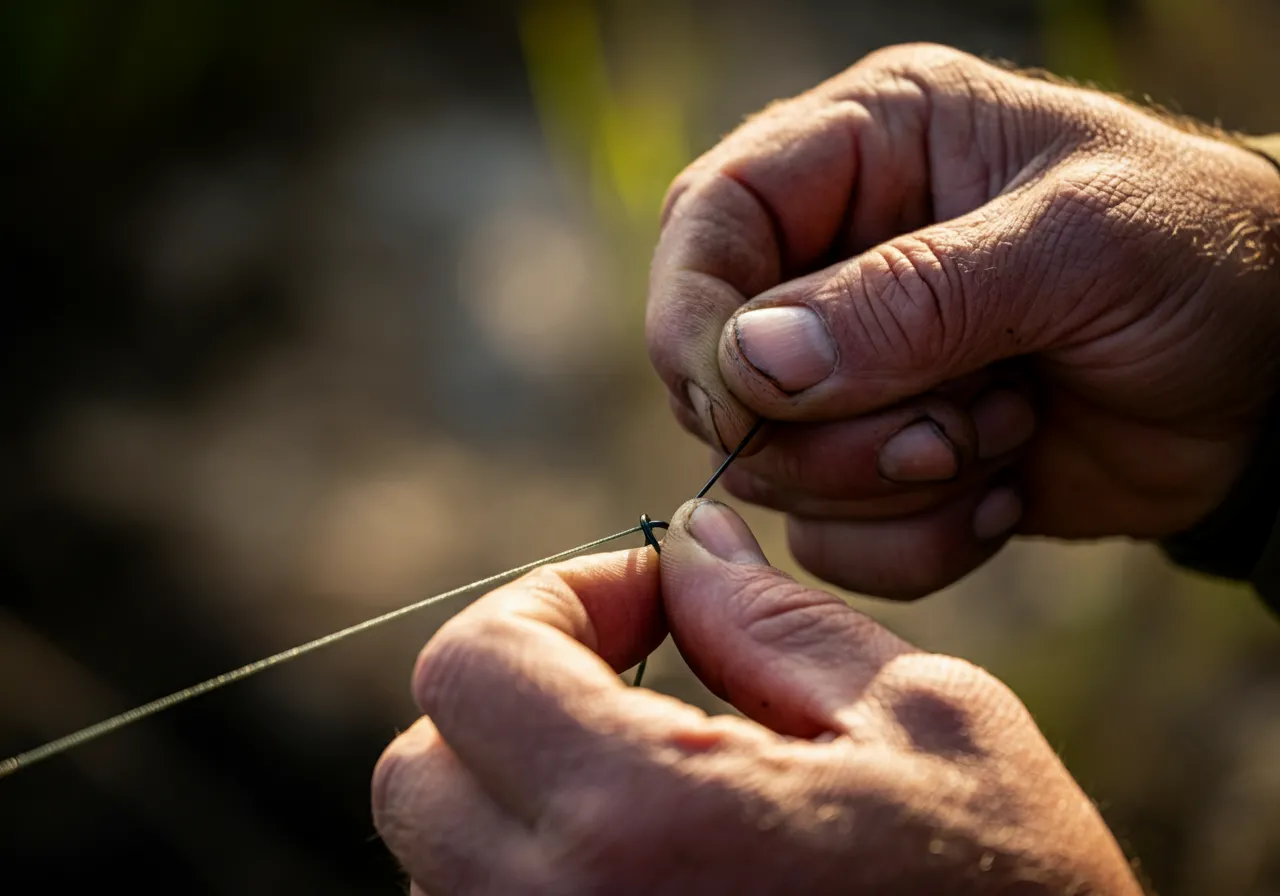
3. The Execution: Power vs. Sweep
Now, execute the hookset by driving the rod upward and backward in one sharp, accelerating motion. The power needed varies drastically:
- For Single-Hook Lures (Worm Hooks, Jigs): Use a powerful, sweeping hookset. Put your back into it to drive the thick hook point through plastic or into the fish’s jaw.
- For Treble-Hook Lures (Crankbaits, Topwater): Use a firm, sweeping motion, not a violent jerk. The fish often hooks itself; you’re just ensuring penetration. A giant swing will often rip the lure right out.
- For Circle Hooks (Live Bait, Catfish): Do not set the hook. Simply start reeling steadily. The hook’s design will slide and catch in the corner of the mouth on its own.
Gear Matters: Matching Your Tackle to the Task
You can have perfect form, but with the wrong gear, you’ll still lose fish. Your rod’s power and action are crucial. A stiff, heavy-power rod transmits force instantly for driving thick hooks. A moderate-action rod has more flex, perfect for treble hooks to prevent tearing free. Your line choice is equally vital.
| Gear Component | Solid Budget Setup | Pro-Performance Setup |
|---|---|---|
| Rod (Bass Example) | 7′ Medium-Heavy, Fast Action Composite Rod. Good sensitivity and backbone for the price. | 7’3″ Heavy Power, Extra-Fast Action High-Modulus Graphite Rod. Maximizes sensitivity and hook-setting power transfer. |
| Line (10-15lb Test) | Monofilament. Forgiving stretch helps with treble hooks but can cushion hooksets on single hooks. | Braid to Fluorocarbon Leader. Zero-stretch braid gives instant hookset; fluorocarbon leader is invisible and abrasion-resistant. |
| Hook Sharpness | Factory-sharpened hooks. Test by dragging the point across your fingernail—if it digs in, it’s good. | Hand-sharpened with a diamond file. A pro touches up hooks before every trip for effortless penetration. |
Pros, Cons, and My Hard-Earned Advice
Pros of Mastering the Hookset: You will land more fish, period. You’ll gain immense confidence, turning those nerve-wracking strikes into sure things. You’ll also lose fewer lures, as a solid hookset keeps the fish from diving into cover.
Cons & Pitfalls: It requires patience and discipline to fight the instinct to jerk immediately. You might miss a few fish early as you learn the timing. Also, heavy hooksets can be tough on your gear and your shoulders if you’re not using proper technique.
My Two Cents: I learned this lesson the hard way on the California Delta. After losing three big bass in a row on a jig, an old-timer watched me and said, “Son, you’re scaring ’em to death. Let ’em eat it.” That next bite, I forced myself to reel down, pause, and then sweep. The rod loaded perfectly, and I landed my first 5-pounder of the day. Timing is everything.
Your Hooksetting Questions, Answered
Q: How do I know if it’s a bite or just my lure bumping a rock?
A: A rock is a single “tap.” A fish bite is often a distinct “thump” or consistent pressure. With experience, you’ll feel the difference. When in doubt, set the hook! It’s better to check than to wonder.
Q: Does hook size affect how I should set it?
A: Absolutely. A large 5/0 hook requires more force to penetrate than a small #6 hook. Match your hookset power to the hook’s size and wire thickness.
Q: What’s the biggest mistake beginners make?
A> Two things: 1) Setting the hook on every little line tick (often just the sinker hitting bottom), and 2) Using a massive, two-handed baseball swing with a crankbait, which almost always ends in failure.
Mastering this fundamental skill will transform your fishing success. Want to put this knowledge into practice? Explore our other technique guides to learn what lures to throw and when. For the most current fishing regulations in your area, always consult your state’s official agency, like the U.S. Fish & Wildlife Service, which provides links to all state agencies.
In a Nutshell
Stop losing fish by mastering the hookset: eliminate slack, pause to let the fish take the bait, then match your rod sweep to the hook type (power for singles, firm for trebles, just reel for circles). Use sharp hooks and gear with appropriate backbone. It’s a skill of finesse, not just force. Now get out there, feel the bite, and drive it home.