Speckled Trout Lure Guide

You’re on the water at first light, the tide is moving just right, and you see swirls and pops all around you. You cast right into the commotion with your favorite lure… and get nothing. Not a follow, not a tap. It’s one of the most frustrating feelings for an angler targeting speckled trout. The problem isn’t that the fish aren’t there—it’s that your lure isn’t speaking their language. Choosing the right artificial isn’t about having the shiniest or most expensive one; it’s about understanding what the trout are eating right now and presenting it convincingly.
Disclaimer: This guide is based on my two decades of guiding for specks from the back bays of Texas to the grass flats of the Carolinas. Always check your local regulations. Some links may be affiliate links, but I only recommend gear I’ve personally tested and trust.
The Science of the Speck: It’s a Menu, Not a Mystery
Think of a speckled trout’s world like a busy diner. The “specials of the day” change with the tide, the season, and the water clarity. Your job is to walk into that diner and serve exactly what they’re craving. Speckled trout are opportunistic ambush predators. Their diet primarily consists of shrimp, small baitfish like mullet and menhaden (pogies), and small crabs. The key to consistent success is matching the hatch—mimicking the size, color, and action of the prevalent forage.
The analogy I use with my clients is reading a road map. The water temperature tells you what city you’re in (cold = deep holes/creeks, warm = shallow flats). The tide and current are the highways the bait and trout use. Your lure choice is the specific vehicle you drive on those highways. Pick the wrong one, and you’ll never arrive at your destination: the fish box.
Safety, Legal & Ethical Checkpoint
Before we talk lures, let’s cover the non-negotiables. On the water, your PFD (life jacket) is your most important piece of gear—wear it. Always check the marine forecast; a sudden squall on open water is no joke. Legally, you must possess a valid saltwater fishing license for the state you are in. Regulations on size and bag limits for speckled trout (often called “spotted seatrout”) vary widely by state and can change frequently. It is your responsibility to know them. For the most current, official regulations, always refer to your state’s wildlife agency. As a starting point, you can review general information via the NOAA Fisheries spotted seatrout overview.
Ethically, handle these beautiful fish with care. Use wet hands or a rubberized net to preserve their slime coat. If practicing catch and release, avoid dragging them on dry surfaces, keep them in the water as much as possible, and use non-stainless, crushable barbless hooks or circle hooks for easier, less damaging removal.
The Speckled Trout Lure Arsenal: A Guide to the Go-To’s
You don’t need a giant tackle box, just the right tools for the job. Here’s my breakdown of the essential lure categories for limit numbers of seatrout.
1. The Soft Plastic Swimbait (The Workhorse)
This is your bread and butter. A paddle-tail or curly-tail grub on a jig head mimics a swimming baitfish perfectly. It’s versatile, cheap, and deadly effective.
- When to Use: Year-round, in all water clarities. Best over grass beds, along drop-offs, and under birds.
- Retrieve: A simple, steady reel is often all you need. Add occasional pops of the rod tip or let it fall on a slack line (the “death drop” triggers many strikes).
- Key Specs: 3-5 inch bodies. 1/8 oz to 1/4 oz jig heads. Use lighter heads in shallower water.
2. The Topwater Plug (The Heart-Stopper)
Nothing beats the explosive surface strike of a speckled trout. “Walking the dog” with a topwater at dawn or dusk is peak fishing.
- When to Use: Low-light conditions, over shallow flats (1-3 ft), or around oyster bars. Calm water is ideal.
- Retrieve: The classic “walk-the-dog” side-to-side action. Twitch your rod tip down while reeling slowly to maintain slack.
- Key Specs: Stickbaits like the MirrOlure Top Dog or Heddon Super Spook Jr. in bone/silver or clear colors.
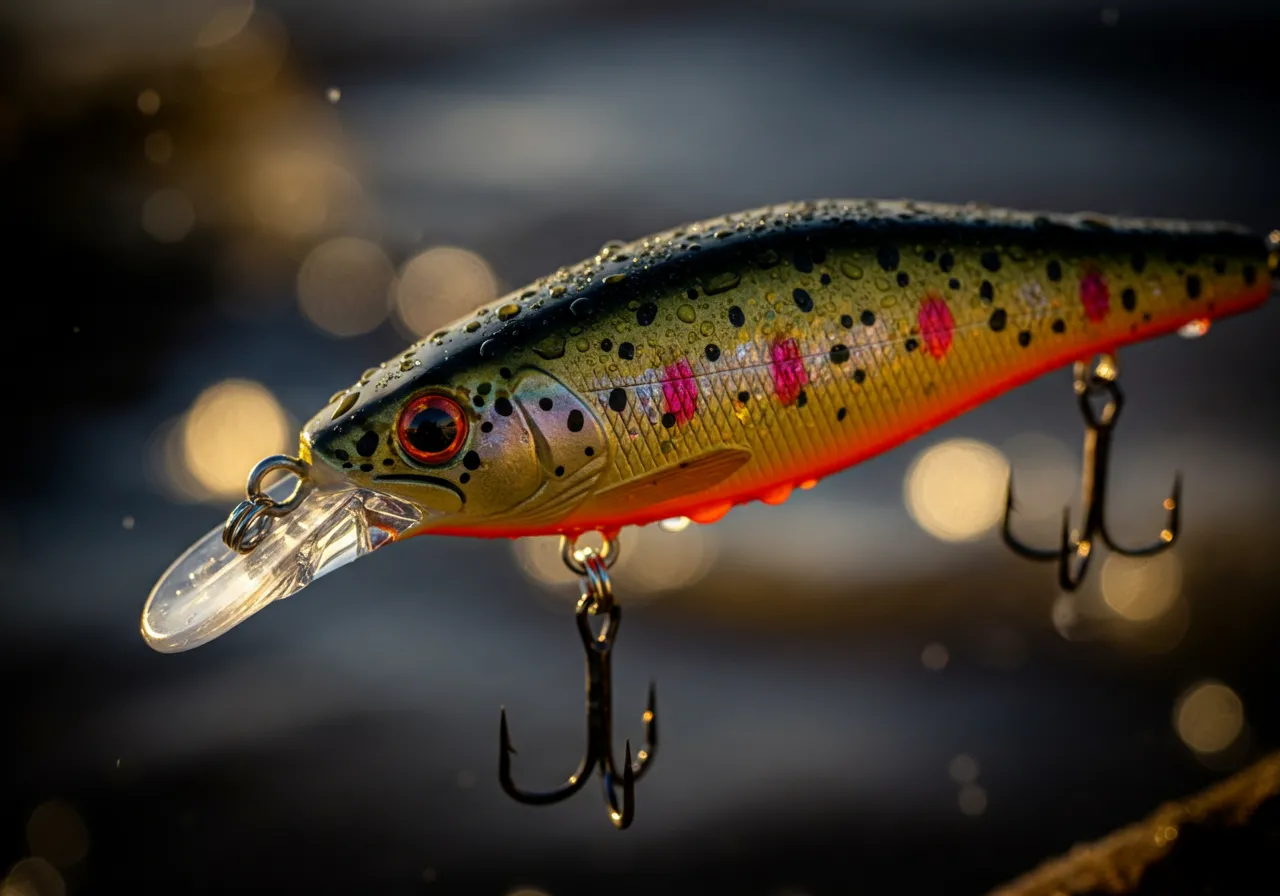
3. The Suspending Twitchbait (The Subtle Seducer)
When trout are finicky or in clear, cold water, a suspending twitchbait shines. It imitates a wounded or hesitant baitfish.
- When to Use: Clear water, colder months, or when fish are following but not committing. Great around docks and structure.
- Retrieve: Cast, let it sit, then twitch-twitch-pause. The long pause is critical. The lure hangs neutrally buoyant, tempting an easy meal.
- Key Specs: MirrOlure 52M series or Rapala X-Rap. Glass minnow or chartreuse patterns.
4. The Shrimp Imitation (The Specialist)
When the trout are keyed in on crustaceans, a soft plastic shrimp under a popping cork is a limit-filling combo.
- When to Use: Inshore marshes, over muddy or grassy bottoms, on a moving tide.
- Retrieve: The cork does the work. A sharp “pop” creates a commotion that mimics feeding fish. Let it sit, then pop again.
- Key Specs: DOA Shrimp, Gulp! Shrimp, or Vudu Shrimp in natural or new penny colors. Pair with a 2-4 ft leader.
Gear Comparison: Getting Started vs. Dialed In
| Gear Component | Budget-Friendly Starter Kit | Pro-Guide Refined Setup |
|---|---|---|
| Rod | 7′ Medium Power, Fast Action Spinning Rod (Great all-around) | 7’2″ Medium-Light Power, Extra Fast Action (Better sensitivity for light bites) |
| Reel | 2500-3000 size Spinning Reel with a smooth drag | High-speed (6.2:1+) Spinning Reel with a sealed, carbon-fiber drag |
| Line | 10-15 lb Braided Mainline with a 12-20 lb Fluorocarbon Leader | 10 lb High-Visibility Braid to a 12-15 lb Fluorocarbon Leader (Seaguar Gold Label) |
| Lure Budget | Focus on 2 packs of soft plastics (paddle-tail, shrimp), 1 topwater, 1 twitchbait. | Carry multiple colors/sizes in each category to match daily conditions exactly. |
Pros & Cons of an Artificial-Only Approach
Pros:
- Efficiency: No stopping for live bait. More time fishing.
- Durability: Lures last for dozens of fish.
- Selectivity: Can often target larger, more predatory trout.
- Cleanliness: No bait wells, no smelly hands.
Cons:
- Learning Curve: Requires reading conditions and mastering retrieves.
- Slow Days: When trout are ultra-focused on one specific forage, live bait can be harder to beat.
- Initial Cost: A well-started tackle box requires an upfront investment.
Speckled Trout Lure FAQ
Q: What’s the single best all-around speckled trout lure?
A: If I had to pick one, it’s a 1/4 oz jig head with a 4-inch paddle-tail soft plastic in “morning glory” or “chartreuse pepper.” It can be worked at any depth and mimics their primary forage.
Q: What color lure should I use for speckled trout?
A> Let water clarity guide you. Clear water: Natural shades (silver, glass minnow, bone). Stained/Murky water: Bold, contrasting colors (chartreuse, pink, black/red) to create a better silhouette.
Q: Do I need a boat to catch specks with artificials?
A> Not at all. Many of my biggest trout limits have come from wading shallow flats or fishing from kayaks and piers. Focus on areas with moving water and structure you can access.
Mastering these lures and understanding when to use them will transform your speckled trout fishing from hit-or-miss to consistently productive. Now, get out there, read the water’s “menu,” and serve them what they want. Tight lines!
Want to dive deeper into reading tidal currents for specks? Check out our next guide here.
Summary
Catching limit numbers of speckled trout consistently relies on matching your artificial lure to the prevalent forage (shrimp or baitfish) based on water conditions, tide, and season. A core arsenal of soft plastic swimbaits, topwater plugs, suspending twitchbaits, and shrimp imitations will cover 95% of situations. Always prioritize safety, know your local regulations, and handle these iconic gamefish with respect.