Top Spinning Reels Under $100

You’re standing on the bank, watching a bass dimple the surface. You make the perfect cast, your lure lands with a whisper… and then you feel it. A subtle tap, then a heavy pull. You set the hook, the rod loads up, and then—zzzzzzzt—a grinding, uneven sound from your reel. The drag stutters, the fish gets a moment of slack, and it’s gone. Sound familiar? That feeling of being let down by your gear, especially when it costs a fortune, is a frustration I know all too well. The good news? You don’t need to spend a month’s tackle budget to get a reliable, smooth-performing spinning reel. Today, I’m cutting through the marketing hype to show you the best performing spinning reels under $100 that I’d trust on my own rod.
The Disclaimer: Fish Legally, Fish Safely
Before we talk gear, let’s talk responsibility. No reel is worth using if you’re not on the right side of the law and safety. In the US, you must have a valid fishing license for the state you’re in. These funds are the lifeblood of conservation, stocking programs, and habitat restoration. Regulations on size and bag limits are not suggestions; they are science-based rules to ensure healthy fisheries for our kids. Always check the specific regulations for your body of water. You can start by visiting your state’s wildlife agency, like the U.S. Fish & Wildlife Service, for links to state resources.
On the water, your PFD (life jacket) is your most important piece of equipment. Check the weather before you head out, and if skies turn threatening, don’t hesitate to head in. Finally, practice ethical angling. Handle fish with wet hands, use proper catch-and-release techniques when applicable, and always pack out more trash than you brought in.
The “Transmission” of Your Fishing Rod: A Reel Analogy
Think of your spinning reel not just as a line holder, but as the transmission of your entire fishing setup. A cheap, gritty reel is like a transmission that slips and grinds—it wastes your energy, fails under pressure, and ultimately leaves you stranded. A good reel, however, is a smooth, precision gearbox. It efficiently transfers the power from your hookset to the fish, gives you fine control during the fight with a reliable drag, and retrieves line smoothly so your lure action isn’t compromised. Under $100, you’re looking for a transmission that’s reliable, durable, and smooth enough for 95% of the driving you’ll do.
The Core Guide: What to Look For in a Budget Workhorse
Forget flashy colors and exaggerated gear ratios. At this price point, focus on these core pillars of performance:
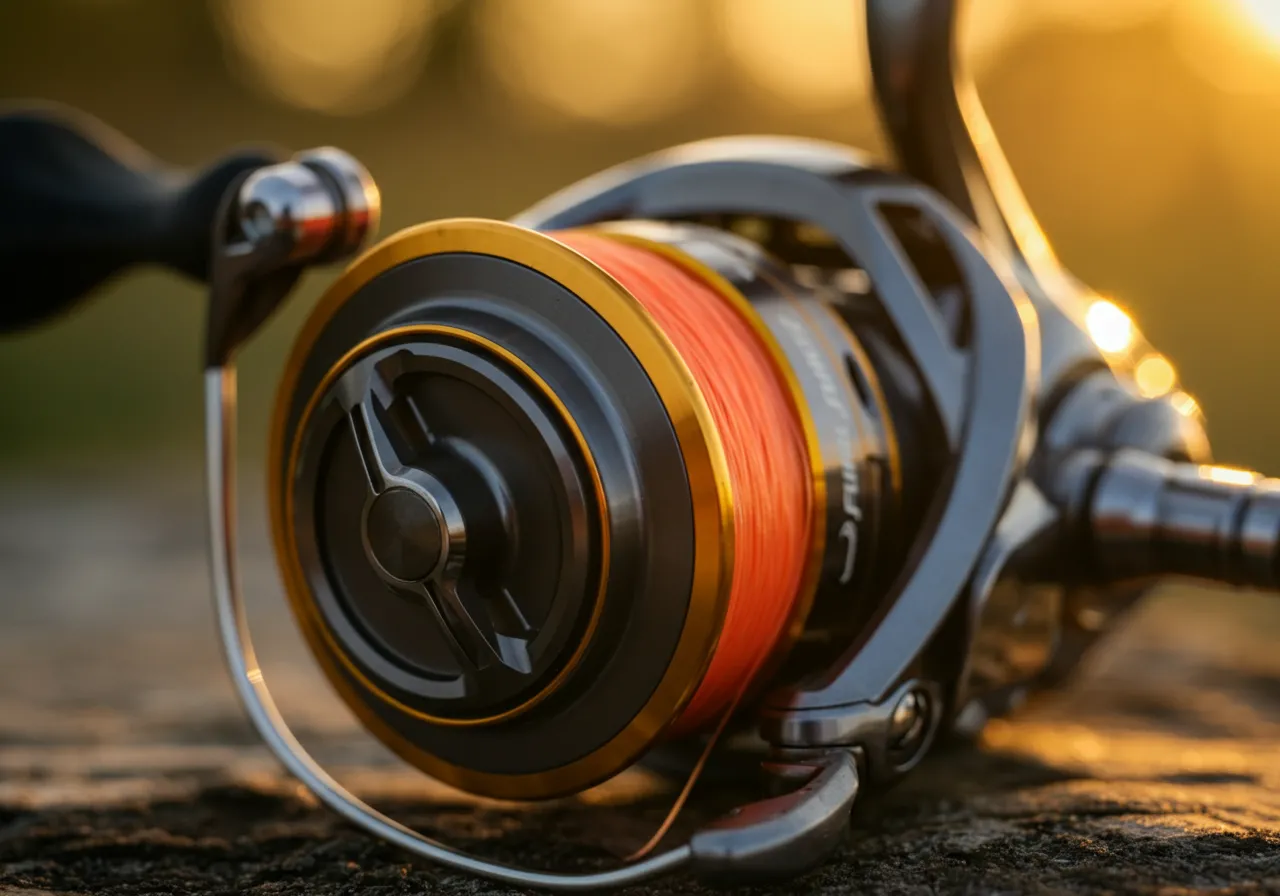
- The Drag System: This is non-negotiable. You need a multi-disc, carbon fiber or felt drag system. It must be smooth, not jerky, to absorb the headshakes of a good fish without breaking the line. Test it by pulling line off the spool; it should feel like butter, not sandpaper.
- Gearing & Bearings: More ball bearings generally mean smoother rotation, but quality matters more than quantity. Look for sealed or corrosion-resistant bearings. The reel should feel solid when you turn the handle, with no lateral “play” or wobble.
- Body & Frame: A graphite composite body is light and corrosion-resistant, but for bigger fish (saltwater or heavy freshwater), a reinforced aluminum or composite frame adds crucial rigidity to prevent flexing.
- Rotor & Bail: A rigid rotor that doesn’t flex under load is key. An anti-reverse switch is a pro feature that’s becoming common, allowing you to back-reel if you choose.
Step-by-Step: Setting Up Your New Spinning Reel for Success
- Spooling Line: Have a friend hold the new line spool on a pencil through the center. Ensure the line comes off the side of the spool the same way it goes onto your reel (usually label-side up). Fill the spool to within 1/8-inch of the rim—no more, no less.
- Drag Setting: Before your first cast, set your drag. A good rule of thumb is 25-30% of your line’s breaking strength. You should be able to pull line off with a steady, firm pull. Re-adjust for different lures and fish sizes.
- Bail Maintenance: After every trip, rinse your reel with fresh water. Every few trips, put a single drop of reel oil on the bail roller. This little piece is a major point of friction and wear.
Top Contenders: Reels That Earn Their Keep
Based on years of guiding and personal use, here are categories where your money is well-spent. These are reels I’ve seen stand up to redfish, bass, walleye, and panfish season after season.
- The All-Around Freshwater Champion: The **Shimano Sienna FG**. It’s been a staple for a reason. Its waterproof drag (Water Guard) is fantastic for the price, and it’s incredibly simple and reliable. Perfect for bass, trout, and walleye anglers.
- The Saltwater-Ready Performer: The **Penn Pursuit III**. Built on a proven platform with full metal body construction and Penn’s legendary HT-100 drag, it laughs off salt spray and can handle schoolie stripers, snapper, and inshore species with ease.
- The Feature-Packed Value: The **Daiwa Regal LT**. The “LT” stands for Light & Tough. It boasts an aluminum spool, a super-lightweight body, and an incredibly smooth drag for its class. It feels like a reel that costs twice as much.
- The Smooth Operator: The **Pflueger President**. A longtime favorite, known for its buttery-smooth retrieve and durable 10-ball bearing system. It’s a classic workhorse that’s perfect for the angler who wants proven, no-fuss performance.
Budget vs. Pro: Where Your Money Really Goes
| Feature | Under $100 Reel (The Daily Driver) | $250+ Reel (The Sports Car) |
|---|---|---|
| Body Material | Graphite Composite (light, corrosion-resistant) | Machined Aluminum (maximum rigidity, premium feel) |
| Drag Material | Carbon Fiber or Felt (very good, smooth performance) | Carbonite, Wasabi, or Cork (lighter touch, extreme heat dissipation) |
| Bearings | Stainless Steel or Sealed (good corrosion resistance) | Stainless Shielded or Corrosion-Resistant (smoother, longer-lasting) |
| Gearing | Brass or Composite Gears (durable for the price) | Cold-Forged Brass or Aluminum (quieter, more efficient, longer life) |
| Best For | 95% of angling situations. The smart choice for most. | Tournament anglers, extreme saltwater, or those who demand the absolute finest touch. |
The Honest Pros & Cons
Pros: You get incredible value and performance that far exceeds what was available 20 years ago. These reels are lightweight, reliable, and will catch thousands of fish if maintained. They free up your budget for better line, lures, or even a nicer rod.
Cons: You may sacrifice some long-term durability in extreme saltwater environments. The gear systems might be a bit noisier under heavy load, and the tolerances (the “fit and finish”) won’t be as laser-perfect as a $500 reel. They are tools, not jewels.
Your Spinning Reel Questions, Answered
Q: What size spinning reel should I get for bass fishing?
A: For all-around bass fishing (from finesse to spinnerbaits), a 2500 or 3000-size reel is the sweet spot. Pair it with 10-15 lb braid and a 6.5-7.5 ft medium-power rod.
Q: Can I really use a sub-$100 reel in saltwater?
A> Absolutely, but you must be diligent. Rinse it thoroughly with fresh water after every single use, even if you didn’t submerge it. Reels like the Penn Pursuit are built specifically for this abuse.
Q: Is a higher gear ratio (like 6.2:1) always better?
A> Not at all. A higher ratio (e.g., 6.2:1) retrieves line faster, great for burning spinnerbaits or working topwater. A lower ratio (5.2:1) gives you more cranking power, which is ideal for deep cranking or fighting big fish. Choose based on your technique.
Ready to put more fish in the boat without emptying your wallet? The right reel is out there. Now that you’re armed with the knowledge of what truly matters, you can shop with confidence. Check out our other guides on pairing these reels with the best budget rods and the one fishing knot you need to know.
Bottom Line
You don’t need to spend a fortune to get a dependable, smooth-performing spinning reel. Focus on a quality drag system, solid construction, and trusted brands like Shimano, Penn, Daiwa, and Pflueger in the under-$100 range. Maintain it well, and it will be a partner on the water for years to come.