Walleye Ice Fishing Secrets

You’re out there. The sun set hours ago, the cold is biting through your boots, and you’re staring into a black hole in the ice, wondering if anything is down there. You’ve heard the stories of the giant, glowing-eyed walleye caught after dark, but your own tip-ups stay stubbornly still. The secret isn’t just being on the ice at night; it’s understanding the walleye’s nocturnal shift and speaking their language in the dark.
Disclaimer: This guide is based on 20+ years of on-ice experience. Always check your local state fishing regulations for seasons, size/creel limits, and specific rules for night fishing or lighting. Your safety is your responsibility. I am not affiliated with any gear brands mentioned unless explicitly stated.
The Night Shift: Understanding the Walleye’s After-Dark Behavior
Think of a walleye’s eye like a built-in pair of night-vision goggles. Their light-gathering ability is legendary, giving them a massive advantage over prey in low light. During the day, especially on clear lakes, they often slide into deeper, darker haunts or tight to structure to avoid the light. But come nightfall, it’s their time to patrol. They move up onto flats, adjacent to breaks, and into shallower basins to feed actively. You’re not just fishing *at* night; you’re meeting them in their prime hunting office.
Safety & Legality: The Non-Negotiables
Night ice fishing amplifies all risks. This isn’t the time for shortcuts.
- Ice Safety is Paramount: Daytime ice thickness means nothing at night if springs or currents are present. Always check with local bait shops. Never go alone. Tell someone your plan and return time.
- Light Your Way, But Be Smart: A powerful headlamp is essential, but use red or green light settings when looking down the hole to preserve your night vision and avoid spooking fish. Always have spare batteries.
- Combat the Cold: Hypothermia is a real threat. Wear layers, insulated waterproof boots, and have a reliable shelter and heater. A personal flotation device (PFD) like a float suit or ice picks around your neck are critical safety gear, not optional.
- The Legalities: A valid fishing license for the state you are in is mandatory. Regulations are your roadmap to conservation. Know the walleye limits for the specific water you’re on. For the most authoritative source, always consult your state’s wildlife agency. For example, you can review general best practices and find links to state agencies through the NOAA Fisheries website.
The Nighttime Arsenal: Techniques and Gear for Success
Your approach needs to shift with the sun. It’s less about finesse and more about presence and vibration.
Core Technique: The Aggressive Jigging Cadence
- Location: Target transitions. Focus on the first major breakline off a flat (e.g., from 12 feet to 18 feet), the edges of weed beds still green under the ice, or hard-bottom saddles between basins. Use your daytime scouting to mark these spots.
- Presentation: Start with a heavier jigging lure (1/2 to 3/4 oz) like a rattle spoon or a large glowing jig head. You want to call fish in from a distance. Drop it to bottom, then reel up 6-12 inches.
- The Cadence: This isn’t subtle. Use sharp, aggressive 12-18 inch lifts, letting the lure fall back on a semi-tight line. The “click” of the reel or rod tip hitting the ice can even mimic sound. Pause for 10-15 seconds between series of lifts. That pause is often when the strike comes.
- The Hookset: In the dark, you often “feel” a weight or simply stop feeling your lure. Don’t wait for a “tap.” Sweep the rod upward firmly the moment anything feels different.
Gear Guide: Seeing and Feeling in the Dark
- Rod & Reel: A medium-light to medium power, fast-action ice rod (28-32 inches) gives you sensitivity for bites and backbone for hooksets. Pair it with a smooth-drag spinning reel spooled with 6-10 lb braided line for zero stretch and superior feel.
- Line & Leader: Use a bright braid (yellow or green) so you can see subtle line movements. Tie an 18-24 inch fluorocarbon leader (8-10 lb test) via a small swivel for abrasion resistance and low visibility.
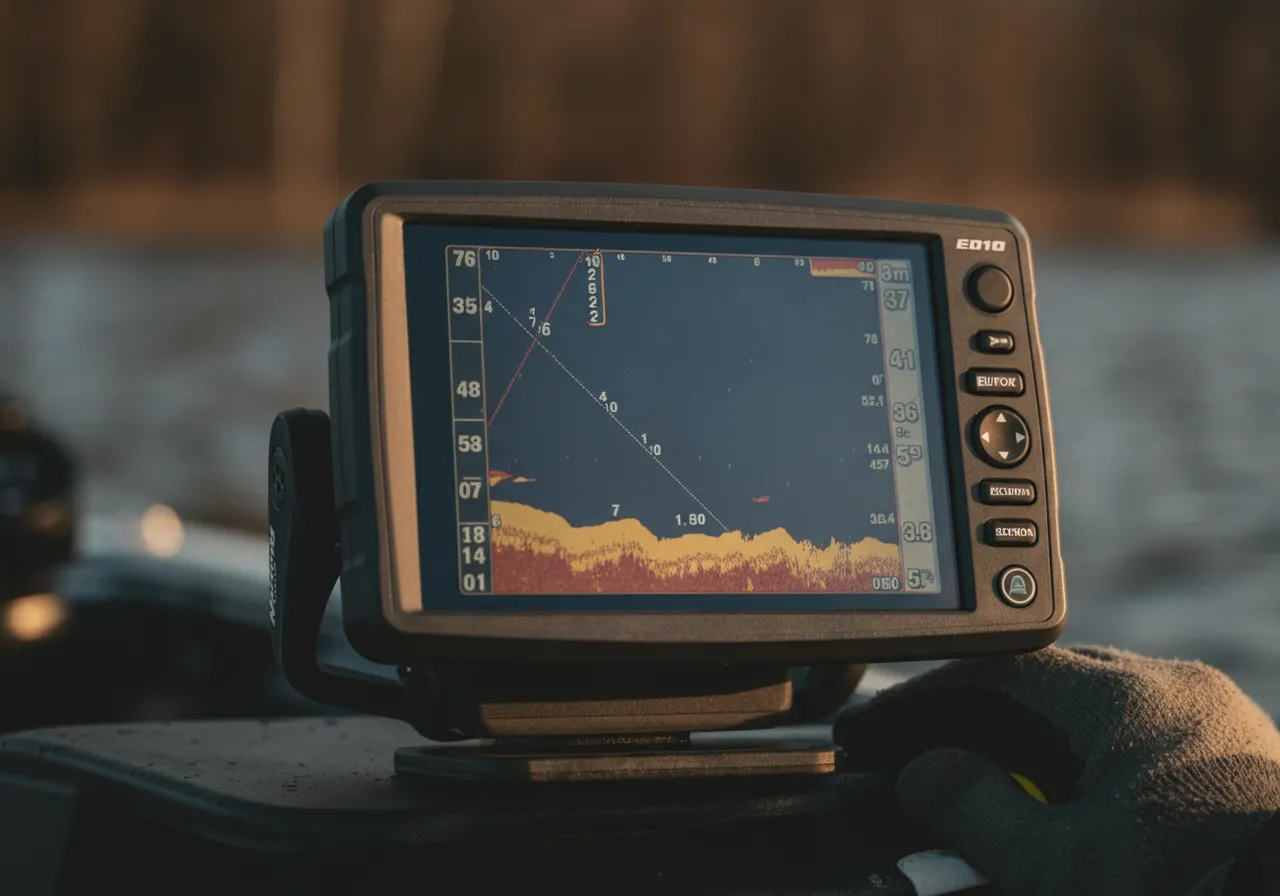
- Electronics: A flasher (like a Vexilar or Marcum) is your single most important tool. It shows your lure, the bottom, and any fish that enters your cone, turning a black hole into a video game. It’s non-negotiable for efficient night fishing.
- Lighting: A portable LED light you can submerge in the hole (a “glow light”) attracts plankton, which attracts baitfish, which attracts walleye. It’s a dinner bell.
Gear Comparison: Budget Setup vs. Pro Setup
| Category | Budget-Friendly Starter Kit | Pro-Guide Refined Setup |
|---|---|---|
| Rod/Reel Combo | Combo unit from Clam, Berkley, or 13 Fishing. Good for learning. | Separate, high-sensitivity rod (St. Croix, Tuned Up Custom) paired with a 1000-series reel (Shimano, Pflueger). |
| Line System | 6-8 lb Monofilament. Simple, cheap, handles cold. | 10 lb Hi-Vis Braid to an 8 lb Fluorocarbon leader. Max sensitivity & stealth. |
| Primary Lure | Glow-in-the-dark jig (1/4 oz) tipped with minnow head. | Custom-painted rattle spoon (1/2 oz) or blade bait, charged with UV light. |
| Fish Finder | Entry-level flasher (used market) or a careful watch of the line. | High-resolution flasher or live-scope sonar for unparalleled detail. |
| Light Attraction | Chemical light sticks dropped down the hole. | Rechargeable submersible LED glow light. |
Pros & Cons of Night Ice Fishing for Walleye
- Pros: Often less pressure on popular lakes. Targets larger, more active fish. Unique and thrilling experience. Can be incredibly productive.
- Cons: Significant safety concerns. Extreme cold. Requires additional gear (lights, extra batteries). Can be disorienting. Not ideal for young children.
From My Ice Hole: A Quick Story
I remember one brutally cold night on Lake of the Woods. My electronics had died, and I was fishing “blind” in 22 feet. Out of frustration, I started slamming my lure off the bottom, creating a huge racket. Within minutes, I had a 28-inch walleye. The noise didn’t scare them—it intrigued them. In the dark, sound is a beacon.
Night Walleye Ice Fishing FAQ
Q: What’s the best moon phase for night fishing walleye?
A: While you can catch them any night, many seasoned anglers find the days leading up to and during a full moon can be exceptional. The increased ambient light seems to spur even more activity.
Q: Do I need a shelter for night fishing?
A> It is highly, highly recommended. A flip-over shelter blocks wind, contains your light, and lets you use a heater safely. It turns a survival test into a comfortable fishing trip.
Q: How do I handle fish for release in the cold?
A> Be quick. Have pliers ready. Avoid touching their gills or eyes with dry hands. Lower them back into the hole immediately. If the hook is deep, cut the line as close as possible—it will dissolve faster than the fish struggling on the ice.
Night ice fishing for walleye is where ordinary trips become legends. It demands respect—for the fish, the elements, and the rules—but rewards you with solitude and heart-pounding strikes from ghosts in the deep. Now, go charge your glow lures and check those ice reports. Your new favorite fishing memory is waiting in the dark.
Ready to tackle other seasons? Explore our other guides on summer walleye tactics or selecting the perfect ice auger to complete your setup.