Loop Knots for Lure Action

You’ve made the perfect cast. Your lure lands softly just outside that sweet spot near the submerged timber. You start your retrieve, feeling confident. But something’s off. That expensive jerkbait isn’t wobbling with the erratic, wounded-fish action you saw on the package. It’s pulling through the water stiffly, like a toy on a string. You get a follow, but no commit. The fish turns away. Sound familiar? The problem might not be your lure, your rod, or your technique. It’s likely your knot.
Disclaimer: This guide is based on my two decades of professional angling experience. Always check your state’s specific fishing regulations and license requirements before heading out. Safety on the water is paramount—never fish severe weather without a life jacket (PFD). Practice ethical angling, including proper catch and release techniques to ensure our fisheries thrive for generations.
Why Your Knot is Killing Your Lure’s Vibe
Most anglers learn the improved clinch knot or the Palomar first. They’re strong, reliable, and they cinch down tight on the lure’s eye. And that’s exactly the problem. A cinched-down knot locks your lure into a fixed position, severely restricting its natural movement. Think of it like putting a dog on a short, tight leash versus a long, loose one. On the short leash, the dog can only move in a straight line behind you. On the long leash, it can run, sniff, and explore freely. Your lure needs that same freedom.
The Solution: Let It Swing with a Non-Slip Loop Knot
This is where a proper loop connection changes the game. By creating a small, secure loop in front of your lure, you give it the pivotal freedom to swim, wobble, dart, and pause with a lifelike fluidity that triggers more strikes. The increased action mimics a vulnerable, injured baitfish—the prime target for any predator. I primarily use two types: the Non-Slip Mono Loop (perfect for most applications) and the Rapala Knot (a classic for hard baits).
Safety & Legal Check: Before You Tie In
Before we get to the how-to, a quick but critical reminder. Your knot’s strength is irrelevant if you’re not fishing legally or safely. A valid fishing license is required in all 50 states. Regulations on species, size, and bag limits are set by state agencies to manage fish populations scientifically. I make it a habit to review the rules for the specific body of water I’m fishing each season. For the most authoritative source, always refer directly to your state’s wildlife agency. For example, anglers can find comprehensive regulations for Florida waters at the Florida Fish and Wildlife Conservation Commission website.
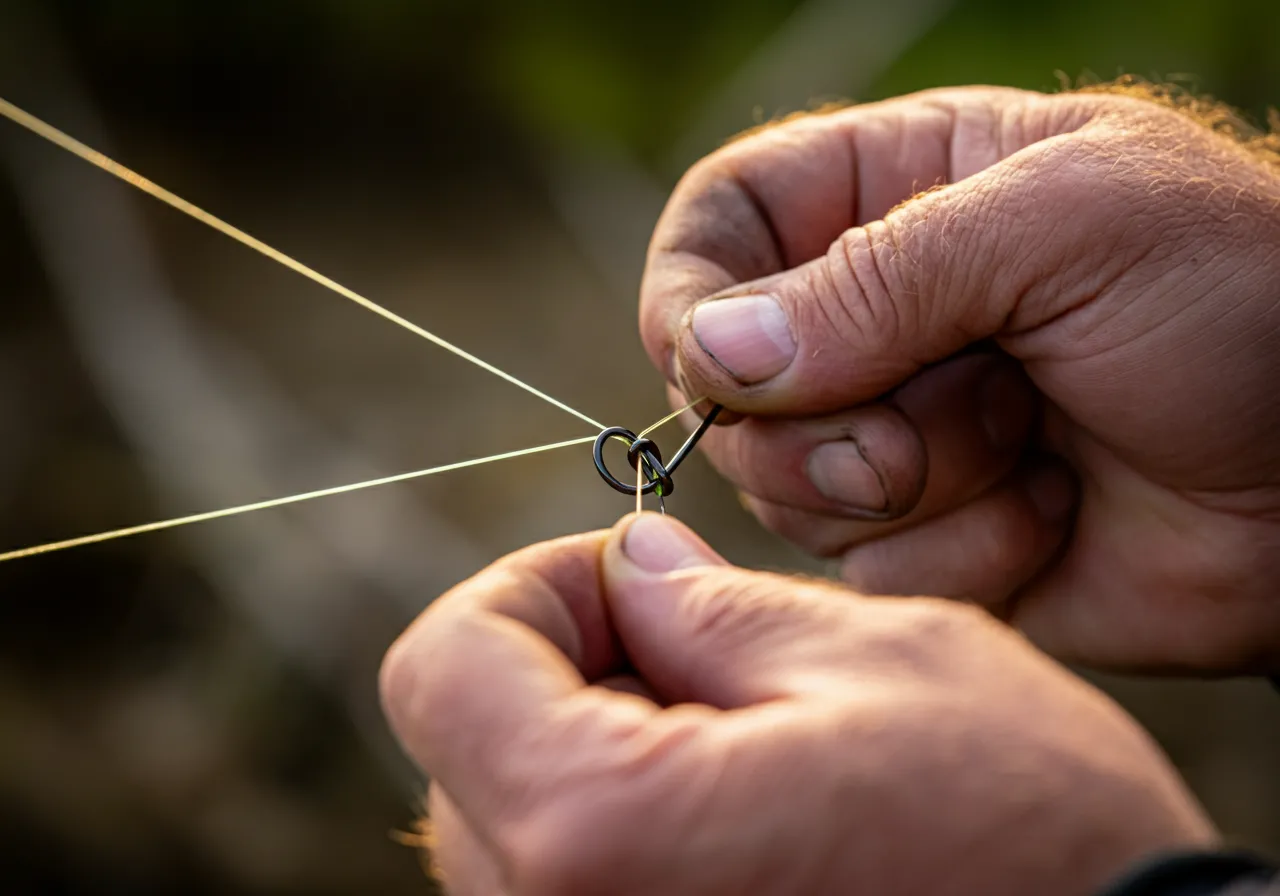
Also, when testing new knots or lures, do it in a controlled environment. A sudden break-off with a heavy lure can be dangerous. Always be aware of your surroundings and other anglers.
Step-by-Step: Tying the Non-Slip Mono Loop Knot
This is my workhorse loop knot. It’s strong, relatively easy to tie, and creates a perfect, non-slip loop.
- Thread and Loop: Pass about 12 inches of line through the lure’s eye. Bring the tag end back parallel to the main line, forming a loop that hangs below the lure.
- Create the Twist: Hold the tag end and the main line together. Twist the lure 5-7 times, which wraps the tag end around the doubled line. This forms the knot’s core.
- Thread the Tag End: Pass the tag end back through the small loop that was formed just above the lure’s eye.
- Lubricate and Cinch: Wet the knot with saliva or water. Slowly pull the main line to slide the wraps down toward the lure’s eye. The loop will form naturally. Tighten firmly.
- Trim: Trim the tag end close, leaving about an 1/8-inch to prevent slippage.
Loop Knots vs. Fixed Knots: A Side-by-Side Comparison
| Aspect | Loop Knot (Non-Slip Mono) | Fixed Knot (Improved Clinch) |
|---|---|---|
| Lure Action | Excellent. Allows full, natural wobble, swing, and darting action. | Restricted. Lure movement is dampened and less lively. |
| Best For | Jerkbaits, topwaters, swimbaits, crankbaits—any lure where action is key. | Bottom contact presentations (Texas rigs, drop shots), where direct feel is crucial. |
| Knot Strength | Very High (approx. 90-95% of line strength). | High (approx. 85-90% of line strength). |
| Ease of Tying | Moderate. Requires a few steps but is easy with practice. | Easy. One of the first knots most anglers learn. |
| Line Wear | Low. The loop distributes stress. | Can be higher at the sharp bend on the lure eye. |
The Real-World Pros and Cons
Pros:
- More Strikes: The enhanced, natural action is an undeniable trigger.
- Versatility: One knot technique improves a wide range of lures.
- Strength: A well-tied loop knot is incredibly reliable.
- Better Hooksets: With some lures, the loop allows for a better alignment on the strike.
Cons:
- Learning Curve: It’s not as instantly simple as a clinch knot.
- Not for Everything: Avoid it for finesse or bottom presentations where you need direct contact.
- Potential for Tangles: An excessively large loop can sometimes catch on the rod tip or other guides.
Loop Knot FAQs
Q: Can I tie a loop knot with braided line?
A: Yes, but you must increase the number of twists to 8-10 to prevent slippage. Some anglers prefer a different loop knot, like the Kreh Loop, for pure braid.
Q: How big should the loop be?
A: Just big enough to allow free movement. For a jerkbait, a loop that allows the lure to swing about 1/4 to 1/2 inch is perfect. Too large, and you lose some sensitivity and control.
Q: Do I need to retie this knot often?
A> As with any knot, inspect it regularly for nicks or abrasion, especially after catching a fish or snagging. I retie every few hours of consistent casting or after any significant fight.
Mastering this one simple connection can transform your lure’s performance from mechanical to magical. It costs nothing but a few minutes of practice and can turn those frustrating follows into solid hookups. Give it a try on your next trip—your tackle box is full of lures waiting to be set free.
Ready to refine your approach further? Explore our other guides on reading water structure and seasonal fish behavior to put your newly active lures in front of more fish.
Bottom Line: A non-slip loop knot provides critical freedom of movement for lures, creating more natural action that triggers aggressive strikes, making it an essential technique for any angler targeting predatory fish with reaction baits.