Billfish Trolling Spreads

You’ve been running lures for hours. The spread looks beautiful, the baits are swimming perfectly, but the cockpit is quiet. No screaming reels, no frantic shouts of “hook-up!” You’re covering water, but you’re not fishing the water. The frustration of a silent spread is real. It often comes down to one thing: you’re not presenting a complete, strategic picture to the fish. Setting a billfish trolling spread isn’t just about dragging lures; it’s about orchestrating an irresistible scenario. Think of it as setting up a chessboard on the ocean, where every lure has a specific role and position to trigger a strike.
Disclaimer: This guide is based on my two decades of experience on the water. Always prioritize safety and check your local regulations. Links to gear or other sites are for informational purposes to help you learn.
The Predator’s Buffet: Why Your Spread Matters
Billfish—sailfish, marlin, spearfish, and swordfish—are apex predators. They don’t just see a single baitfish; they see behavior, opportunity, and vulnerability. A haphazard spread is confusing noise. A strategic spread tells a story. My favorite analogy is comparing it to a roadside diner versus a five-star buffet. A single lure is that lonely diner—maybe a fish stops, maybe it doesn’t. But a perfectly laid spread? That’s a lavish, noisy, chaotic buffet. It creates competition, triggers feeding frenzies, and presents multiple easy targets. Your goal is to mimic a school of bait under attack, with lures representing the lead fish, the stragglers, and the wounded—all positioned to guide a marlin right to your hook.
Safety, Rules, and Respect: The Non-Negotiables
Before we talk lures, we talk responsibility. Bluewater fishing is no joke.
- Safety First: File a float plan. Have a VHF radio and EPIRB. Everyone wears a life jacket when conditions warrant it, no exceptions. Constantly monitor weather; a squall can turn a great day dangerous in minutes.
- Legal Compliance: You must have the proper fishing licenses and permits. For highly migratory species like billfish, federal permits are often required in addition to state licenses. It is your duty to know the rules for the waters you are in.
- Ethical Angling: We target these magnificent creatures for the sport, not just the meat. Practice proper catch-and-release. Use circle hooks to minimize gut-hooking, keep the fish in the water as much as possible, and revive it thoroughly. Handle all fish with care and respect. For the latest regulations and permit info, always consult the official source, like the NOAA Fisheries website.
Building Your Spread: Positions and Personalities
A classic offshore spread is built in layers, from closest to the boat to farthest away. Each “wave” or position has a specific purpose.
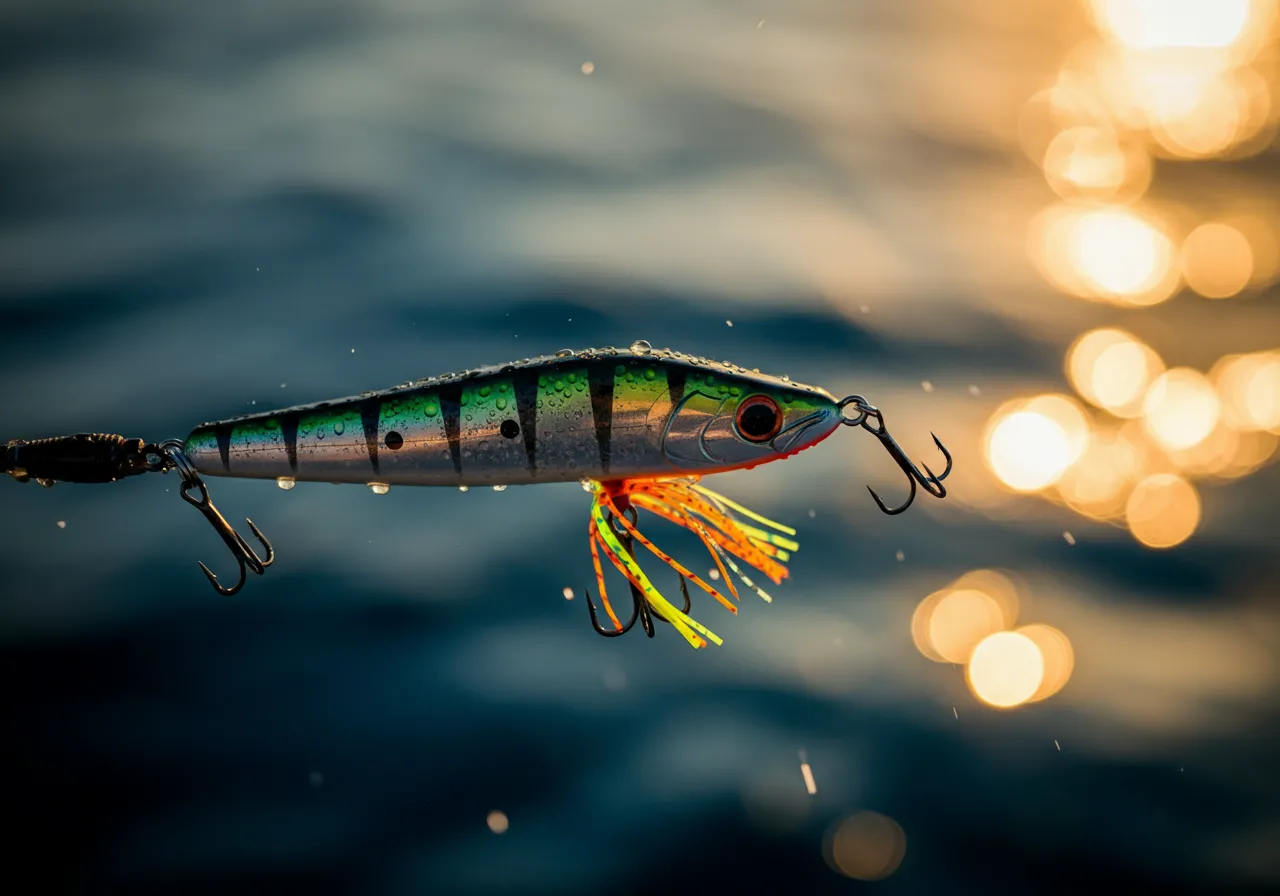
The Core Positions of a Spread
- The Shotgun (Long Center): This is your longest line, straight back off the stern, 300+ yards. It’s a lone lure, often a large plunger or bird, simulating a solitary fleeing fish. It’s for the curious follower who needs extra time to commit.
- The Flat Lines (Short Corners): These are your workhorses, run 50-100 feet back in the second or third wake wave. They’re typically smaller lures or natural baits (ballyhoo, mullet) and get the most action. They represent the heart of the bait school.
- The Outriggers (Wide): Lures are clipped to outrigger lines and released to dance 75-150 feet back, way out to the sides. They create a wide, enticing footprint and mimic bait scattering to the flanks. This is where you often see the spectacular surface strikes.
- The Teaser (No Hook): The unsung hero. A dredge, a bird, or a daisy chain of plastic squids run close to the transom. Its only job is to create commotion, bring fish up, and get them excited. It turns lookers into strikers.
Step-by-Step: Deploying a Basic 6-Lure Spread
- Scan & Plan: Use your electronics. Find the temperature breaks, color changes, or weed lines. That’s where the life will be. Set your trolling speed accordingly (6-9 knots for sails, 7-10 for marlin).
- Start with the Teaser: Get your hookless teaser in the water first, right in the prop wash. Let it start working and creating a bubble trail.
- Deploy the Flat Lines: Set your two short corner lures. Get them tracking cleanly in the clean wake just outside the white water.
- Send out the Outriggers: Clip your lures to the outrigger releases and let them out. You want them splashing and skipping way out wide. Adjust length so they’re in a different wave pattern than the flat lines.
- Fire the Shotgun: Finally, send your long center lure way, way back. This is your deep-strike option.
- Be the Conductor: Constantly watch the spread. If a lure isn’t running right, reel it in and adjust or change it. Change direction slightly to make lures dart. Your spread is a dynamic system.
Gear Showdown: Building on a Budget vs. Tournament Ready
You can catch fish without mortgaging the house. Here’s a realistic look at building your arsenal.
| Gear Component | Budget-Conscious Setup (The Solid Foundation) | Tournament/Pro Setup (The Refined Edge) |
|---|---|---|
| Rods & Reels | 50-80lb class stand-up rods with 2-speed lever drag reels. Durable, capable, and will handle most inshore/offshore billfish. Brands like Penn International or Okuma Makaira are workhorses. | Custom-calibrated 30-130lb class rods for specific lure weights. High-speed, ultra-smooth drag reels (e.g., Shimano Talica, Accurate). Lighter, faster, and offer superior finesse and power. |
| Lures | Start with a core kit of 5-7 proven skirted trolling lures (Mold Craft, Pakula) in blue/white, black/purple, and green/yellow. Add a couple of cedar plugs and a bird teaser. | An extensive, condition-specific arsenal. Soft-head lures, pitch baits, chain-driven dredges, and custom-tuned lures for specific water clarity and light conditions. |
| Terminal Tackle | Pre-made wind-on leaders with ball bearing swivels and 200lb mono. Standard circle hooks in various sizes. | Hand-tied, fluorocarbon leaders for specific lures. Premium, ultra-sharp non-offset circle hooks. Multiple rigged natural baits ready to deploy. |
| Outriggers | Fixed or telescoping fiberglass outriggers. Gets the job done effectively. | Carbon fiber or Rupp-style outriggers with hydraulic or electric controls for precise, on-the-fly adjustment. |
The Real Talk: Pros and Cons of Trolling Spreads
Pros:
- Maximum Coverage: You’re searching vast amounts of water efficiently.
- Trigger Multiple Species: A good spread can attract dolphin (mahi), tuna, and wahoo alongside billfish.
- Controlled Presentation: You dictate the speed, depth, and action of every lure.
- The Spectacle: There’s nothing more thrilling than watching a marlin sky a lure on the outrigger.
Cons:
- Gear Intensive: Requires significant investment in rods, reels, lures, and boat equipment.
- Steep Learning Curve: Tuning lures and managing a spread takes practice and patience.
- Can Be Noisy & Inefficient: Burns more fuel than slow-trolling live bait and the boat’s noise can sometimes spook fish.
- Weather Dependent: Requires relatively calm seas to keep lures tracking properly.
Billfish Spread FAQ
Q: What’s the single most common mistake in setting a spread?
A: Running lures too close together. They need separation to create distinct targets and prevent tangles. Give each lure its own space in the water column.
Q: Do I need a massive boat to troll for billfish?
A: Not necessarily. I’ve caught sails and white marlin from center consoles in the 28-32 foot range. The key is being able to safely handle the sea conditions and having enough rod holders to manage your lines.
Q: How important is lure color, really?
A> In clear, sunny water, natural colors (blue/white, green) often excel. In stained or low-light conditions (early morning, overcast), dark or contrasting colors (black/purple, pink) create a better silhouette. When in doubt, run a mix.
The art of the spread is what separates hopefuls from consistent producers. It’s a thinking person’s game. Start simple, master the positions, watch how the fish react, and never stop adjusting. Now get out there, set your board, and make your move.
Ready to dial in your offshore game? Check out our other deep-dive guides on reading sea conditions and advanced bait rigging to become a more complete bluewater angler.
Bottom Line: A strategic billfish trolling spread mimics a natural bait school under attack, using layered lures in specific positions (shotgun, flat lines, outriggers) to trigger strikes. Success hinges on understanding this “chessboard,” using proper gear, and always prioritizing safety and conservation.