Bottom Fishing for Grouper

You feel the tap-tap, a subtle thump through the rod. You reel down, set the hook hard, and for a second, it feels like you’ve snagged the ocean floor. Then the bottom starts moving. The rod doubles over, line screams off the reel, and the fight is on. This is bottom fishing for grouper—a primal test of strength, tackle, and strategy where the biggest fish live in the hardest places.
Disclaimer: This guide is based on my 20+ years of experience. Always check your local state regulations for seasons, bag limits, and size restrictions before you go. Safety is your responsibility. I may earn from qualifying purchases through affiliate links, but I only recommend gear I’ve personally trusted on the water.
Why Grouper Hug the Bottom: It’s a Real Estate Game
To consistently catch grouper, you need to think like one. Forget open water. For a grouper, life is all about prime real estate. Think of the seafloor like a city: the ledges, wrecks, and rock piles are the high-rise apartments and fortified bunkers. These structures provide ambush points for feeding, protection from larger predators, and current breaks where bait gets funneled right to their door. Your job isn’t to cast and retrieve; it’s to deliver a meal directly to their doorstep without getting your rent (your tackle) evicted by the structure.
The Non-Negotiables: Safety, Licenses, and Conservation
This isn’t pond fishing. The ocean demands respect, and grouper fishing amplifies the risks.
- Weather & Sea State: Never compromise. A calm morning can turn into a dangerous afternoon. Always check the marine forecast and have a reliable way to monitor changes. I use the National Weather Service as my primary source.
- Safety Gear: Everyone wears a life jacket (PFD). No exceptions. Have a VHF radio, first-aid kit, and know how to use them.
- The Legalities: In the US, you need a valid saltwater fishing license for the state you’re fishing in. Federal regulations often apply for species like Red Grouper and Gag Grouper. These rules change frequently to protect the fishery. Check with your state wildlife agency for the latest.
- Conservation & Handling: Many grouper species are slow-growing. Use circle hooks to reduce gut-hooking. Have a venting tool or descending device ready to safely release fish suffering from barotrauma (swim bladder expansion). Keep only what you plan to eat within regulations.
The Heavy-Duty Gear: Building a Grouper-Winning System
You can’t go to war with a squirt gun. Grouper fishing requires specialized, powerful tackle designed for one job: to win a vertical tug-of-war against a bulldog in a rock quarry.
The Rod & Reel: Your Winch System
Your reel is your winch. I recommend a high-capacity, heavy-duty conventional reel (like a Penn International or similar) spooled with 50-80 lb braided line. The low-stretch braid gives you immediate hook-setting power and sensitivity to feel the bottom. Your rod is the crane arm—a stout 6-7 foot heavy-action rod with a strong backbone to lift the fish and a sensitive enough tip to telegraph bites.
The Terminal Tackle: The Delivery & Retrieval System
- Leader: 60-100 lb fluorocarbon or monofilament leader. Abrasion resistance is key.
- Sinkers: Bank sinkers or torpedo weights from 8 to 16 ounces, sometimes more. You need enough to hold bottom in the current.
- Hooks: 7/0 to 10/0 circle hooks. They are conservation-minded and often hook the fish in the corner of the jaw.
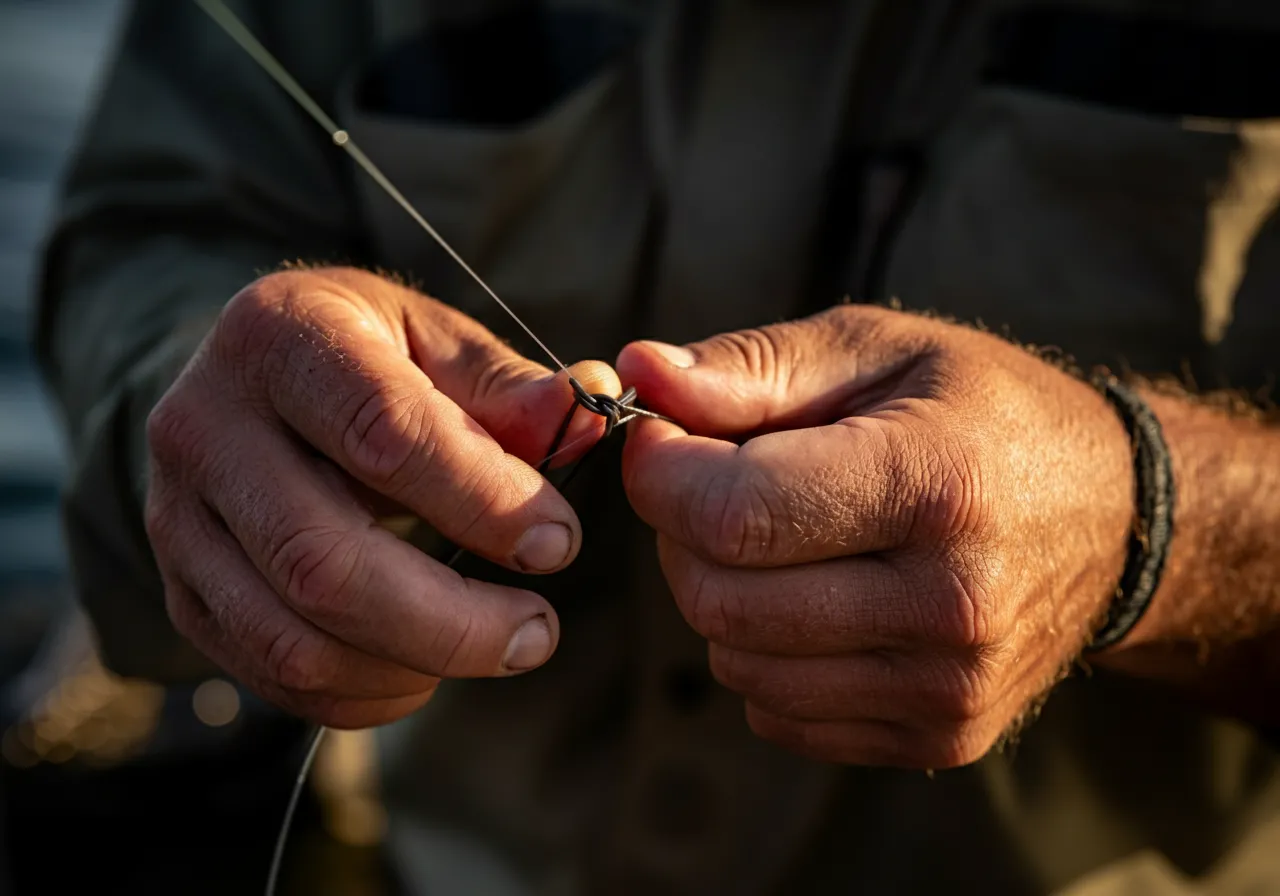
- Rig: The classic knocker rig is my go-to. It’s simple: tie your hook to the leader, then slide the leader through the eye of your sinker before tying to your main line. This allows the fish to feel less resistance when it picks up the bait.
The Bait: The Doorbell
Fresh is best. Live pinfish, grunts, or squirrelfish are trophy-callers. For dead bait, a hefty chunk of bonito, mullet, or squid works wonders. Your bait should be substantial—you’re ringing the dinner bell for a large predator.
Step-by-Step: Executing the Bottom Fishing Technique
- Find the Spot: Use your chartplotter and fishfinder to identify promising structure—a sharp ledge, a distinct rock pile, or a wreck. Accuracy is everything.
- Position the Boat: Use your motor to hold position up-current of the spot. You want to drift your bait back naturally onto the structure.
- The Drop: Don’t just throw it overboard. Lower your rig controlledly until you feel it hit bottom. Reel up a crank or two to keep it just above the snags.
- The Wait (and the Feel): Keep your rod tip low and maintain light tension. Pay attention. A bite might be a sharp “tap,” a heavy “thump,” or just the line going slack as the fish picks it up and moves toward you.
- The Strike: DO NOT JERK THE ROD. With a circle hook, simply start reeling with steady, firm pressure. The hook will set itself. If using a J-hook, reel down until you feel weight, then strike hard upwards.
- The Fight: This is a straight-up power game. Keep the rod high and pump: lift the rod to gain line, then reel down quickly as you lower it. Your goal is to get the fish’s head up and away from the structure immediately. Let it dig back down, and you’ll likely get cut off.
Gear Showdown: Getting Started vs. Going Pro
| Gear Component | Solid Starter Setup (Budget-Conscious) | Dedicated Pro Setup (No Compromises) |
|---|---|---|
| Reel | Penn Fathom 40 2-Speed Conventional Reel. A workhorse with a great price-to-performance ratio and a crucial low gear for winching power. | Penn International VISX 16 or Shimano Talica 16. Sealed drag, immense cranking power, and bulletproof construction for seasons of abuse. |
| Rod | Ugly Stik Tiger Elite 6’6″ Heavy. Incredibly durable with a sensitive tip, perfect for learning without fear of breaking it. | Custom-built 6′ Heavy action rod from a builder like United Composites or Calstar. Optimized action and components for maximum lifting power. |
| Line | 50-65 lb Braided Line (PowerPro, Sufix 832). Provides the low-stretch sensitivity needed without the high cost of some premium braids. | 80 lb Hollow-Core Braid (JB Line, Toro Tamer). Allows for seamless loop-to-loop connections and superior abrasion resistance. |
The Honest Truth: Pros and Cons of Bottom Fishing for Grouper
Pros:
– Targets the largest, most desirable fish on the reef.
– Technique is straightforward to learn (though mastering it takes time).
– Incredibly exciting, physical form of fishing.
– Can be productive year-round in many areas.
Cons:
– Expensive initial investment in heavy tackle.
– High loss rate of terminal tackle (snags).
– Physically demanding on you and the gear.
– Highly dependent on weather and sea conditions.
Grouper Bottom Fishing FAQs
Q: What’s the best time of year to bottom fish for grouper?
A: It varies by species and region, but generally, spring through fall offers the most consistent action as water temperatures warm. Always check local seasons, as many have closed periods to protect spawning fish.
Q: Do I absolutely need a boat?
A> For true structure bottom fishing, yes. However, some piers, jetties, and bridges over deep water channels can provide access to grouper habitat from shore, especially for smaller species.
Q: How do I avoid getting snagged on every drop?
A> You won’t avoid it entirely—it’s part of the game. Use just enough weight to hold bottom. The moment you feel your sinker tap into a crevice, reel up quickly. A “knocker rig” also helps by allowing the sinker to slide away if it gets stuck, sometimes saving your hook and fish.
Ready to target other structure-hugging giants? Check out our advanced guide on Vertical Jigging for Amberjack and Snapper to add another powerful technique to your arsenal.
Bottom Line
Bottom fishing for grouper is a pure, challenging pursuit that connects you directly to the ocean’s structure. It combines strategy, strength, and respect for the fish and the environment. Get your gear right, put your time in over the spots, and that heart-stopping moment when the bottom moves will be a memory you chase forever. Tight lines and be safe out there.