Braided Line Pros and Cons

You feel the tap-tap, set the hook hard, and the rod doubles over. For a few glorious seconds, you’re connected to a personal best. Then, ping. Your line snaps at the knot, and your heart sinks with the lure. If you’ve been there, blaming your knot or the fish’s strength, the real culprit might have been your line choice. Today, we’re cutting through the hype and getting real about braided fishing line—the modern superline that can transform your fishing, but only if you know its secrets and its flaws.
The Disclaimer: Fish Legal, Fish Safe, Fish Ethically
Before we talk gear, let’s cover the non-negotiables. This advice is from the deck of my boat, not a lawyer’s office. You are responsible for knowing and following your state’s fishing regulations. This means having a valid fishing license, knowing size and bag limits, and understanding species-specific rules. Regulations exist to conserve our fisheries; respecting them is the mark of a true angler. Always check with your state’s wildlife agency for the latest rules. On safety: no fish is worth your life. Wear your PFD, check the weather before you go, and tell someone your plan. Finally, handle fish with care, especially during catch and release. Wet your hands, support its weight, and get it back in the water quickly. We’re stewards of the resource first.
The “Superline” Science: Why Braid Isn’t Just Stronger Line
Think of traditional monofilament line like a bungee cord. It stretches, absorbs shock, and is forgiving. Braided line is like a steel cable. It’s made by weaving ultra-high-molecular-weight polyethylene (Dyneema or Spectra) fibers into a single, incredibly dense cord. This construction gives it near-zero stretch and a diameter that’s roughly half that of mono of the same strength.
Here’s the fishing analogy: Using braid is like upgrading from a standard transmission to a direct-drive racing transmission. Every input—every twitch of your rod tip, every nibble from a fish—is transmitted instantly and directly. You gain incredible control and sensitivity, but you also feel every single bump and vibration, and you lose the shock-absorbing “cushion” that mono provides. This fundamental difference changes everything about how you fight fish and set your drag.
The Angler’s Guide to Braid: Rigging, Casting, and Mastering the Feel
Using braided superline isn’t just spooling it on and fishing. To avoid frustration, follow this approach.
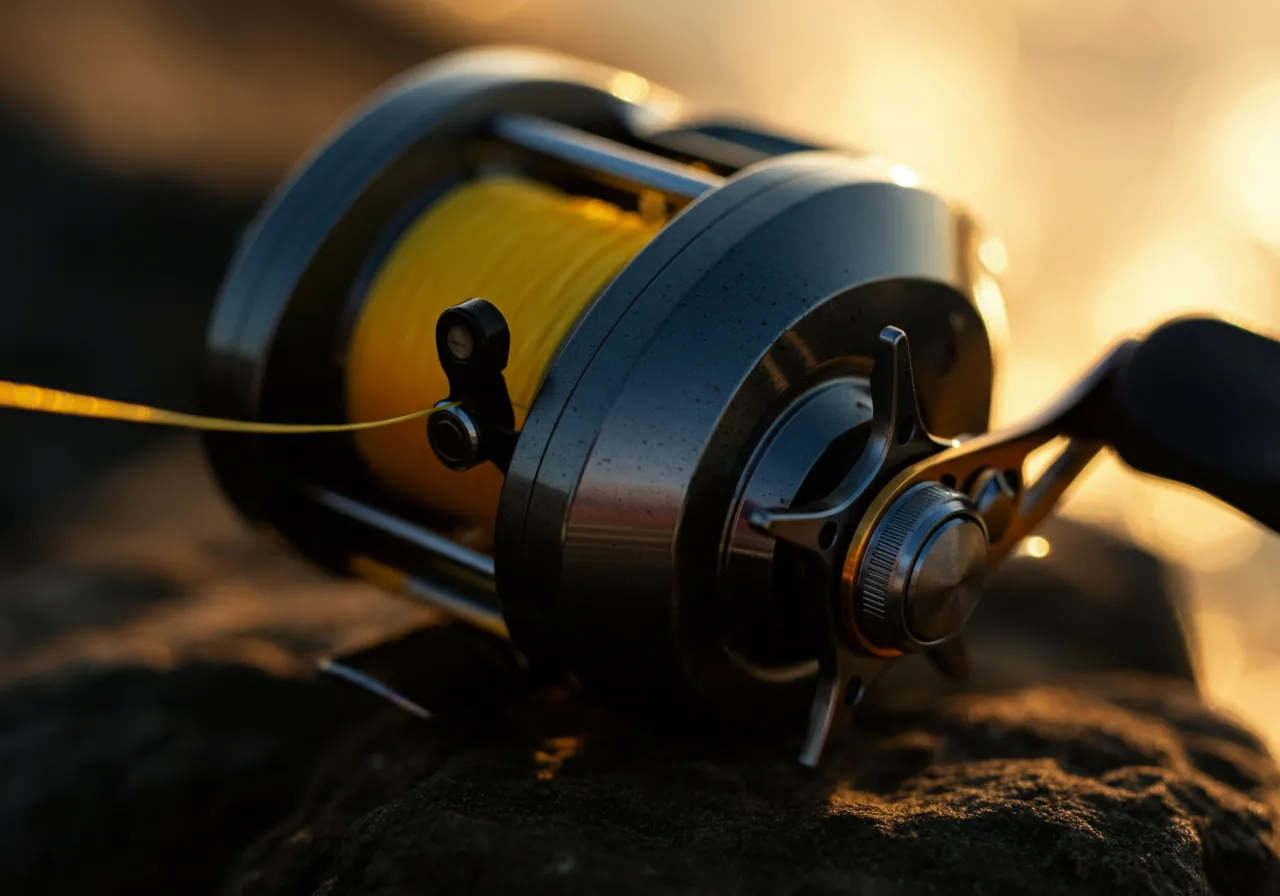
Step 1: The Right Foundation (Backing & Filling the Spool)
Braid is slick and can spin on your reel’s spool. Always use a mono or fluorocarbon backing. Tie 20-30 yards of cheap mono directly to the spool arbor, then tie your braid to the mono with a double uni or Alberto knot. This prevents slippage and saves money, as you don’t need 300 yards of expensive braid to fill the spool.
Step 2: The Critical Connection (The Leader Knot)
Braid is highly visible in clear water and lacks abrasion resistance. For 90% of applications, you must use a fluorocarbon or mono leader. This provides invisibility, shock absorption, and abrasion resistance around rocks and structure. The FG Knot or Alberto Knot are the gold standards for connecting braid to leader. Practice them until they’re second nature.
Step 3: Drag Setting & Hook Sets
Remember the “direct-drive” analogy? With no stretch, a hard hook set with a tight drag can rip the hook right out of a fish’s mouth or break your rod tip. Set your drag lighter than you think—about 25% of your line’s rated strength. Use a smooth, sweeping hook set, not a violent baseball swing. Let the rod’s flex and the fish’s fight work for you.
Step 4: Retrieval & Sensitivity
This is where braid shines. You will feel things you never felt before: a bass nudging a Texas-rigged worm, a walleye softly inhaling a jig on the bottom. Trust this sensitivity. When bottom fishing, keep a finger on the line to detect the subtlest ticks.
Gear Match-Up: When to Deploy the Braid
| Fishing Technique/Situation | Why Braid is the Best Choice | Recommended Braid Test (with Leader) |
|---|---|---|
| Flipping & Pitching Heavy Cover | Zero stretch allows for instant hook sets to pull bass out of thick grass, wood, or mats. Superior strength-to-diameter cuts through vegetation. | 50-65 lb braid with a 20-25 lb fluorocarbon leader. |
| Deep Water Jigging & Vertical Presentations | Unmatched sensitivity transmits bites from 100+ feet directly to your hand. You feel the jig “tap” the bottom and the fish’s bite immediately. | 20-30 lb braid with a 12-20 lb fluorocarbon leader. |
| Topwater Frogs & Walking Baits | No stretch helps drive the hooks home on explosive surface strikes. The floating line also helps keep topwater baits working correctly. | 50-65 lb braid (often fished straight, no leader, for walking through slop). |
| Long-Distance Casting with Light Lures | Thinner diameter cuts through the air with less friction, allowing for incredible casting distance with finesse gear. | 10-20 lb braid with a 6-12 lb fluorocarbon leader. |
The Honest Breakdown: Braided Line Pros and Cons
The Powerful Pros
- Unbeatable Sensitivity: Feel everything. This is its #1 advantage.
- Superior Strength-to-Diameter: Get 30 lb test strength in the diameter of 8 lb mono.
- Zero Stretch: Maximum power transmission for hook sets and control.
- Extreme Durability: Does not degrade from UV light and has a very long spool life.
- Excellent Casting Distance: Thin diameter equals less air resistance.
The Real-World Cons
- High Visibility: Fish in clear, pressured water can see it, making a leader mandatory.
- Poor Abrasion Resistance: A sharp rock or gill plate can cut it where mono would hold. Again, a leader solves this.
- Knot Challenges: Its slickness requires specific, well-tied knots (Palomar, Uni, FG, Alberto).
- No Shock Absorption: Can lead to pulled hooks or broken gear if your drag isn’t set correctly.
- Cost: Higher initial cost than mono, though its longevity often makes it cheaper in the long run.
- Dig-In on Spools: If a big fish pulls hard, braid can dig into itself on the spool, causing a nasty bird’s nest or break-off on the next cast.
Braided Line FAQ
Can I use braid on any reel?
You can, but it’s best suited for baitcasting and spinning reels with smooth drags. On spinning reels, be mindful of line twist and use a swivel if needed. Avoid using it on old reels not designed for the lack of stretch.
What’s the biggest mistake beginners make with braid?
Two things: not using a leader in clear water, and setting the drag too tight. The lack of stretch is a double-edged sword that requires a finesse touch on the drag knob.
Does braid color matter?
For you, yes. High-vis yellow or green is easier to see above water for tracking line movement. Many anglers prefer a darker color like moss green for a less obtrusive look below the surface. Since you should be using a leader, the main line color’s impact on the fish is minimal.
The Final Cast
Braided fishing line is a tool, not a magic bullet. In the right hands—for fishing heavy cover, deep structure, or when ultimate sensitivity is key—it’s a game-changer. It turns missed strikes into solid hook-ups. But it demands respect. It requires proper knots, careful drag management, and almost always, a leader. Don’t be afraid of it, but understand its personality. Master it, and you’ll add a powerful, responsive weapon to your angling arsenal. Now, get your knots right, check that drag, and go put that sensitivity to the test.