Brook Trout Habitat & Tips

You’ve hiked for miles, your boots are soaked, and you’re casting into the most beautiful, crystal-clear mountain stream you’ve ever seen. Yet, your fly or spinner comes back untouched, again and again. The brook trout are there—you can see them darting under the undercut banks—but they’re ignoring everything you throw. The frustration is real. Catching these native gems isn’t just about casting; it’s about becoming a mountain stream detective, learning to read the water like a topographic map of trout lies.
Disclaimer: This guide is based on 20+ years of personal experience. Always check your state’s current fishing regulations for seasons, size/bag limits, and specific water rules. Safety and conservation are the angler’s first responsibility.
The Science of the Brookie: Think Like a Cold-Water Refugee
The brook trout (or ‘brookie’, ‘speckled trout‘, ‘squaretail’) isn’t a trout at all but a char. This distinction is key to understanding its behavior. Think of it as a cold-water specialist living in a warming world. Its entire existence is a search for two things: cold, oxygen-rich water and cover. A stream is its highway, and specific spots are its safe houses. Your job is to identify the addresses.
The Habitat Map: Reading the Water‘s Real Estate
Imagine the stream as a bustling, liquid city. The brook trout aren’t out in the open “streets” (fast, shallow riffles). They’re in the apartments and back alleys where the current delivers food but doesn’t exhaust them.
- The Under Cut Bank (The Penthouse): Overhanging roots and soil provide shade, cover from predators, and a conveyor belt of insects. Cast tight to the bank.
- The Deep Pool Below a Riffle (The Restaurant): Fast water oxygenates the pool and washes in food. Fish the seam where fast and slow water meet.
- Logjams & Woody Debris (The Fortress): Complex structure offers ultimate protection. Present your offering upstream and let it drift naturally into the hideout.
- Spring Seeps & Tributary Mouths (The AC Unit): Even in summer, these spots inject colder water. Brookies will stack up here to beat the heat.
Safety, Licenses, and Ethical Angling
Before you step into these fragile ecosystems, get your house in order. Mountain weather changes in an instant—pack rain gear and layers. Wading slippery rocks demands caution; a wading staff is a wise investment. You must have a valid fishing license for the state you are in. Regulations for native brook trout are often strict to protect these sensitive populations; many areas are catch-and-release only or have very low creel limits.
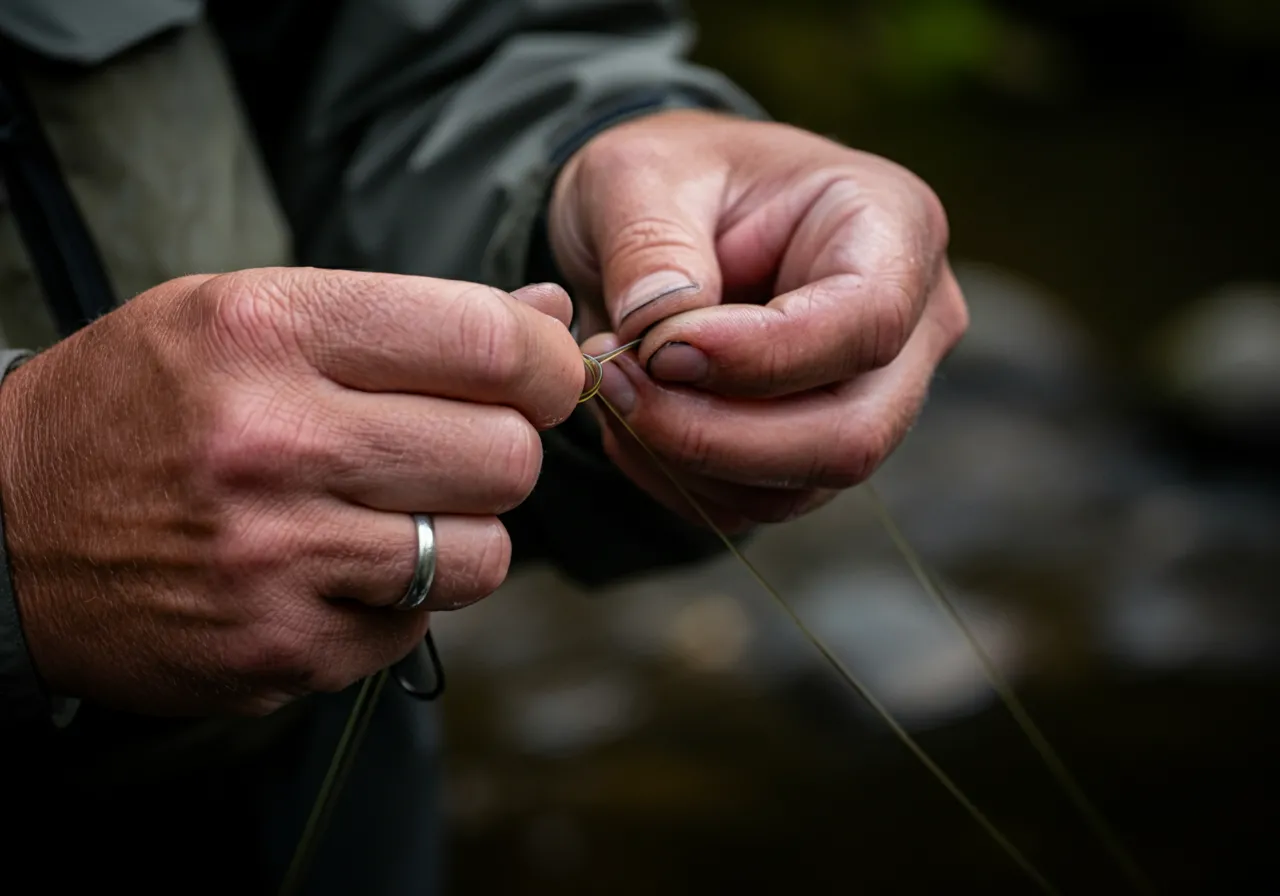
Practice ethical angling: Use barbless hooks for easier release, keep the fish in the water as much as possible, and wet your hands before handling their delicate slime coat. If you pack it in, pack it out. Leave no trace. For the most current regulations, always refer directly to your state’s agency, such as the New York State Department of Environmental Conservation.
The Tactical Approach: Stealth and Presentation
Forget power casting. Brook trout in clear, shallow streams are skittish. Your approach is everything.
Step-by-Step: The Upstream Sneak
- Gear Up Light: A 3-5 weight fly rod or an ultralight spinning rod (4-6 ft) with 2-4 lb test line is perfect.
- Move Like a Heron: Move slowly upstream (fish face into the current). Stay low, use the bank and vegetation as cover. Your shadow is your enemy.
- Read & Plan: Stop and scan each likely “lie” (the spots listed above). Plan your first cast—it’s often your best.
- Present, Don’t Disturb:
- Fly Fishing: Use small dries (Adams, Elk Hair Caddis), nymphs (Hare’s Ear, Pheasant Tail), or streamers (Woolly Bugger). Focus on a drag-free drift.
- Spin Fishing: Tiny inline spinners (Mepps Aglia #0, #1), small spoons, or a simple worm under a float. Cast upstream and across, retrieving just fast enough to engage the blade or spoon.
- Target the Zone: Don’t just cast to the middle. Hit the bubble line along a seam, the foam pocket behind a rock, the shaded edge of a log. Be precise.
Gear Guide: Simple Beats Expensive Every Time
You don’t need a mortgage-worth of gear. For brookies, finesse and appropriateness trump high-tech bells and whistles.
| Gear Type | Budget-Friendly Starter Kit | Pro/Enthusiast Refinement |
|---|---|---|
| Rod & Reel | Ultralight 5’6″ Spinning Combo or a basic 3wt Fly Rod Kit. Reliable and forgiving. | Fast-action 7’6″ 3wt Fly Rod for precise dry fly presentations, or a high-quality ultralight spinning reel with a sensitive graphite rod. |
| Line & Leader | 4 lb monofilament. It’s cheap, has stretch for forgiveness, and is less visible. | Fly: Weight-forward floating line. Spin: 2-3 lb fluorocarbon leader for near-invisibility in clear water. |
| Lures/Flies | A few small gold/spinnerbaits, a handful of classic wet flies and nymphs. Keep it simple. | Specialized dry flies for local hatches (like Isonychia or terrestrials), and micro-jigs for deep pools. |
| Footwear | Sturdy hiking boots with good ankle support. Wading can be dangerous. | Felt-soled wading boots (where legal) or modern rubber soles with studs for superior traction on slick rocks. |
Pros & Cons of Brook Trout Fishing
- Pros: Takes you to breathtaking wilderness. Requires minimal, inexpensive gear. The fish are stunningly beautiful. Teaches fundamental stream-reading skills applicable to all trout fishing.
- Cons: Often involves difficult hiking and access. Fish are small and easily spooked. Populations are fragile and sensitive to warming waters and habitat loss.
FAQs: Quick Answers for Your Brook Trout Quest
Q: What’s the best time of year to fish for brook trout?
A: Spring (post-runoff) and Fall are prime. In summer, focus on early morning, evening, or high-elevation streams. In winter, deep, slow pools in midday can still produce.
Q: Do I need to go deep into the wilderness to find them?
A> Not always, but it helps. The most accessible streams often see more pressure. A hike of even a mile can put you on less-pressured, more willing fish.
Q: What’s the single most important tip?
A> Stealth. If you can see them, they can see or sense you. Move slowly, stay low, and make your first cast count. Presentation over power.
The pursuit of the wild brook trout is less about the catch and more about the connection—to pristine water, quiet forests, and a living piece of North America’s natural heritage. Respect the resource, refine your approach, and you’ll unlock the quiet magic of mountain stream fishing.
Ready to tackle another technique? Explore our other guides on reading river currents or selecting the perfect fly rod to deepen your skills on the water.