Carolina Rig Basics for Beginners

You’ve been fishing the shoreline all morning. You’ve thrown every crankbait and spinnerbait in your box, but the water is flat and the bass are nowhere to be found. You watch a boat drift over the deep end of a point, and you see the angler’s rod suddenly double over. He’s on a fish—a good one. What does he know that you don’t? Chances are, he’s using a technique that covers deep water, finds fish, and triggers strikes when they’re stubborn: the Carolina rig.
For a beginner, the Carolina rig can look intimidating with its beads and swivels, but think of it as your underwater search engine. It’s a slow, methodical, and incredibly effective way to probe offshore structures like points, ledges, and creek channels where big bass live. This guide will break it down, piece by piece, so you can start catching those deep-water fish.
The Science & Strategy: Why the Carolina Rig Works
When summer heat pushes bass into deeper, cooler water, they become less aggressive. They won’t chase a fast-moving lure. The Carolina rig is designed for this exact scenario. The heavy weight on the main line digs along the bottom, kicking up silt and creating vibrations—like a dinner bell ringing. Your soft plastic bait, however, is free to float and swim naturally behind it, unweighted and looking like an easy meal.
My favorite analogy is comparing it to a bird dog on a hunt. The heavy weight is the dog, nose to the ground, busting through cover to flush out birds. The soft plastic is the hunter, following calmly behind, ready for the shot. The weight does the hard work of searching, while the bait presents an irresistible, effortless target.
Safety, Legal & Ethical Fishing First
Before we talk tackle, let’s cover the non-negotiables. Fishing deep water often means being on a boat, so always wear your life jacket (PFD). Check the weather before you head out; a sudden storm on open water is no joke.
In the United States, you must have a valid fishing license for the state you are in. Regulations on size and bag limits are strictly enforced to conserve our fisheries. It is your responsibility to know them. Always check the official regulations for your state. For a prime example of a state wildlife agency’s resource, you can review the regulations via the Tennessee Wildlife Resources Agency.
Practice ethical angling. When fishing deep, bass can suffer from barotrauma (swim bladder expansion). If you are practicing catch and release, learn how to properly vent a fish or use a descending device to get them back to depth safely.
The Core Gear Guide: Building Your First Carolina Rig
Let’s build this from the rod tip down. You don’t need the most expensive gear, but you do need the right type of gear.
- Rod: A 7′ to 7’6″ medium-heavy to heavy power, fast-action casting rod. You need the backbone to set the hook at a distance and handle the heavy weight.
- Reel: A low-profile baitcasting reel with a good drag and a gear ratio between 6.3:1 and 7.1:1. You want power, not speed.
- Line: Use 10-17 lb fluorocarbon or 30-50 lb braid as your main line. Fluorocarbon is less visible; braid has no stretch for better hook sets.
The Terminal Tackle Shopping List
Here’s what you’ll need on the business end:
- Weight: A 1/2 oz to 1 oz bullet, egg, or walking sinker. Start with 3/4 oz.
- Glass or Plastic Bead: The iconic “click-clack” bead that protects the knot and adds sound attraction.
- Barrel Swivel: A quality size 10 or 12 swivel is critical to prevent line twist.
- Leader Line: 12-20 lb fluorocarbon, 18-36 inches long. This is where the bait lives.
- Hook: A 3/0 or 4/0 wide-gap worm hook.
- Bait: 6-10 inch plastic lizards, creature baits, or straight-tail worms. Natural colors (green pumpkin, watermelon) are killers.
Step-by-Step: How to Rig and Fish It
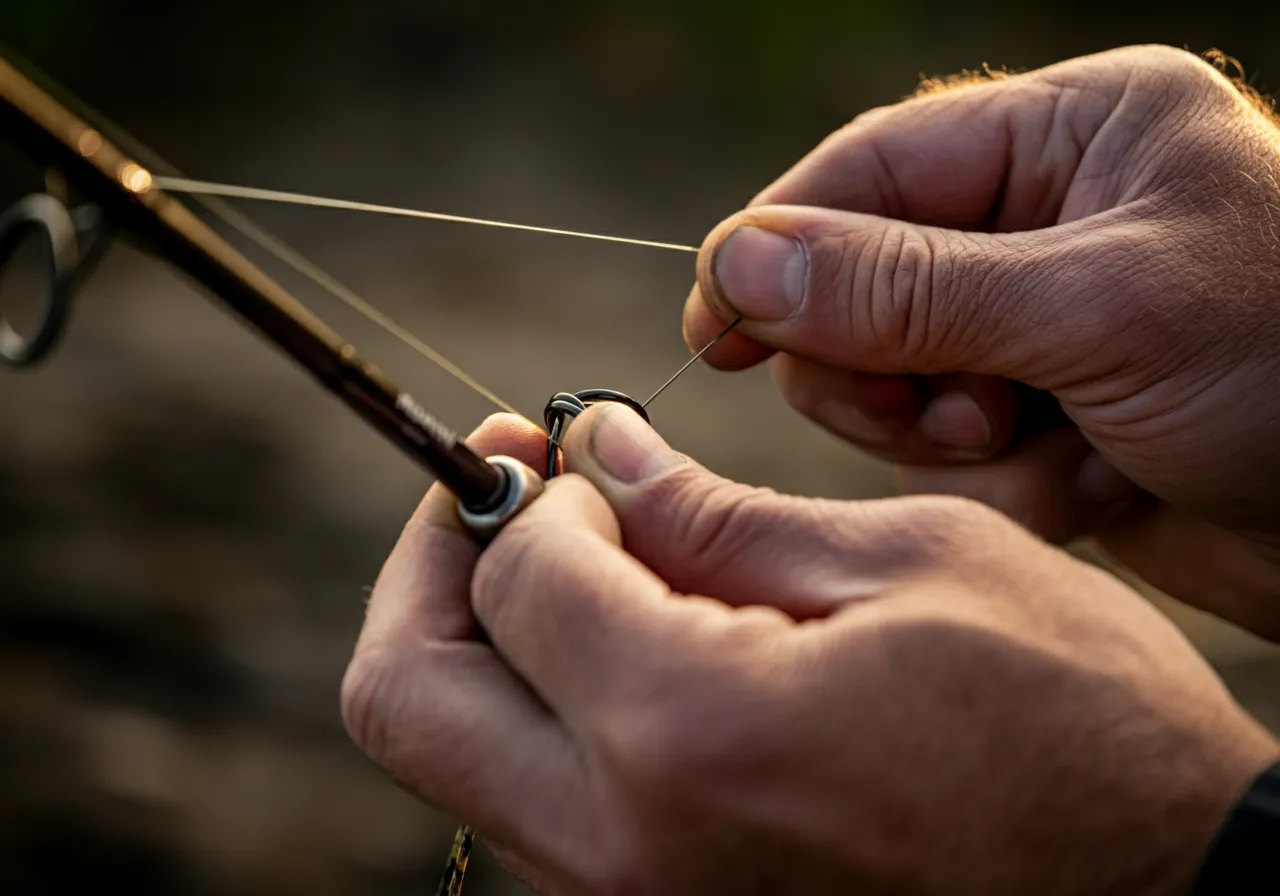
- Rigging: Thread your main line through the sinker. Add the glass or plastic bead. Tie the main line to one end of the barrel swivel. To the other end of the swivel, tie your leader line. Finally, tie the leader to your hook and rig your soft plastic bait texas-rigged (weedless).
- Casting & Presentation: Cast beyond your target area—a deep point, the edge of a weedline, a creek channel swing. Let the rig sink completely to the bottom. You’ll feel the “thump.”
- The Retrieve: This is the key. Slowly drag the rig along the bottom with your rod tip low. Lift the rod tip to pull the weight, then reel down the slack as you lower the tip. Repeat. You’re not reeling continuously; you’re dragging, hopping, and feeling.
- The Strike: You’ll usually feel a “tap tap” or just heavy weight. Don’t jerk immediately! Drop your rod tip toward the fish to give it a second to take the bait, then set the hook hard with a powerful, sweeping motion.
Gear Recommendations: Getting Started vs. Going Pro
| Component | Budget-Friendly Starter Kit | Pro-Level Upgrade |
|---|---|---|
| Rod & Reel Combo | Berkley Lightning Rod MH + Abu Garcia Black Max combo. | St. Croix Bass X MH rod + Shimano SLX DC reel. |
| Main Line | Berkley Trilene Big Game Mono (15lb). | Seaguar InvizX Fluorocarbon (15lb) or PowerPro Braid (40lb). |
| Terminal Tackle | Eagle Claw or Bass Pro Shops bulk packs of weights, beads, and swivels. | Tungsten weights (better feel), Brass & Glass beads, Spro Power Swivels. |
| Soft Plastics | Yum Dingers or Zoom Lizards. | Strike King Rage Tail products or Yamamoto Senkos. |
The Honest Pros & Cons
Pros:
- Unmatched for covering and probing deep water structure.
- Excellent for feeling the bottom composition (rock, mud, gravel).
- Catches big, pressured fish that ignore other presentations.
- The ultimate “search bait” when you don’t know where the fish are.
Cons:
- It’s a slow, patient technique. Not for the adrenaline junkie.
- Can hang up more often in very rocky or snaggy areas.
- Requires a longer, more powerful rod for optimal performance.
- Wind can make it difficult to maintain a tight line and feel bites.
Carolina Rig FAQ
Q: What’s the best time of year to use a Carolina rig?
A: It shines in late spring through fall when bass are on or near deep structure. It’s a summer powerhouse.
Q: Can I fish it from the bank?
A: Absolutely. Look for banks with quick access to deep water—steep points, dam faces, or channel bends. A long cast is your friend.
Q: How do I know if I’m in the right depth?
A> Use your electronics if you have them. If not, target visible structure changes: where a weedline ends, a point drops off, or a creek channel swings near the bank. If you’re not occasionally feeling the bottom, your weight is too light.
Ready to put more bass in the boat? Mastering the Carolina rig is a rite of passage for any serious angler. It teaches you to read deeper water, be patient, and trust your feel. Now, get out there, make that cast, and get ready for that tell-tale “thump.” For more in-depth techniques and gear breakdowns, explore the other guides right here on the site.
Summary: The Carolina rig is a slow-dragging, bottom-bumping presentation consisting of a main line, heavy weight, bead, swivel, and a leader with a soft plastic bait. It’s designed to efficiently search deep offshore structures and trigger strikes from inactive bass, making it an essential technique for any angler’s arsenal.