Inflatable Fishing Kayaks

Ever driven past a perfect-looking pond, a hidden creek mouth, or a glassy coastal flat, only to think, “I’d need a $50,000 boat to get in there”? Or maybe you live in an apartment with no space for a roof rack, let alone a trailer. The frustration of being locked out of prime fishing water is real. For years, I was in the same boat—until I started thinking outside the boat.
Disclaimer: This guide is based on my two decades of professional angling experience. Always check your state fishing regulations and license requirements before heading out. Safety is your #1 priority—never compromise on a proper PFD (life jacket) and weather awareness. This article may contain links to products; we may earn a commission from purchases at no extra cost to you, which helps support our mission of providing free, expert fishing advice.
Beyond the Pool Toy: The Science of Modern Inflatables
Let’s clear the air right now: we’re not talking about the vinyl raft you had as a kid. Modern inflatable fishing kayaks are engineered weapons, built with military-grade drop-stitch PVC or Hypalon. Think of the construction like a high-performance tire. A car tire isn’t just a balloon; it has a rigid internal structure (cords) that allows it to hold its shape under immense pressure. Drop-stitch floors work the same way, creating a platform as rigid as a hard-shell kayak. This means you can stand up to sight-cast for redfish, confidently fight a feisty smallmouth, and not feel like you’re paddling a bouncy castle.
Your Pre-Launch Safety & Legal Checklist
An adventure is only good if you come back to tell the tale. Treat your inflatable kayak with the same respect as any other vessel.
- PFD is Non-Negotiable: You must have a U.S. Coast Guard-approved Type I, II, III, or V life jacket for each person, and it must be worn. In a swamping situation, you won’t have time to put it on.
- Know the Weather, Not the Forecast: As an angler, you know weather changes in a heartbeat. Wind is the #1 enemy of a lightweight craft. If whitecaps are forming, it’s time to head in. Use a reliable source like the National Weather Service for marine forecasts.
- License to Fish: You need a valid fishing license for the state you are in. Regulations vary wildly. It is your responsibility to know the rules for the specific body of water you’re on.
- Ethical Angling on the Go: Pack out all your trash, including discarded line. Have the right tools (pliers, net, lip gripper) for safe, quick catch-and-release to ensure the fish swims away strong.
The Angler’s Guide to Choosing Your Inflatable Fishing Platform
Choosing the right model is like selecting the right rod: you need the right tool for the job. Here’s how to break it down.
Key Features to Cast Your Eye On
- Material & Pressure: Look for “drop-stitch” construction, especially in the floor. Higher PSI ratings (often 6-12 PSI) mean a more rigid, performant kayak.
- Length & Width: Longer kayaks (12’+ track better for covering open water. Shorter, wider kayaks (under 10′) are more maneuverable in creeks. Width is crucial for stability; 34″++ is ideal for standing.
- Fishing-Specific Amenities: Look for D-rings for gear tethers, rod holders (flush-mount or adjustable), attachment points for anchor systems, and a skeg for tracking.
- Puncture Resistance: Multiple layers of PVC with polyester mesh cores are standard for durability. Don’t fear hooks; a quick patch kit solves most minor pokes.
Step-by-Step: Rigging and Launching Your Inflatable Kayak
- Inflation & Inspection: Inflate on a clean, flat surface away from sharp objects. Use the recommended pump (often a dual-action high-pressure pump). Once fully inflated, listen and feel for leaks. A spray bottle with soapy water can help find small ones.
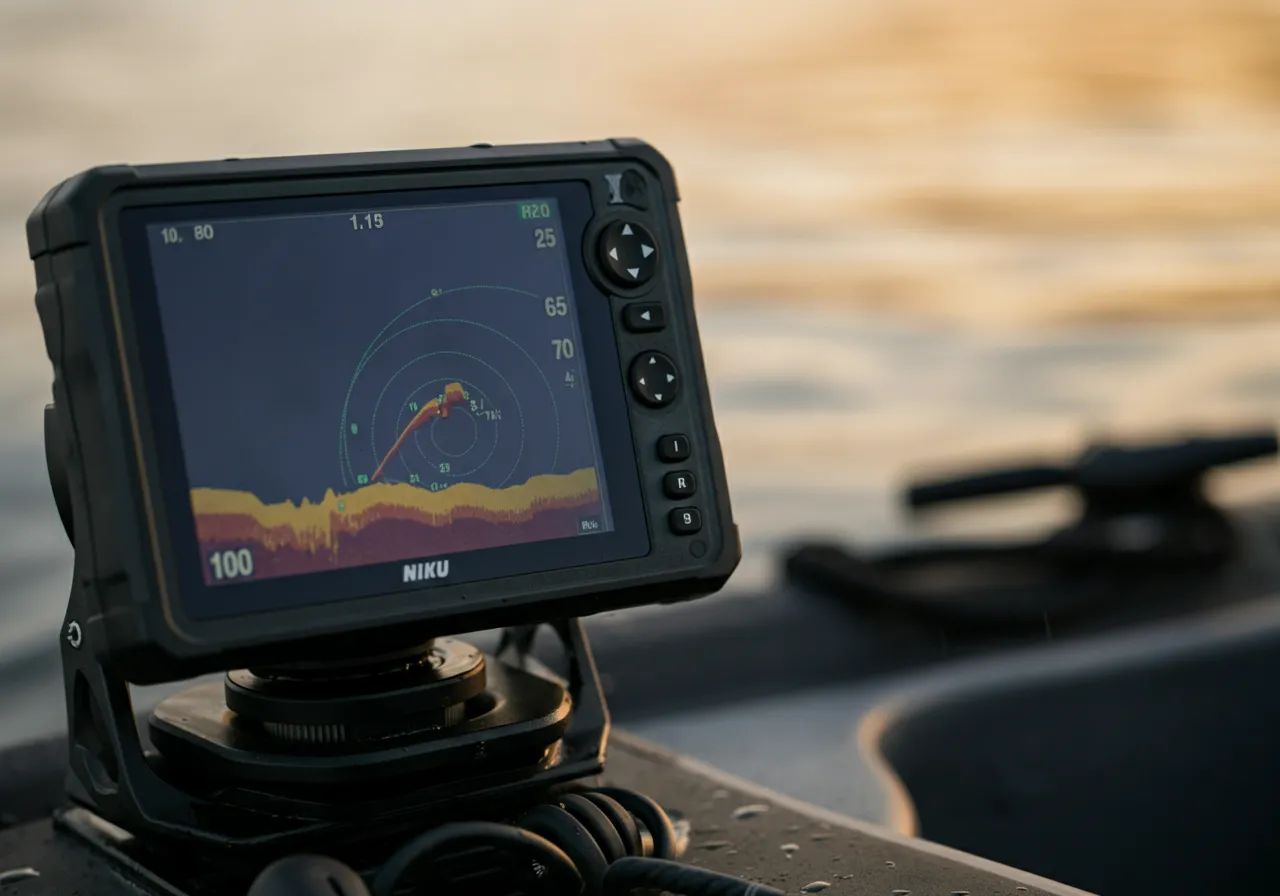
- Strategic Rigging: Before you hit the water, secure all gear. Use carabiners and tethers for pliers, tackle boxes, and rods. Your paddle gets a leash, no exceptions. Mount your fish finder transducer inside the hull with a bit of water as a coupling agent—it works surprisingly well.
- The “Soft Launch”: Avoid dragging your kayak. Inflate it near the launch, then carry or gently slide it in. Keep it parallel to the shore as you get in, placing your weight in the center.
- On-Water Protocol: Stow your pump and bag. Keep a sharp knife accessible (for cutting line in an emergency). Position your gear for easy access without excessive leaning.
Budget-Friendly vs. Pro-Grade: Finding Your Fit
| Feature | Budget-Friendly Option (e.g., Intex Excursion Pro) | Pro-Grade Option (e.g., Hobie Mirage iTrek 9) |
|---|---|---|
| Primary Use | Protected waters, ponds, slow rivers, occasional use. | Frequent use, coastal bays, larger lakes, serious angling. |
| Material/Durability | Heavy-duty PVC, good puncture resistance. | Military-grade PVC or Hypalon, superior abrasion resistance. |
| Rigidity & Stability | Good for sitting, may be less stable for standing. | Drop-stitch floor allows confident standing and casting. |
| Fishing Features | Basic rod holders, D-rings. | Multiple accessory rails, integrated rod holders, pedal-drive compatible. |
| Portability | Very light, packs into a single bag. | Heavier due to robust materials, often two bags (kayak + frame). |
| Investment | $300 – $600 | $1,500 – $3,000+ |
The Honest Pros & Cons from the Water
Pros: Unmatched portability and storage (fits in a closet or car trunk). Incredibly lightweight for car-to-water transport. Access to water impossible for trailered boats. Generally more affordable than hard-shell kayaks or boats. Easy and inexpensive to repair with a patch kit.
Cons: Performance suffers in strong wind and heavy current. Slower paddling speed compared to long, sleek hard-shells. Requires time to inflate/deflate (15-20 mins with practice). Can be susceptible to abrasion on rocky shores (always carry it!). Limited space for excessive gear compared to a bass boat.
Inflatable Fishing Kayak FAQs
Q: Are they really hook-proof?
A: No material is completely puncture-proof, but high-density PVC is extremely resistant. I’ve had hooks bounce off the material. Small punctures are easily fixed on the spot with a patch kit, which you should always carry.
Q: Can I use it in saltwater?
A> Absolutely, but it requires discipline. Rinse your kayak thoroughly with fresh water after every saltwater trip, inside and out, to prevent corrosion of valves and material degradation.
Q: What’s the biggest fish you’ve caught from one?
A> A 42-inch striped bass in an estuary. The kayak’s low profile and silence allowed me to sneak into a shallow slot boaters couldn’t reach. The fight was epic, and the kayak’s stability was key to landing it.
Ready to unlock those hidden fishing spots? The barrier to entry has never been lower. An inflatable fishing kayak isn’t a compromise; for the modern angler, it’s a strategic advantage. Check out our other guides on sight-fishing techniques and kayak anchoring systems to complete your setup.
The Bottom Line
Modern inflatable fishing kayaks are durable, capable, and portable platforms that solve the access problem. By prioritizing safety and choosing the right model for your waters, you can turn previously inaccessible spots into your personal honey holes.