Live Shrimp Rigging Methods

You’ve got the livewell bubbling, the sun is just right, and you’re watching your live shrimp swim under a popping cork. You see the cork dip, you feel a little tick… you set the hook into nothing. Again. The problem isn’t the shrimp—it’s how you’re presenting it. A poorly rigged shrimp is a dead giveaway to smart fish. Let’s fix that. I’ve spent decades on both coasts, and mastering how to hook a live shrimp is the single most important skill for inshore success.
The Disclaimer: Fish Smart, Fish Legal
Before we get to the rigs, let’s cover the non-negotiables. This isn’t just about catching fish; it’s about respecting the resource and staying safe. Always check your state’s current fishing regulations for seasons, size, and bag limits on both your target species and the use of live bait. A valid fishing license is required in all US states. On the water, your life jacket is your most important piece of gear—wear it. Finally, handle every fish with care, especially those you release. Keep them wet, support their weight, and use proper dehooking tools to ensure they swim away strong.
The Science of the Shrimp: It’s All About the “Swim”
Think of a live shrimp in the water like a flashing neon “EAT HERE” sign for predators. Its natural, erratic darting is an irresistible trigger. Your job as an angler is to keep that sign lit for as long as possible. The moment you impair its ability to swim naturally, that sign starts to flicker and die. A lethargic, spinning, or dead shrimp is far less effective. The core principle behind all successful live shrimp rigging is presentation and longevity. You must hook it in a way that allows it to behave naturally while keeping it securely on your hook. It’s a balance between durability and delicacy.
The Essential Live Shrimp Rigging Methods
Here are the three core methods, each with a specific purpose. I carry multiple rods rigged with each, ready for changing conditions.
1. The Through-the-Horn Rig (For Maximum Lifespan)
This is my go-to for free-lining shrimp in current or fishing under a float. It’s the most humane and keeps the shrimp alive and kicking the longest.
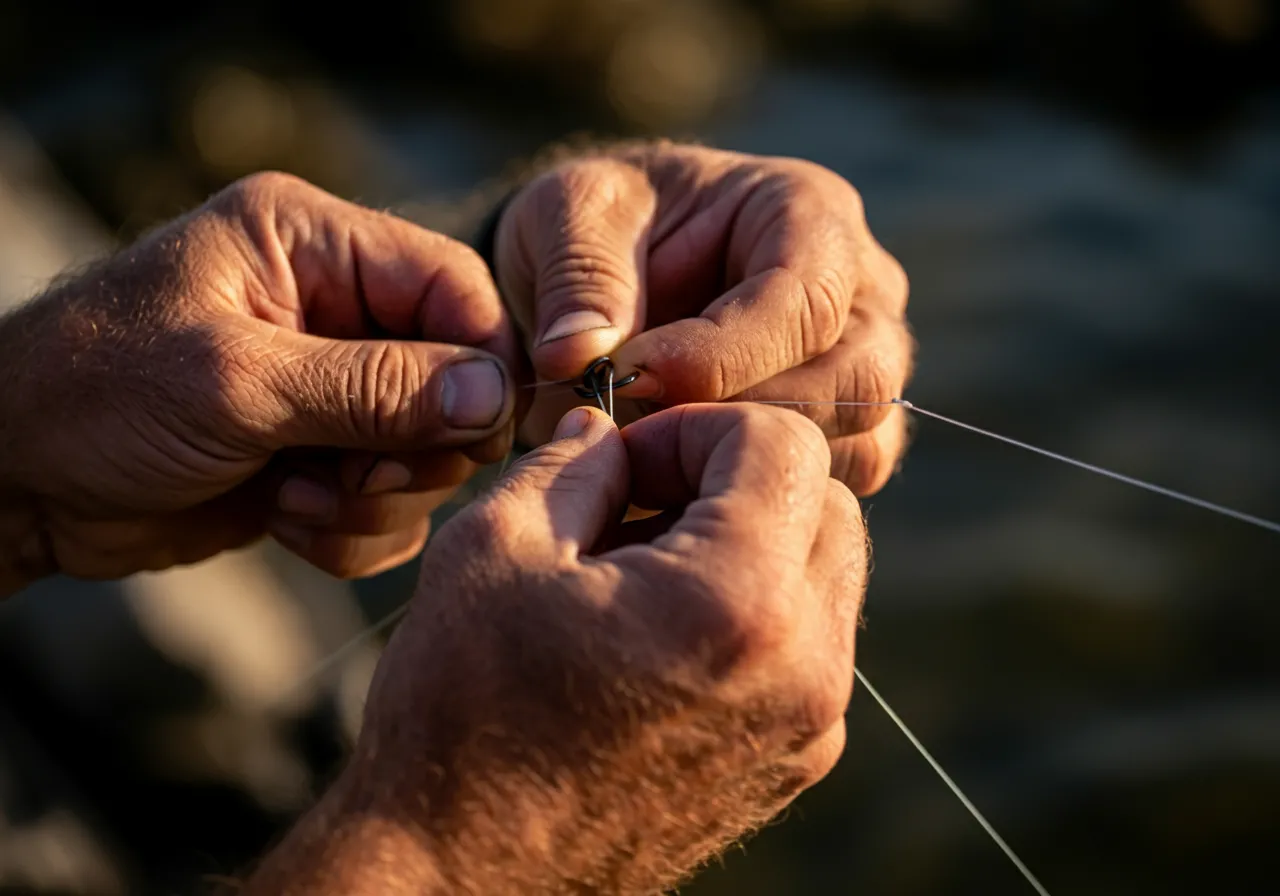
- Step 1: Select a sharp, light-wire bait hook (like a circle or J-hook in size 1/0 to 4/0).
- Step 2: Gently hold the shrimp. Insert the hook point into the center of the dark, horn-like protrusion on its head (the rostrum).
- Step 3: Push the hook straight through and out the top of the head, between the eyes. The hook shank should run along the inside curve of the shrimp’s body.
- Step 4: The shrimp is now hooked in its hardest, most durable part. It can swim freely, tail-first, just as nature intended.
Best For: Clear water, sight-casting to redfish or snook, free-lining in tidal creeks.
2. The Tail Hook Rig (For Aggressive Strikes)
When fish are keyed in on the flash and movement of the tail, or you need a slightly more compact presentation, this is the ticket.
- Step 1: Use a similar light-wire hook.
- Step 2: Insert the hook point into the second segment from the end of the tail, from the underside.
- Step 3: Push the point through and out the top of that segment. You’re essentially “threading” the last few segments of the tail onto the hook.
- Step 4: The shrimp will swim head-first, with its powerful tail flexing right at the hook point, creating a ton of action.
Best For: Speckled trout in deeper holes, fishing around heavy structure where a head-hooked shrimp might hide.
3. The Lip Hook Rig (A Versatile Compromise)
This method offers great hooking potential while still allowing decent swimming action. It’s a fantastic all-arounder.
- Step 1: With the shrimp’s belly facing you, locate the hard plate just above its mouth (in the head between the eyes and the walking legs).
- Step 2: Pierce this plate from the bottom, coming up and out through the top of the head.
- Step 3: The hook will be seated firmly, and the shrimp can still paddle with its legs and flick its tail, though not as powerfully as the Through-the-Horn method.
Best For: Carolina rigs for sheepshead or black drum, bottom fishing in deeper water with a sinker.
Gear Guide: Matching Your Rig to Your Setup
| Component | Budget-Friendly Setup | Pro-Guide Setup |
|---|---|---|
| Hook | Eagle Claw Lazer Sharp Baitholder Hooks (Corrosion-resistant, strong, great value). | Gamakatsu Octopus Circle Hook or Owner Mutu Light Circle Hook (Razor-sharp, ultra-strong, perfect point). |
| Line | 10-20 lb Monofilament (Forgiving, cheap, good for beginners). | 10-30 lb Braided Mainline with a 20-40 lb Fluorocarbon Leader (Sensitivity, strength, and invisibility). |
| Rod/Reel | 7′ Medium Power, Fast Action Spinning Combo (Versatile for all three rigs). | Specific rods: a 7’6″ Light rod for free-lining, a 7′ Medium-Heavy for cork fishing. |
| Accessory | Basic round foam float (popping cork). | Weighted, concave-faced popping cork for better sound and casting. |
Pros & Cons of Fishing with Live Shrimp
- Pros: The most natural presentation possible; appeals to a vast range of species (redfish, snook, trout, tarpon, sheepshead); triggers instinctual strikes; excellent in both clear and murky water.
- Cons: Requires maintenance (livewell, aerator); can be expensive; more delicate than artificial lures; can attract pesky bait-stealers like pinfish and catfish.
Your Live Shrimp Questions, Answered
Q: How do I keep my live shrimp alive longer in the bucket?
A: Keep them cool, shaded, and oxygenated. Use a proper aerated livewell or bucket. Never use water straight from the hose—the chlorine will kill them. Use saltwater or declorinated water. Keep them out of the sun!
Q: What’s the best all-around hook size for live shrimp?
A> A size 1/0 or 2/0 circle hook is incredibly versatile. It’s small enough not to weigh down a medium shrimp but strong enough to handle a slot redfish. It also promotes great lip-hooking for easy catch-and-release.
Q: Can I use these same methods for dead shrimp?
A> You can, but the presentation is totally different. For dead shrimp, you’re often better off using a “knocker rig” or threading it fully onto the hook for bottom fishing. The magic of the methods above is in the live action.
Mastering these live bait shrimp techniques will transform your inshore fishing. It turns a simple bait into a precision tool. Pay attention to the conditions, match the rig to the scenario, and you’ll watch that cork disappear more often than not. Now, go get your line tight.
For the most accurate and up-to-date information on fishing regulations, which vary by state and species, always consult your local wildlife agency. A great resource is the NOAA Fisheries website for federal rules and conservation initiatives.