Offshore Kayak Fishing

You’ve mastered the bays and conquered the inshore reefs. But now, you stare out at the horizon line, wondering what’s beyond. The idea of trolling for mahi over a deep-water wreck or battling a feisty king mackerel from a plastic boat is intoxicating. Yet, the thought of taking your kayak miles out into the open ocean is daunting, maybe even a little scary. I’ve been there. The transition from sheltered water to the true blue is the single biggest leap in kayak angling. It’s not just about bigger fish; it’s about a completely different set of rules.
Disclaimer: This guide is based on my two decades of experience on the water. Your safety is your responsibility. Always check local regulations, weather, and your own skill level. This article may contain links to recommended gear; we may earn a small commission if you purchase through them at no extra cost to you, which helps support our content.
Why Fish Go Deep: The Offshore “Grocery Store” Analogy
Think of the nearshore environment like a convenience store—it has what fish need, but the selection is limited. Now, picture the offshore world as a massive, 24-hour supermarket. The deep-water structures—wrecks, reefs, ledges, and current lines—are the aisles. Baitfish are the products on the shelves. Predators like snapper, grouper, amberjack, tuna, and pelagics cruise these aisles, looking for an easy meal. Your job as an offshore kayak angler is to park your cart (your kayak) in the right aisle and present the most appealing “product” you can. The key factor that organizes this entire supermarket? Current. Current delivers food and oxygen, positioning predators in predictable ambush points. Reading a current line offshore is like reading a road map; it tells you exactly where the traffic will be.
The Non-Negotiables: Safety, Laws, and Respect
This isn’t a section you skim. It’s the foundation of every successful offshore trip.
Your Personal Safety Protocol
- PFD (Life Jacket): You must wear a US Coast Guard-approved Type III or V PFD at all times. Not stored, worn. In offshore conditions, a manual-inflation model is often preferred for mobility.
- Communication: A VHF radio is mandatory. It’s for weather updates, ship traffic, and emergencies. A waterproof handheld model, secured with a lanyard, is the minimum. Consider a personal locator beacon (PLB) for trips far from sight of land.
- Weather & Sea State: Wind is your enemy. I use a simple rule: if the forecast is over 10-12 knots, I reschedule. Check not just the wind, but wave height and period. A dedicated marine forecast is essential. I rely on the National Weather Service’s Marine Point Forecast for the most accurate, location-specific data.
- The Buddy System: Never go alone. Two kayaks are exponentially safer than one.
- Safety Gear: Carry a visual distress signal (flare), a whistle, a bilge pump/sponge, and plenty of water. Tell someone your float plan: where you’re launching, where you’re fishing, and when you’ll return.
Legal and Ethical Compliance
- Fishing License & Regulations: You must possess a valid saltwater fishing license for the state you are in. Offshore often means federal waters (beyond 9 nautical miles in most places), which have separate regulations for species like snapper and grouper. Know the seasons, size limits, and bag limits. Ignorance is not an excuse.
- Catch & Release for the Future: The fight from a kayak is extreme. Use heavy enough gear to land fish quickly to minimize exhaustion. Have a plan for releasing large, deep-water species. Use descending devices or venting tools for fish suffering from barotrauma (swim bladder expansion) to give them a fighting chance at survival. Keep only what you will eat.
The Offshore Kayak Angler’s Toolkit
Your inshore gear likely won’t cut it. Here’s the specialized equipment for hunting in the blue water.
The Kayak: Your Command Center
Stability and storage are king. You need a sit-on-top kayak, at least 12 feet long, with a high weight capacity (400+ lbs). Look for ample, secure hatches for gear storage and multiple rod holders. A pedal-drive system is a game-changer for hands-free propulsion and positioning over a spot.
Electronics: Your Eyes Below
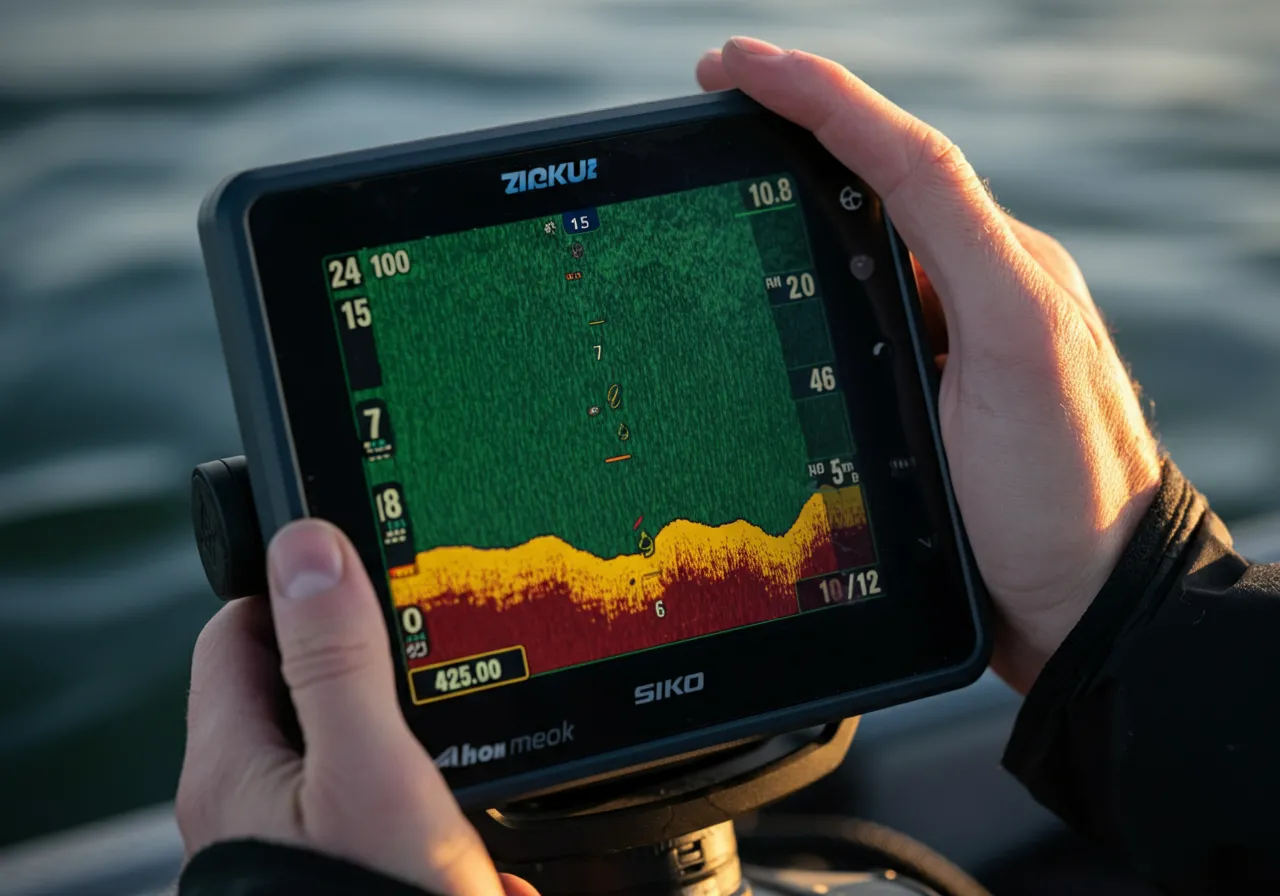
A quality fishfinder/chartplotter combo is not a luxury; it’s essential for finding bottom structure and marking waypoints. A GPS lets you navigate back to that tiny wreck in a vast ocean.
Rods, Reels, and Terminal Tackle
- Rods: Medium-heavy to heavy power, 7-8 foot rods. You need backbone for setting hooks deep and lifting fish.
- Reels: Size 4000-8000 spinning reels or comparable conventional reels, filled with braided line (30-65 lb test). Braid has no stretch, giving you better sensitivity and hook-setting power in deep water.
- Terminal Rig: A simple but effective chicken rig (two-hook bottom rig) is perfect for snapper and grouper. Use a 50-80 lb fluorocarbon leader to resist abrasion from structure and sharp teeth.
Budget vs. Pro Offshore Kayak Setup
| Gear Category | Budget-Friendly Approach | Pro/Investor Approach |
|---|---|---|
| Kayak | Used, stable 12-14 ft sit-on-top paddle kayak. Add aftermarket rod holders. | New pedal-drive kayak (e.g., Hobie, Old Town) with integrated transducer mount and rudder. |
| Fish Finder | Basic sonar unit with GPS. Focus on depth and bottom contour. | Combo unit with Side/Down Imaging, detailed charts, and networking capabilities. |
| Rod & Reel Combo | A reliable, sealed spinning reel (5000 size) on a sturdy boat rod. Spool with quality braid. | High-speed conventional reel on a specialized slow-pitch jigging rod for maximum efficiency. |
| Anchor System | Simple folding grapnel anchor and rope. Manual deployment/retrieval. | Deployable anchor trolley system with a small winch or lever for easy one-handed use. |
Executing the Mission: A Step-by-Step Game Plan
- Pre-Trip Intel: Study nautical charts or fishing apps to locate offshore structures (wrecks, reefs) within a reasonable paddle (1-3 miles). Check tides and current forecasts.
- The Launch & Paddle Out: Launch at dawn for calmest conditions. Paddle efficiently, conserving energy. Use your buddy as a reference point.
- On the Spot: Use your GPS to find the structure. Deploy a drift sock to slow your drift over the spot, or use your anchor to hold position. Never anchor in a shipping lane or in a way that you cannot quickly release.
- Presentation: For bottom fish, drop a weighted rig baited with squid or cut fish to the bottom. Reel up a crank or two and hold on. For pelagics, troll a diving plug or a naked ballyhoo on a planer behind the kayak as you move between spots.
- The Fight & Landing: When you hook up, keep the rod tip up and let the drag do its work. Use the kayak to your advantage—turn it to change angles. Have a long-handled net or a lip gripper ready. For large fish, be prepared to tow them back in (a “kayak sleigh ride”).
The Honest Truth: Pros and Cons
Pros: Unmatched connection to the ocean and the fight. Access to incredible, less-pressured fisheries at a fraction of the cost of a powerboat. The ultimate sense of accomplishment. Incredible physical fitness benefits.
Cons: Significant physical exertion and risk. Weather-dependent. Limited range and payload compared to a boat. Can be intimidating and requires a major investment in specific safety gear and knowledge.
Offshore Kayak Fishing FAQs
Q: How far offshore is “offshore” for a kayak?
A: It’s less about distance and more about conditions and preparation. For most, 1-3 miles is a serious undertaking. Never go beyond your ability to paddle back in deteriorating conditions.
Q: Do I need a special kayak, or will my lake kayak work?
A> Your lake kayak is likely insufficient. You need a longer, wider, more stable ocean-going sit-on-top designed for angling, with sealed hatches and ample gear storage.
Q: What’s the biggest mistake new offshore kayak anglers make?
A> Underestimating the weather and overestimating their stamina. They go out on a marginal forecast or paddle too far, leaving no energy for fishing or the return trip. Start small, close to shore, in perfect conditions.
The blue water is calling. It demands respect, preparation, and a humble attitude. But for those who answer the call properly, the reward is the purest form of fishing there is. The silence between wave sets, the tug of a powerful fish from the abyss, and the self-reliance it builds are unforgettable. Start planning, gear up smartly, and I’ll see you out there.
Ready for your next challenge? Browse our other in-depth guides on kayak fishing techniques and species-specific tactics to build your skills for the big blue.