Pond Bass Fishing Masterclass

You’ve seen it a hundred times. A small, unassuming pond tucked behind a neighborhood or off a country road. It looks peaceful, maybe even a little too simple. You’ve made a few casts with a generic lure, gotten a few half-hearted taps, and left thinking there’s nothing big in there. I’m here to tell you that’s the biggest mistake a bass angler can make. That pond holds giants, and cracking its code is one of the most rewarding skills you can learn. This isn’t about random casting; it’s a strategic hunt. Let’s turn that local pond from a mystery into your personal trophy tank.
Disclaimer: This guide is based on my two decades of professional angling experience. Always check and adhere to your state’s specific fishing regulations and license requirements. Safety and conservation are the hallmarks of a true angler.
The Pond Bass Mindset: It’s a Small Town, Not an Ocean
To master pond fishing, you need to shift your thinking. Don’t compare it to a vast lake. Think of a pond as a small, self-contained town. The bass are the residents, and they have their daily routines, favorite hangouts, and limited resources. In a big lake, fish can roam miles. In a pond, they know every stump, drop-off, and patch of weeds. Your job is to learn the town’s layout and be at the right corner store when they come looking for a meal. Pressure changes, baitfish movements, and even the sun’s angle have an exaggerated effect here. A subtle approach is your greatest weapon.
Safety, Legality, and Stewardship: The Non-Negotiables
Before we talk lures, let’s cover the essentials. This is what separates a responsible angler from the rest.
- License & Regulations: Every single state requires a fishing license for public waters. Pond access on private land requires explicit landowner permission. It is your legal duty to know the specific rules for the body of water you’re fishing, including size and creel limits. Start your research at your state’s wildlife agency website, like the Tennessee Wildlife Resources Agency, for a prime example of the resources available.
- Safety First: Bank fishing has hazards. Scan for overhead power lines before every cast. Wear polarized sunglasses to see underwater obstacles and protect your eyes. Tell someone where you’re going. If you’re in a kayak or small boat on a pond, a life jacket (PFD) is not optional gear.
- Conservation Ethic: These are fragile ecosystems. Practice catch and release for larger bass to sustain the fishery. Use wet hands or a rubberized net to handle fish, keep them horizontal, and revive them fully before release. Always pack out more trash than you brought in.
The Bank Angler’s Toolbox: Precision Over Power
On a pond, you can’t run and gun. You need a versatile, precise arsenal. Here’s how to build it.
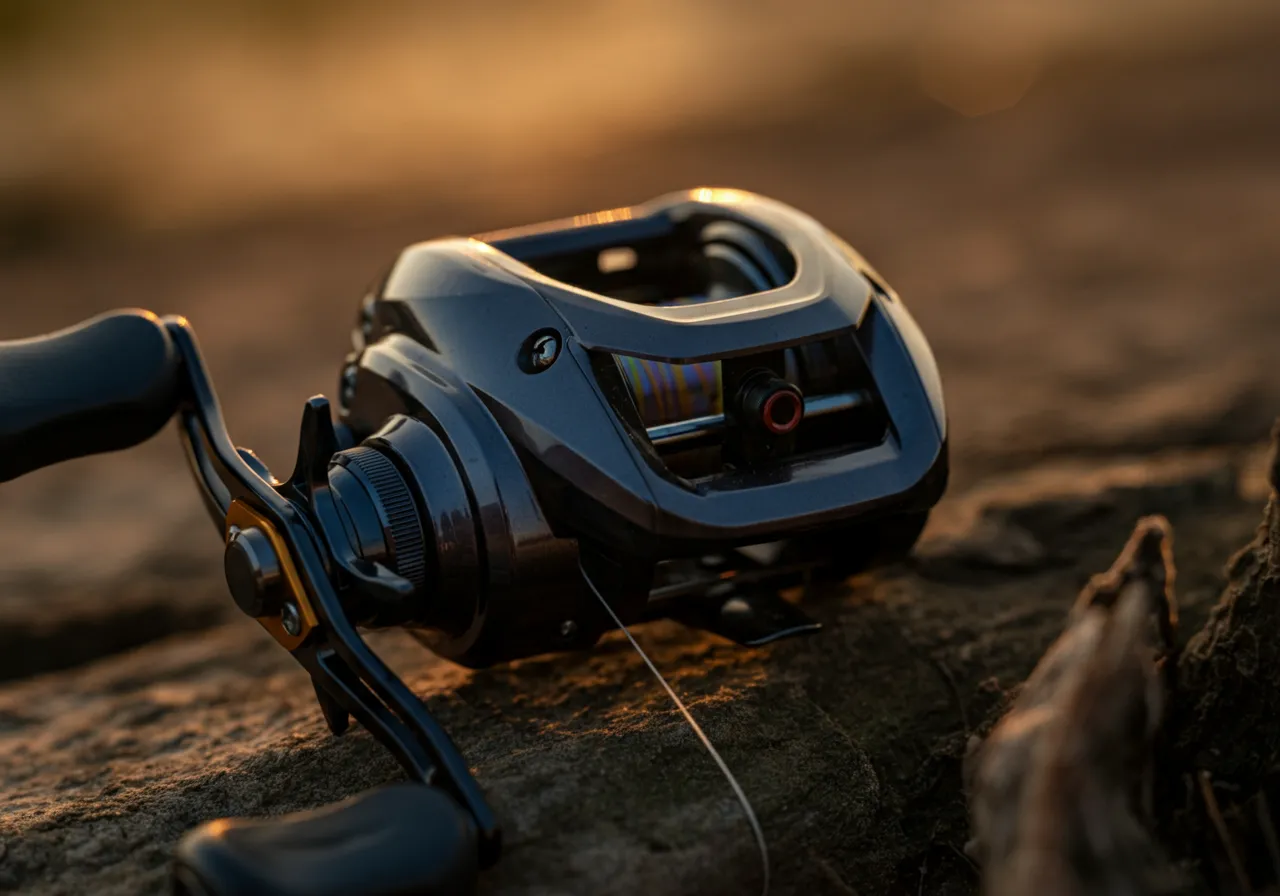
The Rod & Reel Combo: Your “Swiss Army Knife”
A 7-foot medium-heavy, fast-action spinning rod is the perfect all-around tool. It has the backbone to set hooks in cover and the sensitivity to feel subtle pond bites. Pair it with a 2500 or 3000-size reel spooled with 10-15 lb braided line. The braid has no stretch, so you can make long, accurate casts and detect the lightest tick.
The Terminal Tackle & Lure Shortlist
- Weedless Wonders: A 3/0 EWG hook, a 3/16 oz bullet weight, and a pack of soft plastic creature baits or stick worms (like a Senko). This Texas Rig is your #1 search bait.
- Finesse Finishers: A 1/8 oz shaky head jig with a finesse worm or a simple wacky-rigged stick worm for when bass are lock-jawed.
- Reaction Bait: A compact 1/4 oz spinnerbait or a squarebill crankbait that dives 3-5 feet. Perfect for covering water and triggering reaction strikes.
- Topwater Thrills: A popper or a walking bait for dawn and dusk explosions.
The Step-by-Step Pond Dissection
- Scout & Observe (The 5-Minute Intel): Don’t just start casting. Walk 50% of the pond first. Look for visible cover: laydown trees, lily pads, dock pilings, weed lines, or any irregularity. Watch for baitfish dimpling the surface or a bass chasing shad in the shallows.
- Prioritize Your Targets (Work the “Neighborhoods”): Start with the most obvious, high-percentage spots—the corner of a dock, the shady side of a fallen tree. In early morning/late evening, hit the shallow, sunny banks. As the sun gets high, focus on the deepest water available or shaded, heavy cover.
- Make Your Presentation Count (The Art of Stealth): Move slowly and keep a low profile. Your shadow spooking fish is a real problem. Cast past your target and work your lure into it. Let that Texas Rig fall on slack line—90% of bites come on the initial drop.
- Listen to the Pond (Adapt Your Retrieve): If you get a follow or a short strike, don’t just keep chucking. Change something immediately. Slow down your retrieve, switch to a finesse presentation, or change colors. The pond is giving you feedback; your job is to listen.
| Gear Category | Budget-Conscious Choice (Starter Kit) | Pro-Level Refinement (Tournament Ready) |
|---|---|---|
| Rod & Reel | Combo from a major brand (e.g., Ugly Stik GX2 Combo). Reliable, durable, good to learn on. | Separate high-modulus graphite rod (e.g., St. Croix BassX) + smooth drag spinning reel (e.g., Shimano Nasci). Superior sensitivity and casting performance. |
| Main Line | 8-10 lb Monofilament. Affordable, manageable, has stretch that can forgive errors. | 10 lb Braided Main Line (e.g., Sufix 832) with an 8 lb Fluorocarbon leader. Zero stretch for sensitivity, leader for invisibility in clear water. |
| Go-To Lure | Texas-rigged soft plastic (Yum Dinger). Inexpensive, incredibly effective, minimal snags. | Wacky-rigged name-brand soft stick bait (Gary Yamamoto Senko). The undisputed king of finesse presentations for pressured fish. |
| Philosophy | Maximize value and learn fundamentals. The angler’s skill matters most here. | Optimize every component for marginal gains in detection, hook-up ratio, and fish landing percentage. |
The Honest Pros & Cons of Pond Fishing
Pros: Incredibly accessible, often less pressured than big lakes, allows for mastery of a specific ecosystem, can hold surprisingly large bass, perfect for short fishing trips, forces you to become a better technical angler.
Cons: Bass can be highly conditioned to pressure (spooky), limited habitat means fish can be easier to pattern but also harder to catch on tough days, bank access can be restricted, size of fish population is finite.
Pond Bass Fishing FAQ
Q: What’s the single best time of year to fish ponds?
A: Spring, specifically the prespawn period when bass move shallow to feed aggressively before bedding. Fall is a very close second as they feed up for winter.
Q: I don’t have a boat. Is that a disadvantage?
A: Not at all. In fact, bank fishing a pond forces you to be more strategic and stealthy. You learn to work the water you can reach thoroughly, which is a foundational skill.
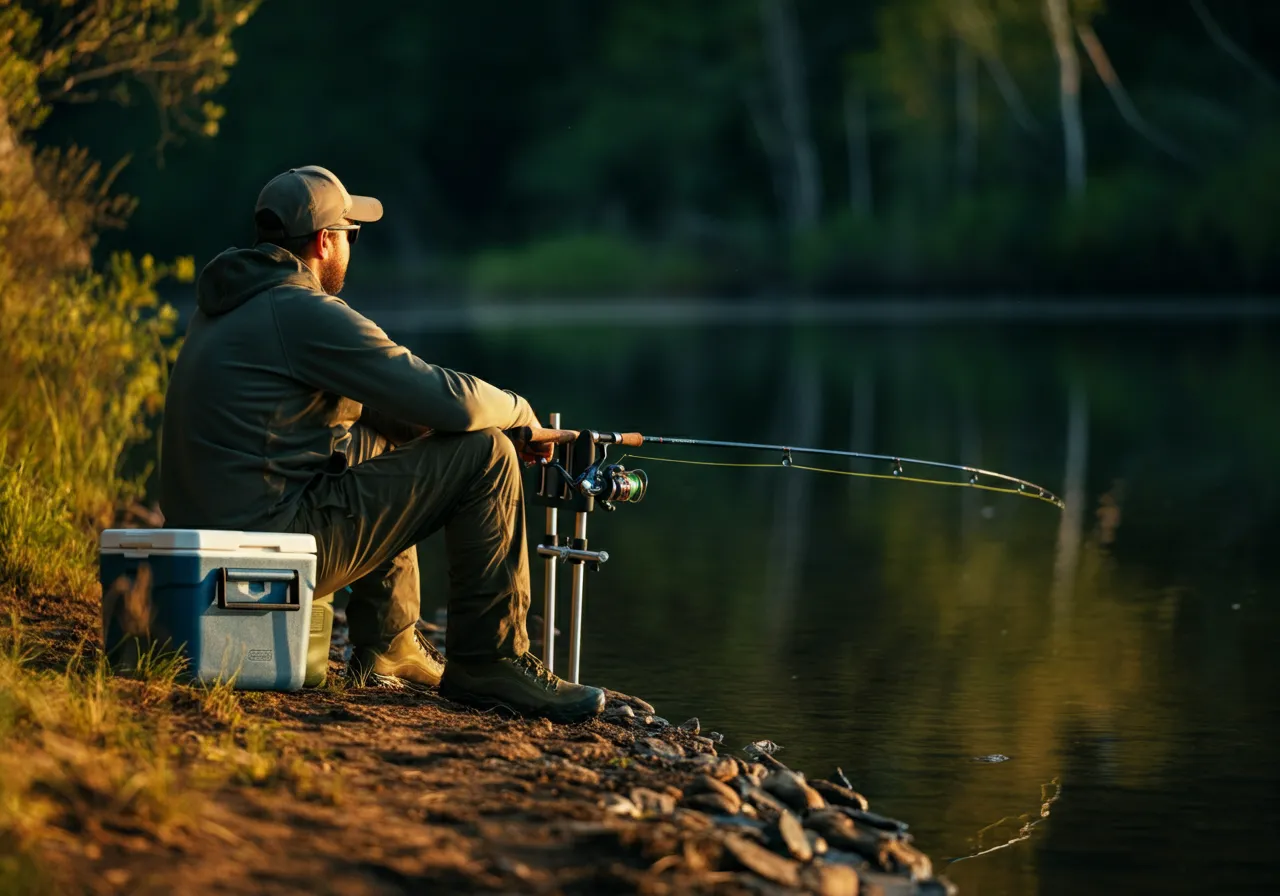
Q: The water is super clear and the bass seem to see me coming. What do I do?
A: This is the ultimate test. Downsize your line to 6-8 lb fluorocarbon leader, make longer casts, wear natural-colored clothing, and use more natural lure colors (green pumpkin, shad patterns). A finesse presentation like a drop shot or a shaky head is often the key.
Mastering your local pond is a journey that never really ends, and that’s the beauty of it. Every trip teaches you something new. Now, grab that rod, study your “small town,” and go put a personal best on the bank. For more in-depth techniques on lure selection and seasonal patterns, explore the other guides right here on the site.
Summary: Pond bass fishing success hinges on understanding the confined ecosystem, using stealth and precision tackle, and methodically dissecting high-percentage targets from the bank, all while prioritizing safety, legality, and conservation.