Reading the Water Basics

You’ve got the rod, the lures, and the time. You make a hundred casts into a beautiful stretch of water and get… nothing. Meanwhile, the old-timer down the bank seems to pull a fish out on every third cast. What’s the secret? He’s not just fishing the water; he’s reading the water. He sees what you don’t: the hidden highways, rest stops, and dinner tables where fish live. Learning to read the water is the single greatest skill you can develop to catch more fish, anywhere.
Think of the Water as a Fish’s City
To understand how to read water, you need to think like a fish. A fish has three primary goals: conserve energy, find food, and avoid becoming food. Water currents, structure, and temperature dictate everything. Imagine the river or lake as a city. The current is the highway—fish won’t sit in the fast lane burning calories. They’ll be in the eddies and slack water behind a rock, the “parking lots” right off the highway. Drop-offs are apartment buildings offering quick escape to deeper floors. Points are restaurants where the current delivers food. Your job is to find these prime real estate spots.
Safety, Laws, and Respect: The Non-Negotiables
Before we talk tactics, let’s cover the essentials. No fish is worth your life. Always check the weather before heading out; a sudden storm on open water is no joke. Wear your life jacket (PFD)—it’s the seatbelt of the water. In the United States, you must have a valid fishing license for the state you are in. Regulations on size, bag limits, and seasons are not suggestions; they are science-based rules to ensure healthy fisheries for our kids. I practice and preach ethical catch and release for breeding stock: keep the fish wet, handle with care, and use barbless hooks or crush the barbs when possible. It’s our duty.
The Angler’s Map: Key Water Features to Decode
Here’s your field guide to the most common and productive features you need to learn to identify.
1. Current Seams & Eddies (The Fish Highway)
In moving water, look for the line where fast water meets slow water. This is a current seam. Bait gets funneled along this line, and predators set up in the slow side to ambush with minimal effort. An eddy is the swirl of water behind a rock or logjam—a complete rest area. Cast your lure so it drifts naturally along the seam or swings into the eddy.
2. Structure & Cover (The Fish Apartment)
Structure refers to changes in the bottom contour: drop-offs, points, humps, and creek channels. Cover is the physical object on that structure: submerged trees, rock piles, docks, lily pads. Fish use cover for concealment and ambush, and relate to structure for seasonal movement. A point extending into the lake is a universal magnet—fish cruise it like a patrol route.
3. Water Color & Clarity (The Mood Lighting)
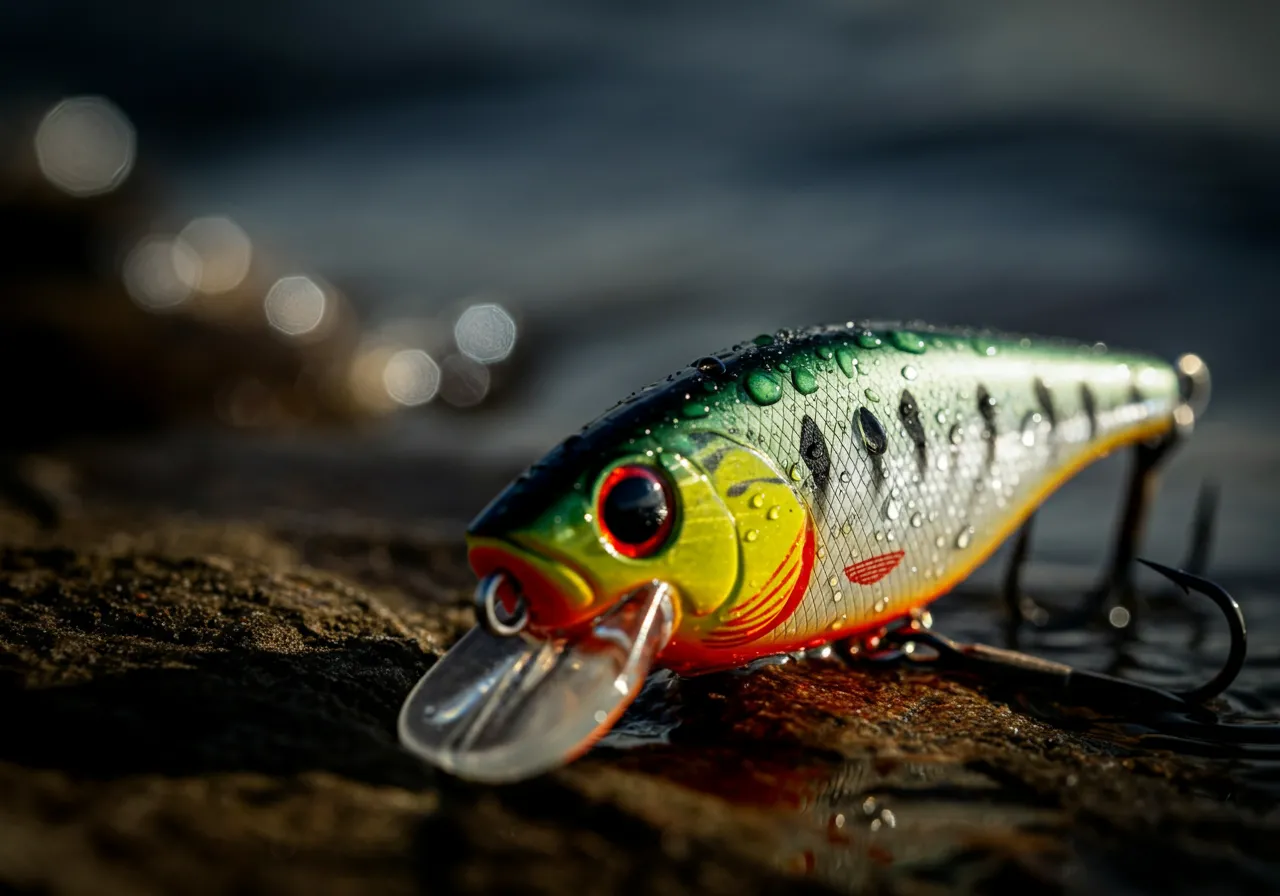
Clear water means fish are spooky and have a long sight line. Use natural colors, lighter line, and make longer casts. Stained or murky water is your friend for aggressive presentations. Use darker silhouettes or lures with strong vibration (spinnerbaits, chatterbaits) and sound (rattling crankbaits).
4. Surface Activity (The Dinner Bell)
Never ignore the surface. A splash might be a single predator. A cluster of small, frantic dimples often means a school of baitfish under attack from below. Birds diving are the ultimate tip-off. If you see this, don’t charge in—approach quietly and cast to the edges of the activity.
Your Step-by-Step Process on the Water
- Pause and Observe: When you arrive, don’t just start casting. Sit for five minutes. Look for surface breaks, current patterns, bird activity, and visible structure.
- Start with the Obvious: Hit the easy targets first: the downwind bank (wind blows bait), any visible cover like a lone dock, or the end of a point.
- Break it Down: Mentally dissect the water in front of you. If there’s a fallen tree, don’t just cast to the trunk. Fish the deep end root ball, the shady pocket under the branches, the current break at its tip.
- Match the Hatch & Presentation: Based on water clarity and what you think fish are eating (insects, shad, crayfish?), choose your lure. Then, present it in a way that makes sense for the feature. Cast past a rock and retrieve your lure so it swings into the calm eddy behind it.
- Move Smart: If a spot doesn’t produce after 10-15 quality casts, move. Fish are either there or they aren’t. Cover water efficiently by targeting the high-percentage spots you’ve now learned to see.
Gear for Reading Water: Budget vs. Pro Angler
While your eyes are the best tool, certain gear can give you a massive advantage. Here’s a breakdown.
| Gear Type | Budget-Friendly Pick | Pro-Angler Edge | Why It Matters for Reading Water |
|---|---|---|---|
| Polarized Sunglasses | Copper or amber lens from a reputable outdoor brand ($30-$60) | High-definition glass lenses with specific water light conditions (e.g., Costa or Maui Jim) ($150+) | Essential. Cuts surface glare, allowing you to see subsurface structure, weed lines, and even fish. |
| Depth Finder | Portable castable sonar (Like Deeper or Garmin Cast) ($100-$200) | High-resolution, side/down imaging combo unit mounted on boat (Humminbird, Lowrance) ($500+) | Reveals hidden bottom contour (structure), water temp, and can show individual fish holding on drop-offs. |
| Mapping App | Free versions of Navionics or Fishbrain (crowd-sourced data) | Premium lake/river mapping with 1-foot contours (Navionics+ or LakeMaster) | Lets you study the underwater “road map” at home, planning spots to target before you ever launch. |
The Honest Pros & Cons
Pros: This skill makes you infinitely more adaptable and successful. It turns empty water into a puzzle full of opportunity. It works in any season, for any species, in fresh or saltwater. It’s free knowledge that lasts a lifetime.
Cons: It takes practice and patience. You’ll still have slow days. It requires constant observation and can feel overwhelming at first. But stick with it.
Reading the Water FAQ
Q: What’s the single most important thing to look for in a river?
A: Current breaks. Anywhere the main flow is interrupted—behind a boulder, inside a bend, below a riffle—creates a resting and feeding lane for fish.
Q: How does wind affect where I should fish?
A: Wind blows surface plankton, which attracts baitfish, which attracts predators. The windy shore or point is often the most productive side. Use it to drift naturally or position your boat to cast into it.
Q: I fish from shore. Am I at a disadvantage?
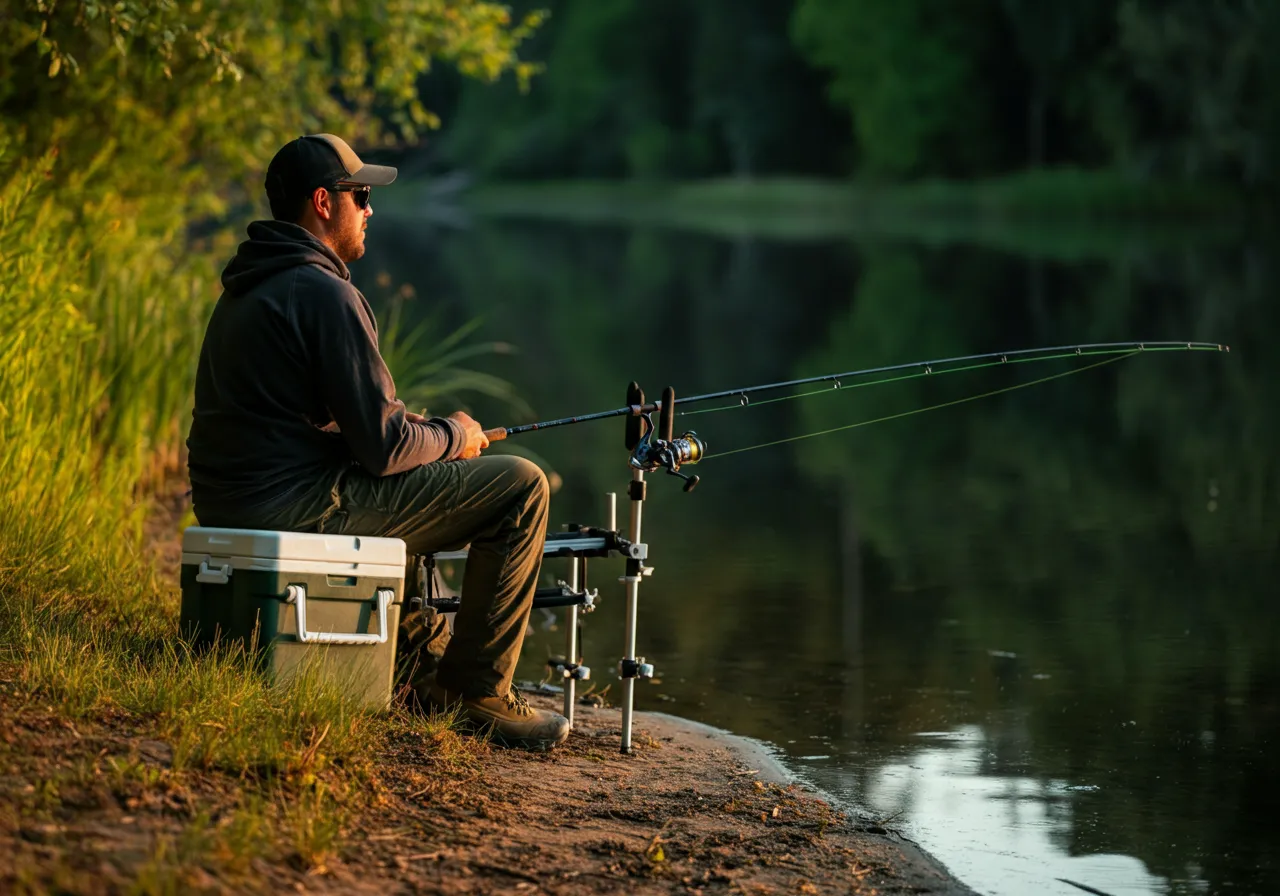
A: Absolutely not. In fact, it forces you to be a better reader. You can’t run to every spot, so you learn to maximize the water you can reach. Focus on features within your casting range: inlet/outlet pipes, laydowns, points, and riprap banks.
Mastering the art of reading water conditions transforms fishing from luck to a predictable hunt. Start on your next trip. Put the rod down first, watch, and think. The fish are telling you where they are. You just have to learn their language. For the most accurate and crucial local information, always consult your state’s regulations and resources, like the U.S. Fish & Wildlife Service website.
Ready to put this knowledge into action? Explore our other guides on specific lures and seasonal patterns to complete your on-the-water education.
Summary
Reading the water is the foundational skill of successful angling. It involves identifying current seams, structure, cover, and water clarity to predict fish location based on their need to conserve energy and ambush prey. Prioritize safety, legality, and ethics. Use polarized sunglasses and maps to gain an advantage, and methodically fish high-percentage areas. This practiced observation turns any body of water from a mystery into a map.