Round Reel vs Low Profile

You’re standing on the deck, a fresh spool of line on your reel, ready to launch a cast to that perfect laydown. You thumb the spool, swing, and… instant bird’s nest. A “professional overrun” that takes ten minutes to pick out. Sound familiar? For many anglers moving from spinning gear to baitcasters, the first hurdle isn’t the fish—it’s the reel itself. And the very first choice you make, the round reel vs low profile debate, sets the tone for your entire casting experience. Let’s cut through the noise and break down which reel shape is the right tool for your hands and your fishery.
Disclaimer: This guide is based on my two decades of professional fishing experience. Always check your state’s specific fishing regulations and license requirements before heading out. Safety first: wear your PFD, check the weather, and practice ethical catch-and-release to ensure our fisheries thrive for generations.
The Anatomy of Control: It’s All in Your Palm
Think of choosing a reel like choosing a hammer. A low-profile baitcaster is your standard claw hammer—fits snugly in the hand, offers precise control for driving nails (or pitching jigs) with finesse. The traditional round reel, or “round baitcaster,” is your sledgehammer. It’s built for power, with a larger frame and spool designed for brute force and massive line capacity. The core difference isn’t just looks; it’s about ergonomics versus raw power. Your hand literally wraps around the decision.
Safety, Legal, and Conservation Check
Before we geek out on gear, let’s cover the non-negotiables. A high-end reel won’t matter if you’re not fishing legally or safely.
- License: Every state has unique rules. You must possess a valid fishing license for the state you are in. Regulations on species, size limits, and seasons are managed by state wildlife agencies, like the U.S. Fish and Wildlife Service, which provides a portal to state agencies.
- Personal Flotation Device (PFD): If you’re on a boat, you need a Coast Guard-approved PFD for each person. Wear it, especially when running or fishing in current.
- Conservation: Handle fish with wet hands, use appropriate tackle to land them quickly, and revive fish fully before release. Our sport depends on healthy populations.
The Gear Guide: Breaking Down the Baitcaster Shapes
The Low-Profile Baitcaster: The Finesse Specialist
This is the workhorse of modern bass fishing. The reel sits low in your palm, with your thumb naturally resting on the spool for immediate control. It’s lighter, balances beautifully on most casting rods, and is designed for all-day casting comfort. I use these for 90% of my freshwater applications—pitching docks, working crankbaits, skipping under trees. The learning curve is gentler, and the feel is intuitive.
The Round Baitcaster: The Powerhouse
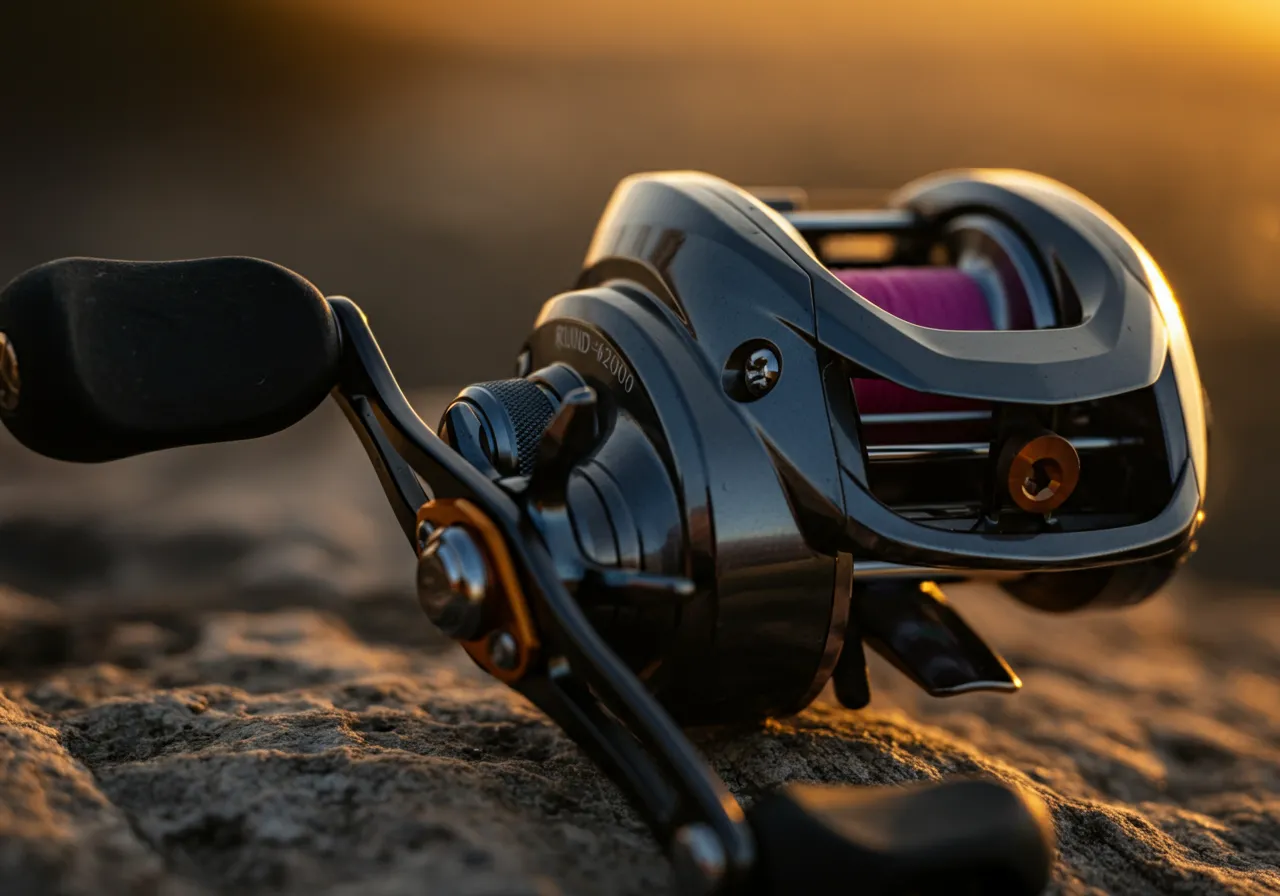
Don’t call it “old school”; call it “specialized.” The round reel’ larger spool diameter allows for faster line retrieval and superior cranking power. Its larger frame can house stronger gears and more drag washers. This is my go-to for heavy-cover bass fishing with big swimbaits, for trolling for stripers or walleye, and for any saltwater application where a yellowfin tuna or a big redfish might decide to go on a long, powerful run. It’s less about wrist finesse and more about winching power.
Head-to-Head: The Comparison Table
| Feature | Low-Profile Baitcaster | Round Baitcaster |
|---|---|---|
| Primary Use | Finesse to Medium-Heavy Freshwater | Heavy Duty, Big Game, Trolling |
| Ergonomics & Weight | Lightweight, palm-fitting, less fatigue | Larger, can be top-heavy, built for strength |
| Line Capacity | Good (150 yds of 12-20lb mono typical) | Excellent (300+ yds of 20-80lb typical) |
| Cranking Power | Good (High gear ratios available) | Superior (Larger gears, more torque) |
| Ease of Use/Learning | Easier for beginners, better thumb control | Steeper learning curve, different balance |
| Best For Techniques | Pitching, flipping, crankbaits, topwater | Deep cranking, big swimbaits, trolling, saltwater |
| Price Point (Entry to High) | $80 – $500+ | $150 – $600+ |
Making the Choice: A Step-by-Step Guide for Your Next Reel
- Assess Your Primary Fishing Style: Are you a weekend bass angler or a offshore chaser? For bass, pike, and general freshwater, start with a low-profile.
- Feel it in Your Hand: Go to a tackle shop. Mount each style on a rod. The right choice should feel like an extension of your arm.
- Match Your Rod: A low-profile balances best on a 7′ casting rod. A round reel often pairs with a heavier 7’6″ rod for leverage.
- Set Your Budget & Features: Within each category, you’ll find reels with magnetic or centrifugal brakes. For beginners, a reel with multiple braking systems is a lifesaver.
- Practice Before You Fish: In your yard, with a 1/2 oz weight, practice casting and thumb control. Adjust brakes until you can cast smoothly without backlashing.
The Honest Pros & Cons
Low-Profile Pros: Superior comfort for repetitive casting, easier to learn, better balance on typical rods, vast model selection.
Low-Profile Cons: Less raw cranking power, lower line capacity, can feel underpowered for true heavy-duty applications.
Round Reel Pros: Unmatched power and line capacity, faster retrieve per handle turn, often more durable in extreme conditions.
Round Reel Cons: Can be tiring for all-day casting, often heavier, less “finesse” feel, fewer modern features in some models.
Your Questions, My Answers
I’m new to baitcasters. Which should I buy?
Start with a mid-range low-profile reel (around $100-$150). The ergonomics will help you learn thumb control faster, leading to less frustration and more fishing.
Can I use a round reel for bass fishing?
Absolutely. It’s excellent for techniques like deep-diving crankbaits that require a lot of torque to pull, or for fishing heavy punching rigs in thick mats. It’s a specialist tool within the bass world.
Is one better for saltwater?
For inshore species like redfish and speckled trout, a sealed low-profile is fantastic. For offshore trolling or targeting large species from shore, the strength and capacity of a round reel are often mandatory.
The round reel versus low profile decision isn’t about one being better. It’s about matching the tool to the task—and to your hand. Your journey is unique. Start where it makes sense, master that tool, and then expand your arsenal. Now, get out there, check those regulations, respect the resource, and tight lines.