Snell Knot for Flipping Hooks

You made the perfect flip. Your bait landed with a subtle “plop” right in the thickest part of the cover. You felt the line go tight, loaded up, and set the hook with everything you had. But instead of the satisfying thump of a solid hookset, you felt the sickening sensation of your line pulling free. The fish is gone, and you’re left staring at an empty hook. If this sounds familiar, the problem might not be your hookset—it might be your knot.
Disclaimer: This guide is based on my professional experience. Always check your state’s specific fishing regulations and license requirements before heading out. Safety on the water is paramount; wear your PFD and monitor weather conditions. This article may contain links to products; we may earn a commission from purchases at no extra cost to you, which supports our work providing free, unbiased angling education.
Why the Standard Knot is Letting You Down
When you’re flipping and pitching heavy cover for bass, you’re asking your terminal tackle to perform under extreme stress. The standard improved clinch knot or Palomar knot is tied to the eye of the hook. Under a powerful hookset, the force vector pulls the hook eye away from the fish’s mouth. This can cause the hook to roll or twist, reducing penetration and creating a smaller, weaker hold. It’s like trying to pull a nail straight out of a board by yanking on its head from an angle—it’s inefficient and prone to failure.
The Science of the Snell: A “Straight-Line” Advantage
The snell knot is different. Instead of attaching to the eye, the line is tied directly to the hook’s shank. When you set the hook, the force is transferred in a perfectly straight line from your rod tip, down your line, and directly into the bend and point of the hook. This eliminates any rotational force, driving the point straight into the fish’s jaw with maximum efficiency.
Think of it like this: A standard knot is like pulling a trailer with a loose, wobbly hitch. The trailer (your hook) can fishtail and lose momentum. A snelled hook is like a rigid tow bar—all the pulling force is transferred directly, resulting in a powerful, straight-ahead drive. For flipping into mats, punching through grass, or wrestling fish from wood, this direct transfer of energy is a game-changer for your hook-up ratio.
Safety, Licenses, and Conservation First
Before we get to tying, let’s cover the essentials. A powerful knot means nothing if you’re not fishing legally or safely.
- License: A valid fishing license is non-negotiable. Regulations vary by state. For example, you can find comprehensive information for Florida anglers at the Florida Fish and Wildlife Conservation Commission.
- Safety: Flipping often means standing on an unstable deck near heavy cover. A Type III PFD (life jacket) is crucial. Be hyper-aware of overhead power lines when casting.
- Conservation: The power of the snell knot is fantastic for landing fish quickly, which reduces stress. Have pliers ready for a swift, careful hook removal, especially if practicing catch and release. Handle fish with wet hands to protect their slime coat.
Step-by-Step: Tying the Snell Knot for Modern Flipping Hooks
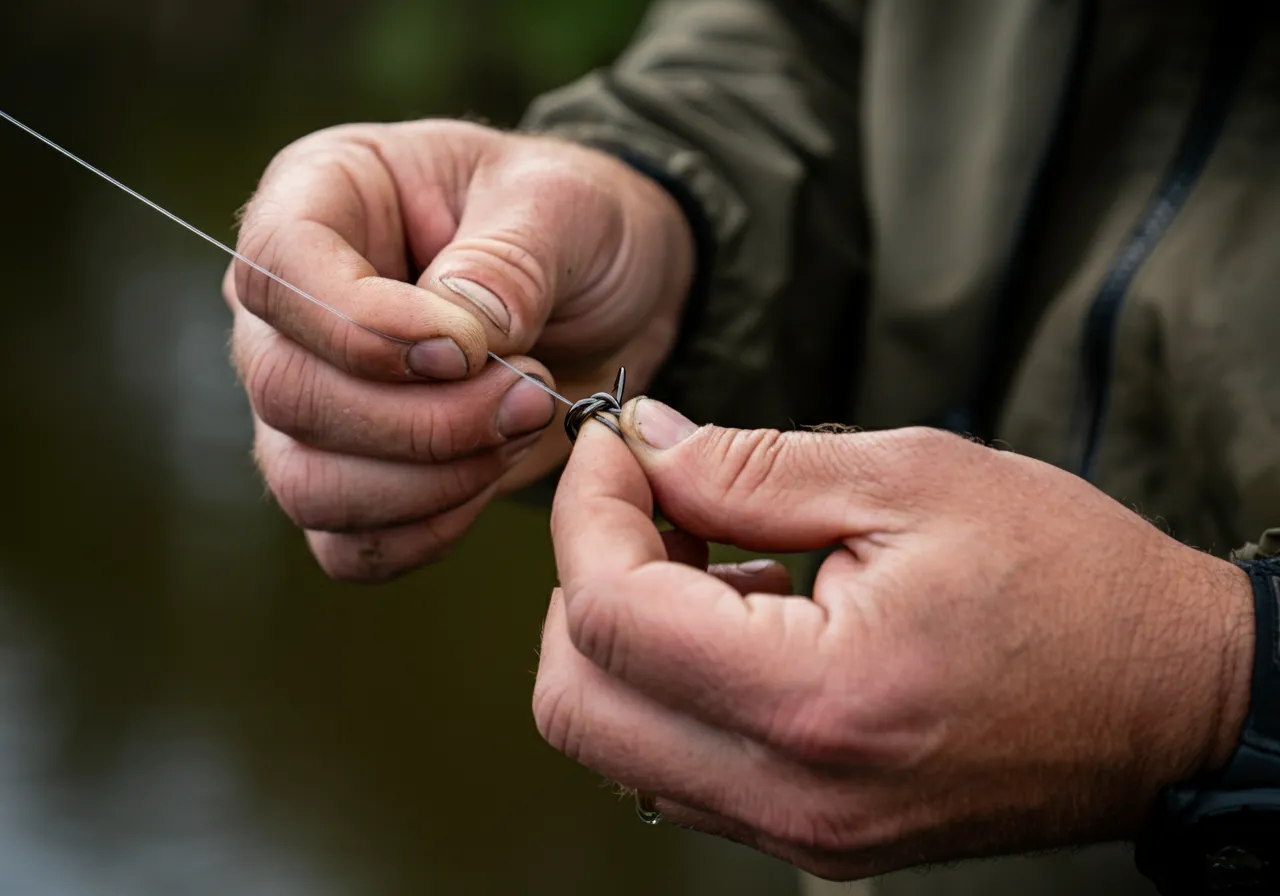
This isn’t your grandfather’s snell knot. We’ll use a modern, easy version perfect for braided line and flipping hooks with a straight shank or a slight offset.
- Thread the Line: Pass 6-8 inches of your line (I use 50-65 lb braid) through the hook eye from the front (point side). Let the hook hang down.
- Form the Loop: Take the tag end and run it parallel back along the hook shank, pointing toward the bend. Pinch it against the shank with your thumb.
- Create the Wraps: With your other hand, take the main line (coming from the rod) and start wrapping it down the hook shank, over both the shank and the tag end. Make 5-7 tight, neat wraps.
- Secure and Tighten: While pinching the wraps, pull the tag end slowly to tighten the coil of wraps down the shank. Then, pull steadily and firmly on the main line to seat the knot completely against the eye. The line should now be in a direct, straight line with the hook shank.
- Trim: Clip the tag end close to the knot. You’re ready to fish.
Gear Showdown: Snell Rig vs. Standard Tied Hook
| Feature | Snell Knot Rig | Standard Knot (e.g., Palomar) |
|---|---|---|
| Hookset Power Transfer | Direct, straight-line pull. Maximizes penetration. | Angled pull; can cause hook to roll. |
| Ideal Application | Flipping/Pitching heavy cover, punching mats, large swimbaits. | Open water techniques, finesse fishing, drop shots. |
| Knot Strength | Exceptional when tied correctly; distributes stress. | Very strong, but stress concentrated at hook eye. |
| Ease of Tying | Moderate learning curve. Practice needed. | Generally easier and faster to tie. |
| Best Line Type | Excellent with braid; also works with fluorocarbon. | Universal for all line types. |
The Honest Pros and Cons
Pros:
- Superior Hook-Up Percentage: The #1 reason to use it. You will land more fish from thick cover.
- Incredible Knot Strength: The wraps distribute pressure, making it one of the strongest connections.
- Clean Profile: Lies straight along the shank, potentially creating less disturbance in the water.
Cons:
- Not for All Hooks: Works best on straight-shank or offset worm hooks. Difficult/impossible on wide-gap or circle hooks.
- Learning Curve: It’s not as instantly intuitive as a Palomar. It requires practice to master.
- Time: Takes slightly longer to tie than a standard knot, which can be a factor in a tournament.
Your Snell Knot Questions, Answered
Q: Can I tie a snell knot with fluorocarbon leader material?
A: Absolutely. It works very well. Just be sure to lubricate the knot (with saliva or water) before final tightening to prevent friction burns that weaken the line.
Q: Is the snell knot only for bass fishing?
A: Not at all! While it’s a bass angler’s secret, it’s phenomenal for any situation requiring a powerful, direct hookset. I’ve used it for pike, musky, and even heavy-duty catfish rigs.
Q: How many wraps should I use for heavy braid?
A> For 50-80 lb braid, I find 5-7 wraps to be the sweet spot. Fewer wraps may not hold; more wraps can create a bulky knot that’s hard to tighten properly.
Mastering the snell knot is one of those small, technical adjustments that separates good anglers from great ones. It turns a defensive weakness—the hookset in heavy cover—into a decisive strength. Spend an hour at the kitchen table practicing with some old line and a hook. Your next trip to the mat, you’ll flip with a new level of confidence, knowing your connection to the fish is as direct and powerful as it can be.
Ready to up your flipping game even more? Explore our other in-depth guides on reading aquatic vegetation and selecting the right punching weights to complete your heavy-cover arsenal.