Umbrella Rig Controversy

You’ve spent hours graphing ledges, marking brush piles, and watching your electronics. You know the big stripers or bass are down there, schooled up and feeding. You throw everything in the box—swimbaits, jigs, crankbaits—and get nothing but the occasional half-hearted follow. The frustration is real. It feels like you’re speaking a language the fish just don’t understand. Then, you see another boat hook up, and again, and again. They’re dragging what looks like a miniature squid boat behind them: an umbrella rig. The bite is undeniable, but so is the controversy swirling around it. Is it an ingenious presentation or an unfair advantage that harms the fishery? Let’s cut through the noise.
Disclaimer: This guide is based on my two decades of experience on the water. It is your responsibility to know and follow all local fishing regulations. Rules governing the use of multi-lure rigs, including the number of hooks allowed, vary dramatically by state and even by specific bodies of water. Always check with your state’s wildlife agency. Furthermore, practice ethical angling by handling fish with care, respecting other anglers, and leaving no trace.
The Science Behind the Swarm: Why It Triggers Strikes
Think of an umbrella rig not as a single lure, but as a predator distraction system. A solitary baitfish is cautious and quick. But a tight school of baitfish represents a vulnerable, chaotic food source—it’s sensory overload for a predator. The umbrella rig mimics this perfectly. Its multiple arms create the distinct, fluttering flash and vibration of a fleeing school. This triggers a primal competitive instinct in gamefish like striped bass, largemouth, and even muskies. They aren’t just feeding; they’re trying to beat their competitors to the meal. It’s the difference between offering a single french fry and shaking a whole bag of them in front of someone.
Safety, Legality, and Conservation: The Non-Negotiables
Before you even think about tying one on, this is the most critical section. Ignoring these points is what fuels the controversy and gives responsible anglers a bad name.
- Know the Law, Every Time: The legality of an Alabama rig (a popular type of umbrella rig) is a patchwork quilt across the USA. Some states ban them entirely. Others restrict the number of hooks (e.g., only 3 hooks on a 5-wire frame). Some only allow them in certain waters. You must check the current regulations for your specific destination. A great starting point is your state’s wildlife agency website. For example, you can review general fishing regulations at the U.S. Fish & Wildlife Service’s fishing page and then drill down to your state’s rules.
- Gear Up for the Load: An umbrella rig with swimbaits is heavy and creates immense drag. This isn’t finesse fishing. You need a heavy-action rod, a high-capacity reel spooled with strong braid (50-65 lb test minimum), and secure knots (like a Palomar). A rod failure under load can be dangerous.
- Fish Handling is Paramount: Multiple hooks mean a higher chance of deeply hooking a fish, especially if it swallows a trailer bait. Have long-nose pliers, jaw spreaders, and a hook cutter ready. If you’re practicing catch and release, consider using single hooks instead of trebles on your swimbaits to dramatically increase survival rates.
Rigging and Running the “A-Rig”: A Step-by-Step Guide
Here’s how I set up and fish a standard 5-arm umbrella rig for maximum effectiveness and minimal hassle.
- Choose Your Frame: Start with a simple 5-arm wire frame. Ensure the arms are flexible enough to collapse on a strike but rigid enough to hold their shape.
- Select and Rig Your Baits: I prefer 3.5″ to 5″ paddle-tail swimbaits on jigheads. Rig three of the arms with these “hooked” baits. On the remaining two arms, use “dummy” baits—soft plastics without hooks. This is a common legal configuration and reduces snags.
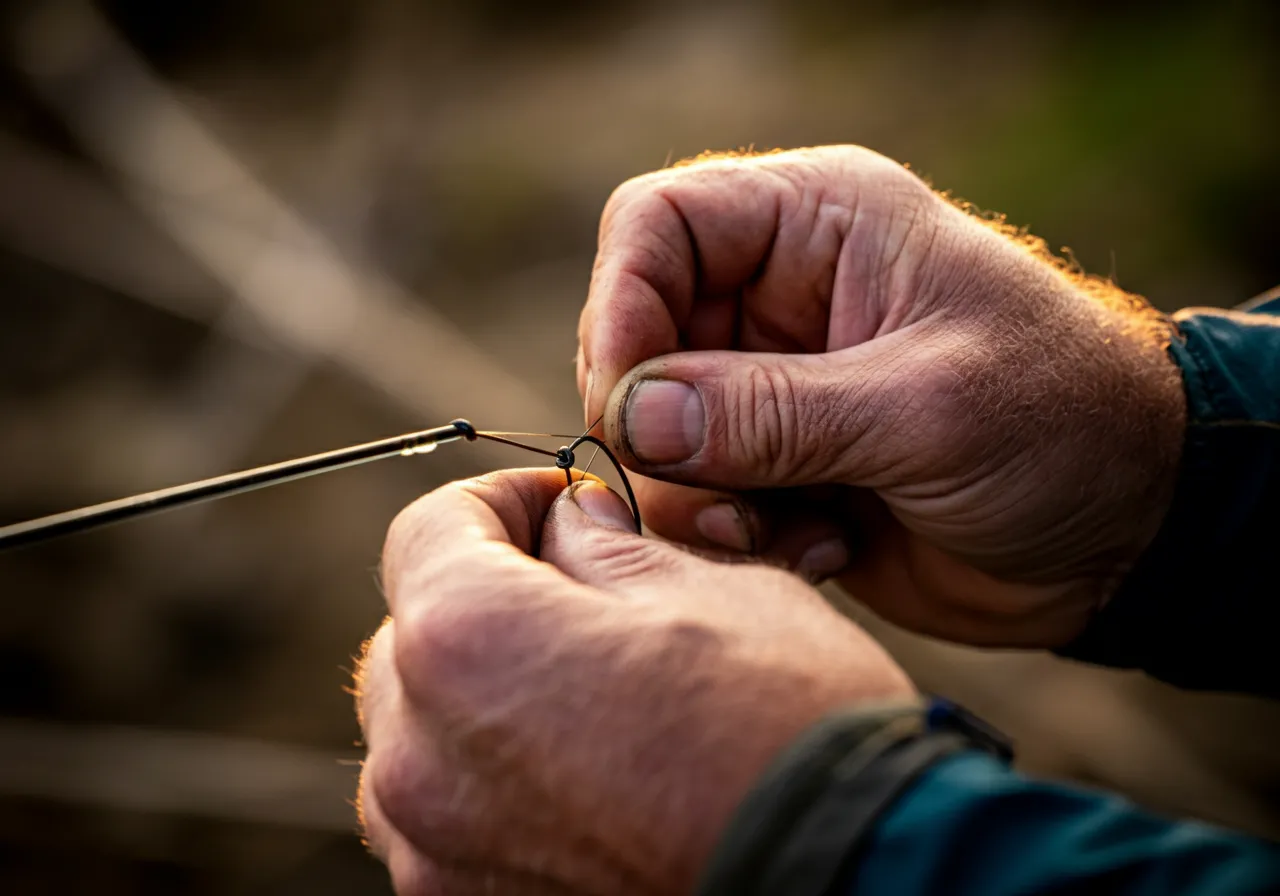
- The Critical Connection: Tie your main braid line to the rig’s central swivel using a reinforced loop knot or a heavy-duty snap. Do not use a weak leader here. The stress point is immense.
- The Retrieve is Everything: Cast out and let the rig sink to the desired depth. The most effective retrieve is a slow, steady roll. Use your rod tip to impart occasional subtle lifts and drops, making the “school” pulse and dart. The key is maintaining a constant, vibrating presence.
- The Strike & Fight: Be prepared for a thump, not always a jarring strike. A fish will often hit a dummy bait or get tangled. Keep steady pressure and reel hard. Use a large, deep net to land the fish, controlling all the hooks safely.
Gear Showdown: Budget Starter Kit vs. Pro Tournament Setup
| Component | Budget-Friendly Setup | Pro/Heavy-Duty Setup |
|---|---|---|
| Rod | 7’6″ Heavy Power, Fast Action Casting Rod (e.g., Berkley Lightning Rod) | 7’11” Extra-Heavy Power, Moderate-Fast Action Swimbait Rod (e.g., Dobyns Champion XP) |
| Reel | High-Speed (7.3:1+) Baitcaster with a sturdy frame, 20+ lb drag | High-Speed, High-Capacity Baitcaster with a forged frame, 25+ lb drag (e.g., Shimano Tranx) |
| Line | 50 lb Braided Main Line | 65-80 lb Braided Main Line |
| Umbrella Rig Frame | Basic 5-arm wire rig | Premium coated-wire rig with high-quality ball-bearing swivels |
| Baits | Generic paddle-tail swimbaits on 1/4 oz jigheads | Premium, durable swimbaits (like Keitech) on weighted screw-lock hooks |
The Honest Pros and Cons
Pros:
- Unmatched Schooling Fish Trigger: In the right conditions, it is arguably the most effective tool for triggering suspended, schooling predators.
- Covers Water Efficiently: It presents a large, aggressive profile that can be seen and felt from a distance.
- Multi-Species Appeal: Effective on stripers, bass, crappie (with smaller rigs), pike, and muskies.
Cons:
- Heavy and Cumbersome: Exhausting to cast and retrieve all day. Not a finesse technique.
- Legal Minefield: The constant regulatory changes create confusion and risk of unintentional violations.
- Potential for Harm: Higher risk of deep-hooking and injury to fish, especially with treble hooks.
- Stigma: Some anglers view it as “cheating” or unsporting, which can lead to conflict on the water.
Your Umbrella Rig Questions, Answered
Q: What’s the best time of year to use an umbrella rig?
A: It shines in cooler water periods (fall, winter, early spring) when gamefish are keyed in on large schools of baitfish. It can be effective year-round in open water for suspended fish.
Q: Can I fish it from the bank or a kayak?
A: It’s challenging. The long, heavy casts required are difficult from shore. In a kayak, it’s manageable but be cautious of the drag—it can literally tow you. Ensure you have the rod power to control it.
Q: Single hooks or treble hooks?
A> For the sake of the fish and your sanity, I strongly advocate for single hooks (swimbait hooks or inline singles). They are easier to remove, cause less damage, and are often required by regulations. You’ll lose a few fish but gain in conservation and easier releases.
The umbrella rig is a powerful tool, not a magic wand. Its effectiveness is proven, but its use demands responsibility, respect for the law, and extra care for the fishery. Understand the controversy, master the technique legally and ethically, and you’ll add a devastatingly effective option to your arsenal for those days when the fish are schooled up and ignoring everything else.
Ready to dial in your electronics to find those schools in the first place? Browse our other guides on reading your sonar and seasonal fish movement patterns to become a more complete angler.