Yellowfin Tuna Chunking

You’ve found the birds, you’ve marked the bait, and you can almost feel the electric pulse of a tuna school below the boat. You drop a jig, troll a spread… and get nothing but a workout. The frustration is real. You’re in the right place, but you’re not speaking their language. When the bite is tough or the fish are keyed in on a specific forage, there’s one technique that cuts through the noise: chunking for yellowfin tuna. It’s not just fishing; it’s an invitation to dinner.
Disclaimer: This guide is based on decades of on-the-water experience. Always check your local and federal fishing regulations, which change frequently. Your safety is your responsibility—never compromise on weather, seaworthiness, or proper safety gear. This article may contain links to recommended products; we aim to provide unbiased, practical advice to help you succeed.
The Science of the Chum Slick: Your Underwater Dinner Bell
Why does chunking work when other methods fail? Think of the open ocean not as an empty desert, but as a vast network of highways. Tuna are nomadic predators, constantly on the move and using scent trails, temperature breaks, and baitfish schools as their road map. When you create a steady stream of cut bait (chum), you’re essentially building a scent superhighway that leads directly to your cockpit.
The key is consistency. A sporadic handful of chunks is like a single billboard in the middle of nowhere. A steady, measured stream is like a series of bright, flashing signs saying “ALL YOU CAN EAT, NEXT EXIT.” It triggers a competitive feeding frenzy, pulling yellowfin tuna up from the depths and holding them in your strike zone. You’re not just hoping a fish swims by; you’re managing a resource and directing traffic.
Safety, Legal & Ethical Angling: The Non-Negotiables
Before we cut the first bait, this is the most important section you’ll read. Offshore fishing is no joke.
- Safety First: File a float plan. Have a registered EPIRB and a VHF radio. Every person must have a properly fitted life jacket (PFD), and you should have a throwable device. Monitor the marine forecast religiously; a NOAA Weather forecast can mean the difference between a great day and a dangerous one.
- Legal Compliance: In the US, you must have a valid state saltwater fishing license. For yellowfin tuna in federal waters, you are required to have an Atlantic HMS Angling Permit (if fishing the Atlantic/Gulf). Size and bag limits are strictly enforced. Ignorance is not an excuse. Bookmark the NOAA Fisheries HMS Management Division website for the absolute latest rules.
- Ethical Stewardship: Only chunk with what you intend to use. Have a plan for your catch—whether it’s for the table or for release. Use circle hooks to minimize gut-hooking, and have the right tools (dehookers, gloves) for safe release. Never leave a chum slick or any trash behind.
The Chunking Arsenal: Gear Built for the Fight
You’re asking your gear to do two contradictory things: be sensitive enough to detect a subtle pick-up in a strong current, and be brutal enough to stop a 100-pound missile. Here’s how to bridge that gap.
Rods & Reels: The Workhorses
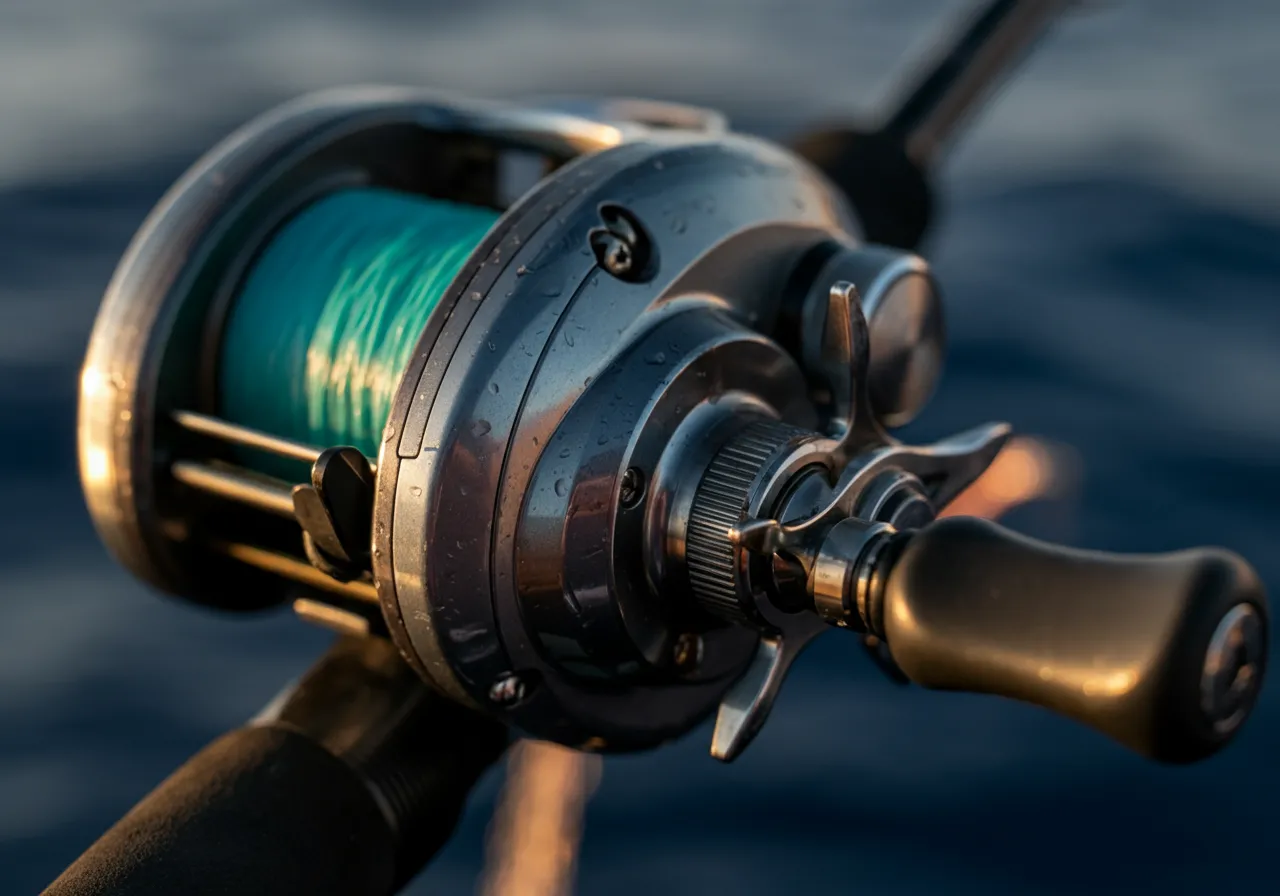
- Reels: You need capacity and drag. A quality lever-drag reel in the 50-80W class is standard. Spool it with 500+ yards of 80-100 lb braided line as your backing. This gives you the line capacity and lack of stretch you need to feel the bite.
- Rods: A 6-7 foot heavy-action rod with a soft tip is ideal. The soft tip allows the chunk to drift naturally and helps you see the bite; the heavy backbone is for the fight.
Terminal Tackle: The Business End
- Leader: A 6-10 foot fluorocarbon leader (100-150 lb test) is critical. Fluorocarbon is nearly invisible underwater and abrasion-resistant.
- Hooks: Non-offset circle hooks are often mandatory and are simply better for conservation. Sizes 7/0 to 9/0 are perfect for most chunking baits. They hook in the corner of the mouth almost every time.
- Rigging: It’s beautifully simple. Tie your main braid to a heavy-duty barrel swivel (150+ lb). Tie your fluorocarbon leader to the other end of the swivel. To the end of the leader, tie your circle hook. That’s it. No weight. The chunk provides the sink.
| Gear Component | Budget-Friendly (Solid Performance) | Pro-Grade (Tournament Ready) |
|---|---|---|
| Reel | Penn International II or Fathom II Lever Drag | Shimano Talica or Penn International VISX |
| Rod | Ugly Stik Tiger Elite or Penn Carnage II | Calstar Grafighter or United Composites |
| Line (Braid) | KastKing SuperPower or Spiderwire Stealth | Jerry Brown Hollow Core or PowerPro Maxcuatro |
| Leader (Fluoro) | Seaguar Blue Label | Seaguar Premier or Yo-Zuri TopKnot |
| Hooks | Mustad Demon Circle Hooks | Owner Mutu Circle Hooks or Hayabusa MW-1 |
The Step-by-Step Chunking Drill
- Prep Your Bait: Use fresh-frozen baitfish (sardines, herring, mackerel). Thaw a block and cut it into “chunks”—pieces about the size of a matchbox. Keep a separate bucket of “chum” (smaller pieces and scraps).
- Establish the Slick: Start with a handful of chum every 30-60 seconds. You want a steady, sinking trail. Position the boat up-current so the slick drifts away from you.
- Rig and Deploy: Impale a prime chunk through the skin side of the hook, just enough to hold it firmly. Freeline it (no weight) directly into your chum slick. Let it drift back naturally with the current, keeping your reel in free-spool with the clicker on. Pay out line until you’re 50-150 feet behind the boat.
- The Strike & Hookset: Watch your line. You’ll often see it jump or speed up. When you feel solid weight, point the rod at the fish, engage the reel, and simply start reeling with steady, firm pressure. The circle hook will do the work. Do not jerk!
- Manage the School: While fighting a fish, have your mates continue the chum stream at a slower pace. This keeps the school interested and often leads to multiple hook-ups.
The Honest Pros & Cons of Yellowfin Tuna Chunking
Pros:
– Incredibly effective when fish are feeding selectively or are deep.
– Can turn a slow day into an epic one by creating your own bite.
– The ultimate “light tackle” feel for giant fish when freelining.
– A thrilling, visual, and active form of fishing.
Cons:
– It’s messy. Very messy. Bait scales and oil everywhere.
– Can attract unwanted guests (sharks, bluefish).
– Requires patience and discipline to maintain the slick.
– Uses a lot of bait, which adds to trip cost and prep.
Yellowfin Tuna Chunking FAQ
Q: What’s the best time of year for chunking?
A: While summer and fall are peak, chunking works whenever yellowfin are present, even in cooler water. It’s often the best late-season technique as fish become more bait-focused.
Q: Do I need a boat to do this?
A> Yes, you need a capable offshore boat to reach the grounds (canyons, banks, temperature breaks). It is not a pier or surf technique.
Q: How do I know if I’m in the strike zone?
A> Use your depth finder. If you’re marking bait and fish at 150 feet, you may need to let your chunk sink deeper before locking it in. Match the hatch depth-wise.
Ready to turn your next offshore trip from a hopeful scout into a targeted hunt? Mastering the chunking game is a rite of passage for any serious tuna angler. The ocean provides the players, but you set the table. Now, go get tuned up. Check out our other guides on reading sonar for pelagics and fighting big fish on stand-up gear to complete your education.
Bottom Line: Yellowfin tuna chunking is a strategic, scent-based technique that uses a steady stream of cut bait to pull fish into a feeding frenzy, allowing you to present a natural offering directly in their path. It requires specific heavy-duty gear, patience, and a strict adherence to safety and regulations, but it’s one of the most reliable ways to put trophy yellowfin in the boat.